
By Ceri Jones
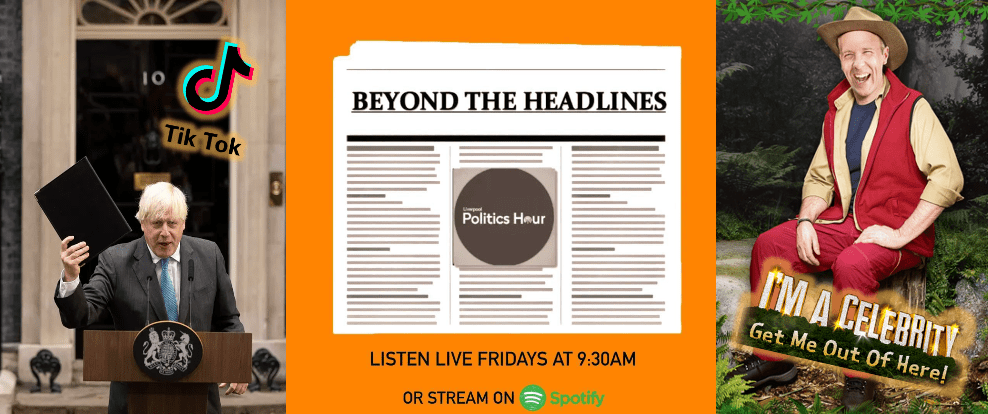
This week in the news once again appears a scandal involving Matt Hancock, as it is revealed he was paid £320K for his I’m A Celebrity appearance in 2022. The former health secretary and current MP for West Suffolk is still suspended from the Conservative party – a decision made due to taking time off from parliamentary duties to appear on the show.
Also this month comes the news of former Prime Minister Boris Johnson signing a book deal with HarperCollins, who have refused to reveal how much Johnson was paid. Like Hancock, he is still an MP for his constituency, Uxbridge and South Ruislip. This begs the question- are our politicians giving us too much celebrity at the expense of politics?
According to YouGov, it would seem celebrity politics already poses considerable concern- 52% of the population were opposed to celebrity involvement in politics. Yet somewhat hypocritically, the majority- 63%- said celebrity advocacy would have no bearing either positively or negatively on how they felt about politics. So the data indicates a public opposed to and sceptical about the influence of celebrity politics.
52% of the population were opposed to celebrity involvement in politics.
Celebrities in Politics
The main concern surrounding celebrity politics is simple- the concern that their influence is not ethical, lacks grounding and that celebrities simply aren’t qualified to talk politics.
“Don’t use it as a platform to make a political speech. You’re in no position to lecture the public about anything”
Ricky Gervais
There appears to be a digital divide with online influencers- 26% of young people are likely to be supportive of celebrity involvement in politics, compared to 2% of those aged over 65. So it seems celebrities could engage younger voters in politics- statistically the demographic with the lowest voter turnout- which can surely be regarded as a benefit for democracy.
The challenge comes when celebrities present discriminatory, misinformed and harmful views; Andrew Tate’s misogyinistic preaching and Kanye’s racist misinformation are just two viral examples. And according to the data it is the younger population who are most likely to engage with this content and have their views manipulated.
Part-Time Politics?
It’s not only celebrities themselves entering the political sphere which is on the controversial rise; the opposite is also true. The term ‘politician celebrity’ is not new- the idea of politicians trying to become celebrities. But it seems now more than ever that big political actors are joining the trend of personalisation.
The infamous example of course is Matt Hancock, who has undeniably become a celebrity following his reality show appearance. Many people warmed to the disgraced MP during the show (at least until it was revealed how much he earned during its production).
Whilst he is no longer secretary, he is, in theory, still a serving MP with parliamentary duties. Duties which he has undoubtedly neglected for his celebrity pursuits.
But Hancock isn’t the only Conservative MP honing in on the celebrity. It’s been reported that former Prime Minister Boris Johnson has signed a book deal this month, still also whilst remaining a serving MP. Are our elected representatives able to perform their roles whilst engaging in this celebrity behaviour? It seems increasingly that these celebrity pursuits are the new priority for politicians.
Perhaps there is deeper concerns to be had about this too- the cheapening of politics. Book deals, television appearances, even cameos (Nigel Farage in particular making some questionable videos) take away the sincerity of politics and increase our focus on the person, the scandal and the excitement.
The Round-Up
The public seems generally opposed to the idea of celebrity politics- both celebrity advocates and politicians’ attempts at popularity. Celebrities themselves must tread a careful balance between advocacy and ignorance, a line which the public themselves seems unsure of.
For politicians, the line is much clearer. The public is tired of the gimmicks and a return to ‘serious’ politics is welcome. Ex-politicians appearances on television shows may provide entertainment, but serving politicians need a severe re-evaluation of their priorities.
For more on this story, listen to Beyond the Headlines LIVE on Friday 9:30AM.
To catch-up and listen later, stream all episodes on Spotify- ‘Beyond the Headlines’ on Liverpool Politics Hour.

 Politics Hour