
By Wali Khan
26th March 2025
In the 21st century racism is no longer trendy; unfortunately for racists, it is now socially condemned. Despite this, the impulse to hate remains, and the racists have evolved. They target a specific group of people, crafting a narrative of threat. However, the cover story is never about ‘race’. It is about ideology. The modus operandi remains the same: smear, demonise, ostracise, while violence simmers beneath the surface. They will insist they are not those racists of the past – oh no, those monsters directly committed or contributed to horrific acts like genocide, apartheid and enslavement. Despite their misdirection, it is not difficult to see the truth when looking for it: hate cloaked in a disguise of righteousness.
Although it may be intertwined with certain biological traits, race is not simply an objective biological reality; it is a product of our societal constructs. In the immediate aftermath of 9/11, Frank Roque murdered Balbir Singh Sodhi, an Indian-American Sikh man – mistaking him for an Arab Muslim. Sikhs and Arabs share a similar phenotype. That of a brown person, this is further exacerbated when it is a brown man with a head covering and a beard. Post 9/11, this phenotype has been demonised, linked with acts of terrorism, and turned into a race of its own. Unfortunately for Balbir Singh Sodi, he matched this description and fell victim to an Islamophobic attack despite not being a Muslim. This horrific act, and countless others like it, exposes the deep-seated racism in Islamophobia. To deny the racist underpinning of Islamophobia is to be wilfully ignorant or completely disingenuous.
In an interview last year, Sky News presenter Kay Burley suggested that former Prime Minister Rishi Sunak’s ethnicity, rather than his government’s policies or actions, somehow disprove accusations of Islamophobia within the government. Rishi Sunak is, in fact, not a Muslim, so on the surface level, Burley’s comments seem entirely nonsensical. However, in reality, they expose their true sentiments: if you are a brown man, you are considered Muslim. Again, this highlights the ridiculous nature of any arguments attempting to suggest Islamophobia has nothing to do with race. Whether intentional or not, her remarks underscore a dangerous issue: the tendency to downplay or ignore Islamophobia in society, branding it as a legitimate criticism of ideology. All while brushing the deep-rooted racism under the rug. Furthermore, Kay Burley’s reference to Sunak’s ethnicity as a defence against Islamophobia echoes a familiar pattern of tokenisation, a lazy attempt to dismiss criticism by pointing to the presence of an ethnic minority in a position of power.
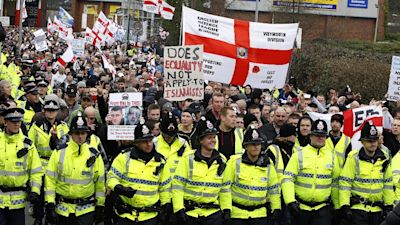
More alarmingly, Islamophobic rhetoric is becoming increasingly normalised in British politics with the likes of Nigel Farage and the Reform party. Last year former Conservative MP Lee Anderson claimed that “Islamists” control Sadiq Khan, the Muslim Mayor of London. Islamists are fundamentalists who aim to establish a political system based on Sharia law. This accusation ignores Khan’s record of liberal values, for which he has received numerous death threats from actual islamists. The language used by Anderson, and the support he received from fellow MPs shows a deliberate refusal to distinguish between the majority of Muslims and radical Islamists. Islam itself is being framed as a threat.
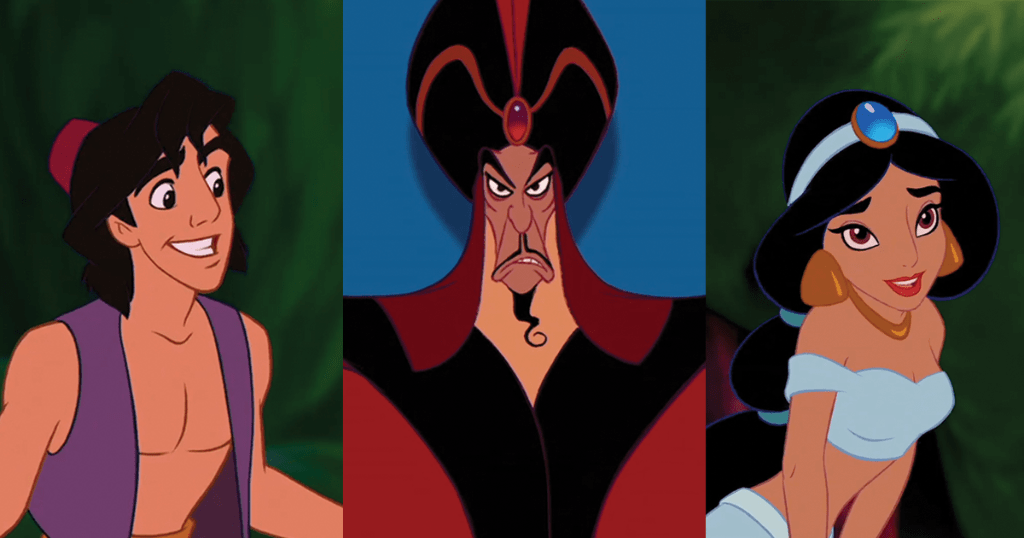
I spoke to Belal Stitan, a media graduate from the London School of Economics, about how Islamophobia is embedded in the media we consume, even in children’s films. He pointed to Aladdin as a clear example. In the film, the heroes like Aladdin and Jasmine are portrayed with more Eurocentric features and speak with American accents, while villains like Jafar have darker skin, exaggerated facial features, and thick, foreign-sounding accents.
Belal explained that this kind of visual and vocal coding sends a powerful message to young viewers: characters who look and sound “Western” are good and trustworthy, while those who don’t are suspicious, dangerous, or evil. It’s a subtle but deeply harmful form of programming that teaches children to associate eurocentricism with goodness and anything else with threat or barbarism.
Growing Islamophobia is extremely dangerous for Muslims in the UK and all around the world, especially in such a polarised climate. in 2024 anti-Muslim assaults surged by 73%. The leaders of this country need to do more to protect this minority group. Muslims in the UK have been demonised for decades culminating in last year’s Southport riots. More broadly this language of hate and fear has manufactured consent for the murders of tens of thousands of Palestinians in 2024.
In this week’s episode of the Young Ones Politics Hour I conducted a detailed analysis on Islamophobia with insights from an Islamophobia expert, a former member of parliament and a British-Palestinian activist. You can listen to the special feature now at Liverpool Politics Hour on Spotify.
 Politics Hour