The Politics of Paul McCartney

Anthony Howe

5/05/25

Paul McCartney needs no introduction. 1/4 of the Beatles. 1/2 of Lennon-McCartney. Writer of some of the greatest songs that will ever come to exist. When you hear the words politics and The Beatles, most would immediately think of John Lennon. Lennon wore his politics on his sleeve, never ashamed of the fact that he was a revolutionary, happy to openly criticise the existing structures of the world order to fight for the values he held so dear.

The contrast between Lennon and McCartney, that is so often attributed to their songwriting, when applied to their politics, creates an interesting case study. The politics of John Lennon are a well-trodden story. The bed-in for peace. Give Peace a Chance. His Maoist sympathies. Yet, the politics of Paul McCartney is a story less well known. A story that requires you to scratch beneath the surface, a politics that so often requires you to delve deep beyond the captivating melodies, a politics occasionally laid bare for all to see.

Paul McCartney’s most brazenly political song is “Give Ireland Back to the Irish”, released as a single in February of 1972 as a response to the Bloody Sunday killings. This is one of McCartney’s few openly political songs that resulted in a ban by the BBC due to its alleged pro-IRA sympathies. Despite it being his punchiest political song, it is still delivered in a classic McCartney style. Upbeat. Melodic. Catchy. Promoting the message that if only we could come together as one people, then the troubles could be resolved.

Give Ireland Back to the Irish represents a much wider story than that of the killings that took place in January 1972. This song personifies a personal relationship between McCartney, the music, and the message. A relationship that began in 1957 and continues to this very day. If any of the subject material addressed by McCartney across his decade-spanning musical career warranted a down-to-earth and downbeat protest song, it would be this one. Yet, for McCartney, he refuses to see the music as secondary. No subject matter will be able to resist the force of his melody-making sensibilities, should they guide him that way. McCartney unashamedly talks of Britain’s greatness in a song supposed to be in protest of British activity in Northern Ireland. Unapologetic that the musicality of Give Ireland Back to the Irish is given equal weight to its message. That’s the difference between Lennon and McCartney; for the latter, the music and the message must sit as equals. Never to compromise each other, never to have one diluted to favour the other.

This is what makes the politics of Paul McCartney so interesting. So often, the true meaning of his songs are shrouded in beautiful melodies, glorious orchestration, and intricate instrumentation, resulting in pop perfection. It is McCartney’s unwillingness to compromise on the musicality of his songs that requires you to dig deeper and uncover what truly drives him.

Tune in to “The Young Ones” final radio show tomorrow from 11:30 am as we delve further into the politics of Paul McCartney.
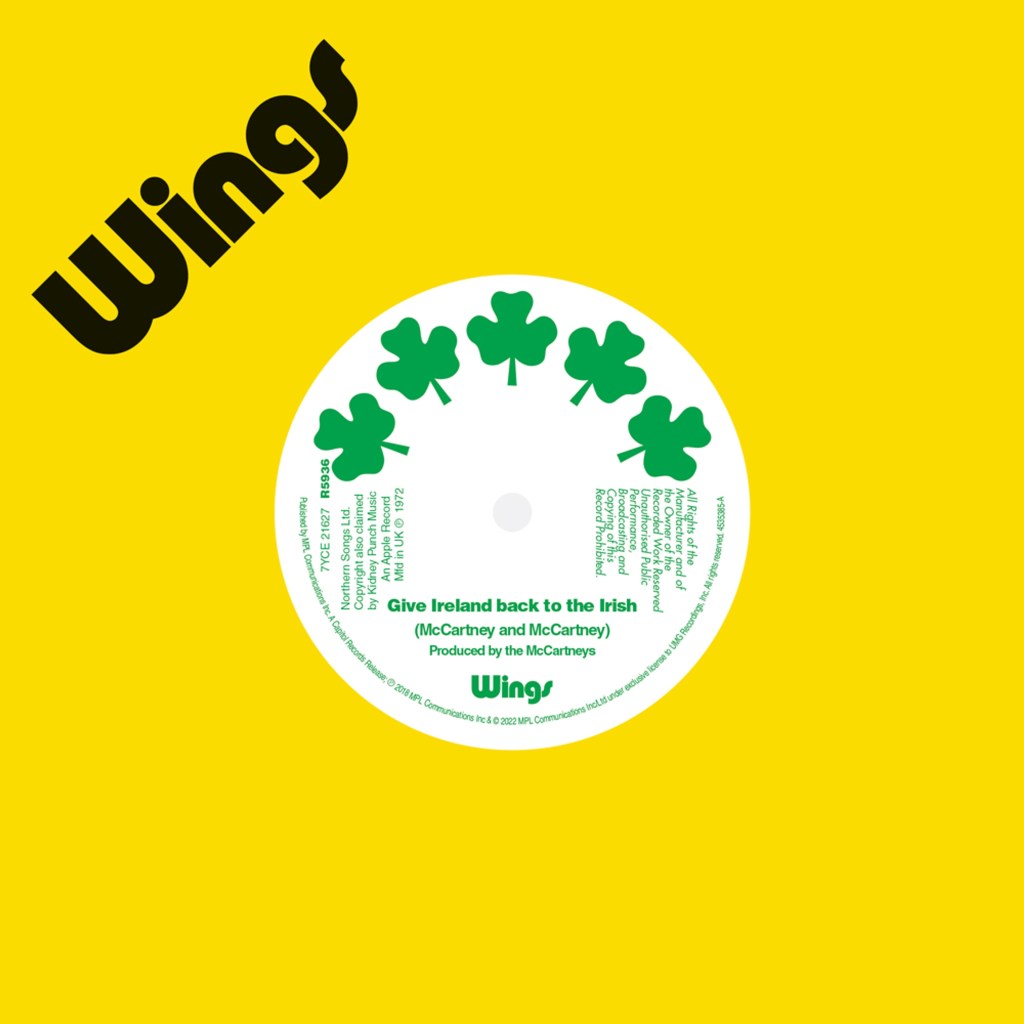
Picture Credit: PaulMcCartney.com, 2025
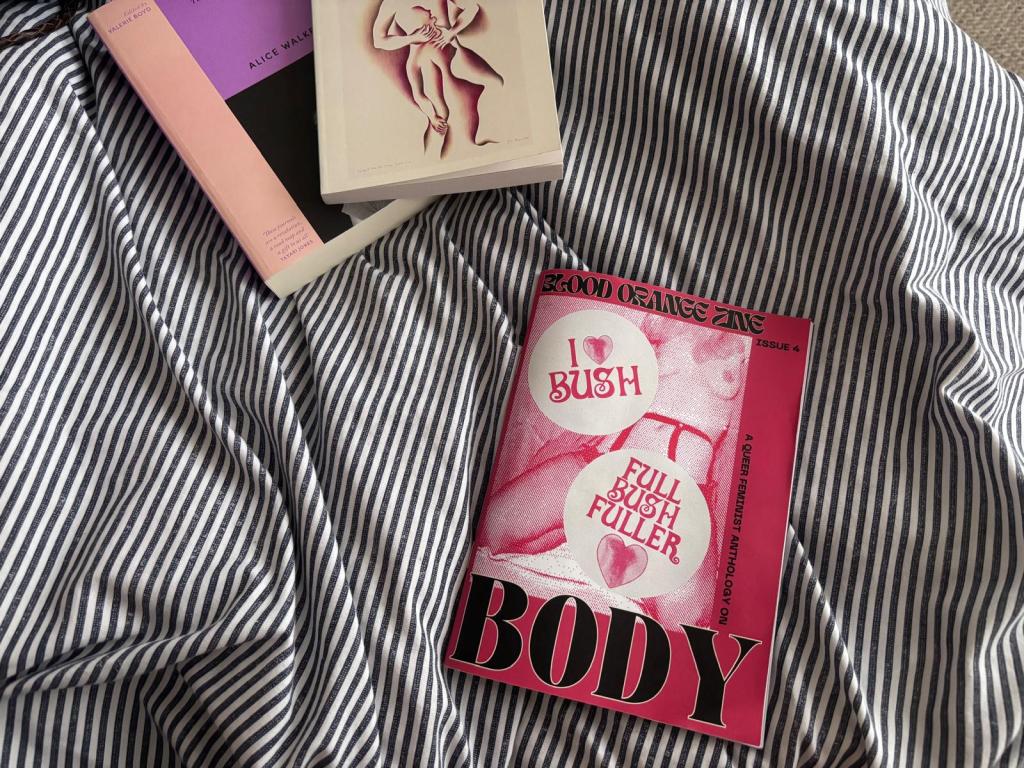
‘I like to beautify the ugly and uglify the beautiful’: Returning to interview Sophie McQue, a Gen Z poet

Written by Tanzi Stewart-Stewart

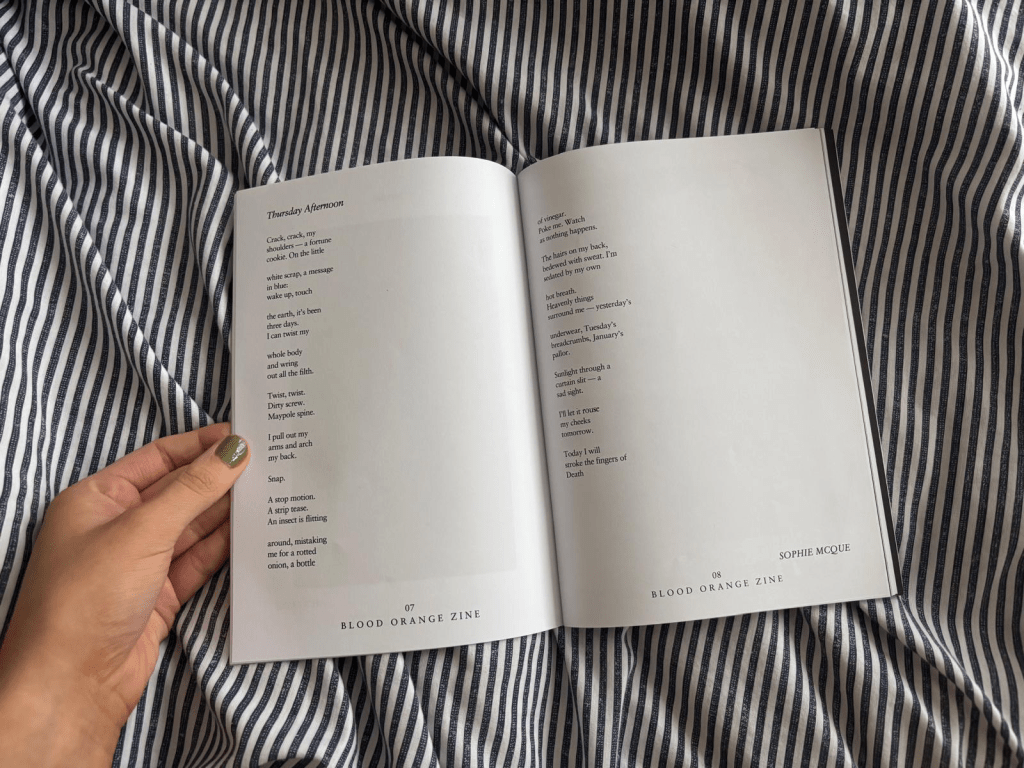
Loyal listeners may remember Sophie McQue from her interview about her and her friend Rosie’s feminist book club, Tongues of Stone. But a book club is dedicated to other authors, and Sophie herself has recently been published in a feminist zine, Blood Orange Zine, based here in Liverpool. 

Sitting in Sophie’s bedroom now, it is every inch a bohemian muse’s boudoir draped in white lace and adorned with biblical iconography. Even my interviewee herself is decorated similarly, with a stick and poke of the virgin mary on one arm and ropes of pearls and crosses cascading over her other shoulder. She is an atheist, of course.

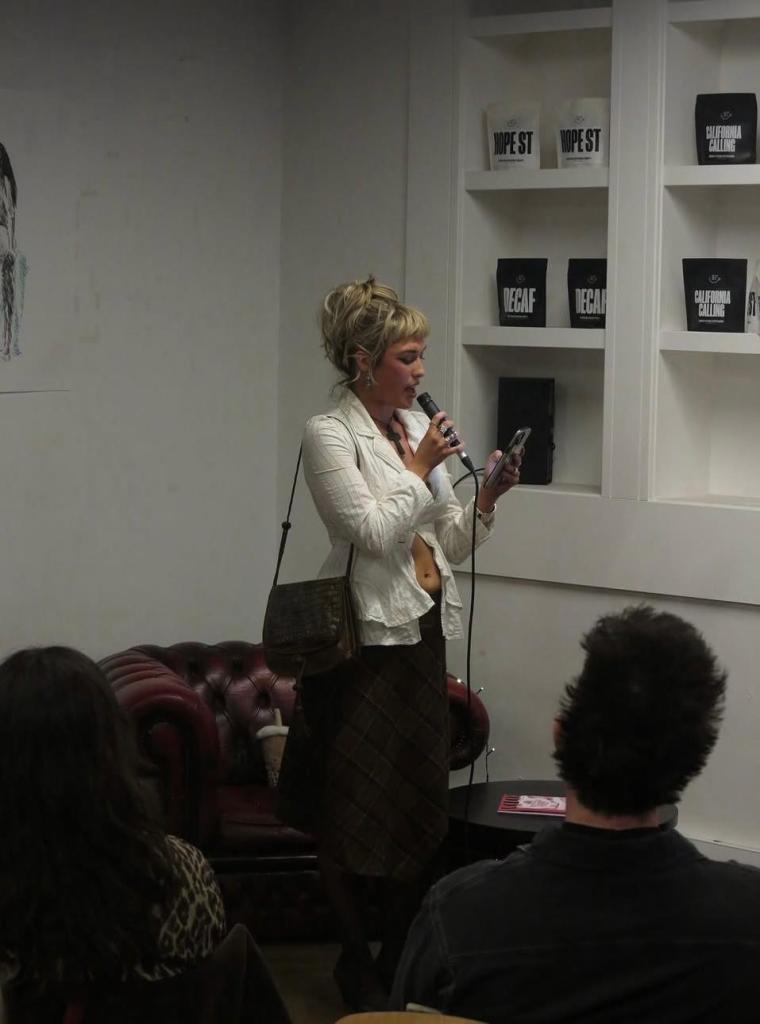
I previously interviewed Sophie on The Young Ones on the topic of young women in literature in Liverpool. On that note, Blood Orange is a queer feminist zine, with themes such as female rage, female friendships, and reclaiming the night. Their most recent publication was on the theme of Body, and both Sophie’s first publication and public poetry reading. I enjoyed my first interview with Sophie so much, and am so interested in the topic myself, that I wanted to revisit her on the occasion of her first publication. 

How did you approach the body brief?

‘I already had poems written. I had actually submitted to their female friendships theme but they didn’t publish it. But this next theme, body, I always write from the body about the body, and they published it. I always use themes of the grotesque…’

Is the female body inherently political to you?

“Yeah. Yes of course… Females have always been kind of looked at through their body and been put at a disadvantage for that. However, I don’t tend to always explore that in my writing. I explore the grotesque. Because I think women’s bodies are often expected to be held up as clean and sexy in a lot of media and I like to confront the abject and the grotesque in my writing. I like to beautify the ugly and uglify the beautiful. I confront the grotesqueness of my body while using very feminine and floral language. I use a lot of animal imagery, feminine colours, and stuff. Delicate things that represent femininity – it makes it a bit creepier I think, approaching the abject from a hyper-feminine angle.”

What was the reading like?

Well.. I mean I was terrified! And they forgot about me. There was a woman there, the creator of the magazine’s old tutor, and she went up and reminded her, so I was the closing act which was daunting for my first ever reading.. However by the end of it I was a little bit tipsy so that helped! I felt empowered- I got a nice cheer from all my friends, and I felt proud of my writing. I just had a feeling that it would be something people resonated with. It gave me confidence knowing that I could read my work with a northern accent. I speak a little bit drab. All my vowels are quite… What’s the word… flat?

(Sophie is from the North-East, with a Mackem accent.)

Final Question… What’s your favourite line from your poem?

Oooh! Dirty screw. May pole spine

For a deeper discussion on women in literature, I encourage you to revisit our broadcast on young women in literature where I originally interviewed Sophie on her book club, available below (Interview begins at 27:58).

You can find Sophie’s work on @dreamboatsophie on instagram and her book club at @tonguesofstone. You can find Blood Orange Zine and their upcoming summer zine at https://bloodorangezine.com/

Sorry, dire wolves are still extinct.

Rufus Self

Could Jurassic Park become a reality?

Colossal Biosciences recently announced that they’ve brought an extinct species back to life. The animal in question is the dire wolf – recently famous from Game of Thrones. According to the company, three pups named Romulus, Remus, and Khaleesi mark the first successful de-extinction of a mammal.


It’s the kind of claim that grabs headlines, but it’s also not true.


I spoke with leading experts, Dr. Kayce Bell, Curator of Mammalogy at the Natural History Museum in Los Angeles, and Dr. Nick Rawlins, Director of the Otago Paleogenics Lab., University of Otago, New Zealand.


They were both clear: this is not a de-extinction. Not even close.

Picture credit: Colossal Biosciences, 2025

What Is a Dire Wolf Anyway?
Dire wolves evolved in North America about 250,000 years ago and went extinct 13,000 years ago. Bigger than modern grey wolves, they hunted Ice Age giants like mammoths and bison. But they weren’t just oversized wolves. “They’re equally related to jackals, coyotes, and wolves,” Dr. Bell told me. “They look similar due to convergent evolution, but genetically, they’re distinct.”


So, what have colossal actually done?
Colossal sequenced the dire wolf genome from fossil samples and compared it to that of modern grey wolves. They then used CRISPR gene-editing tools (think molecular scissors) to tweak 14 genes across 20 sites in a grey wolf embryo, said Dr.Rawlins – That’s 20 changes out of roughly 12.5 million differences between the species.
Some of the traits they targeted included body size, coat colour, and muzzle shape, even though as Dr. Bell pointed out, we don’t actually know what colour dire wolves were.
So is there even any dire wolf DNA in these pups?
“no”, said Dr. Bell, “they used the information that they got from the direwolf genome, but they just modified gray wolf genes.


So should we be calling them Dire wolves?

“no – they’re designer grey wolfs with a few dire wolf like characteristics”

Dr. Rawlins

Why does it matter what we call them?
Pretending that this is “de-extinction” undermines conservation efforts. If people think we can just bring animals back with tech, the incentive to protect what we still have disappears.


“Who cares if the white rhino goes extinct when we can just bring it back?” Dr. Bell said. “But we can’t. We’re not bringing anything back. We’re creating something else entirely.”
Worse, Colossal’s claim has been picked up by politicians who are already hostile to conservation. “A week after the story broke, Trump-aligned figures were talking about removing animals from the endangered species list,” Dr. Rawlins told me. “Their argument was: why protect them if we can just de-extinct them later?”


But of course, we can’t. Extinction, unfortunately, is forever.


Catch up with the full story on Politics in motion.

The Intersection of Politics and Music: Sam Fender’s new album,’ People Watching’

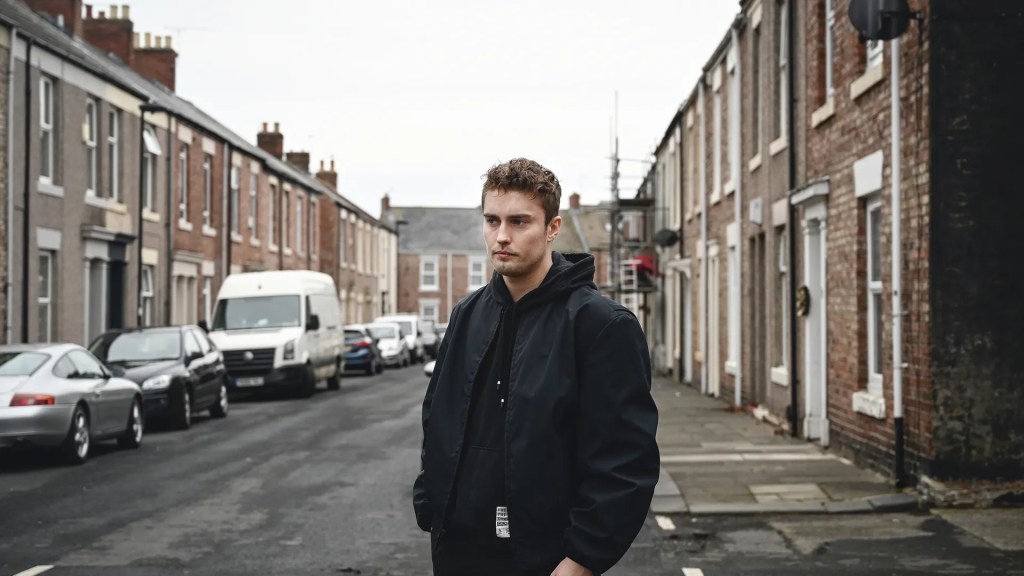
(Photo: Mary Turner/The New York Times)

By Nick Gillingham

27th March 2025

It is just over a month on from the release of Sam Fender’s latest album, People Watching. Fender, through his use of social commentary and political observations, has cemented his legacy as one of the UK’s most impactful musical voices in the 21st century. In an age where the intersection of politics and music has become less popular, Fender has managed to find great success in sharing his views through music. In the title track, People Watching, Fender recalls his visits to a care home to see Annie Orwin, who he described to the BBC as “a surrogate mother in a lot of ways”.

“Promised her I’d get her out of the care home

The place was fallin’ to bits

Understaffed and overruled by callous hands

The poor nurse was around the clock

And the beauty of youth had left my breaking heart”

This clear criticism of the NHS and those responsible for the ‘Crumbling Empire’, another of his tracks on the album, isn’t a new approach by Fender but a continuation of similar themes he has sung about in previous albums. Songs such as ‘Poundshop Kardashians’, ‘Hypersonic Missiles’ and ‘Play God’, to name a few, are heavily political, singing about a multitude of issues, even referring to Donald Trump as an ‘orange-faced baby at the wheel of the ship’ in ‘Poundshop Kardashians’.

While other artists like Dave and Stormzy use music as a medium to air their political views, Fender stands alone in the modern, mainstream political rock arena. We would have to look back as far as Bob Dylan and John Lennon, whose protest songs became anthems for the civil rights and anti-war movements, to find the last to fill that particular niche.

But it isn’t his willingness to air his political views through his music which sets Fender apart from other musicians in the modern day; it’s his rawness and authenticity. Fender often builds his lyrics on the tough reality of growing up in a broken, working-class family, with many of his childhood friends and the UK population alike sharing similar experiences. Fender also happily crosses the stigmatic borders of mental health through his songs like ‘Dead Boys’ and ‘The Dying Light’, which many strugglers resonate with and feel empowered to speak on, following in the footsteps of their favourite artist.  In an interview aired on Liverpool Politics Hour, I asked Dr Mike Jones, previously of the band Latin Quarter, about the power of music and the impact of lyrics in songs:

“It resonates across and through us because it sparks so many different forms of symbolic communication. But the point is what we remember are the words…we’re all isolated individuals, and when you hear some words which connect with how you’re feeling, then we absorb them, they become reference points for us.”

Jones feels strongly about the significance of lyrics, and it helps explain the reasons for Fender’s success. Despite the heavy usage of his melodies in TV adverts, Fender has come under criticism for ‘imitating’ the sound of Bruce Springsteen’s works. Fender has admitted in interviews that he grew up listening to Springsteen and is an artist who heavily inspired him. Although many point out similarities between the two, it is the frequent use of a saxophone, an instrument that seems to have become synonymous with the city of Newcastle over the years, that makes Fender’s melodies unique. His use of a saxophone, intertwined with his relatability and vulnerability has set him aside and led to three successive number-one albums in the UK, with ‘People Watching’ becoming the latest.

You can listen to the interview with Dr Mike Jones below:

Adolescence: The Show That’s Finally Got Britain Talking

watching netflix
Credit to www.quotecatalog.com

By Sam Oliver-Rainbird

26th March 2025

Conversations about misogyny are uncomfortable. Conversations about violence against women are uncomfortable. Conversations about accountability are uncomfortable. What is most uncomfortable are the rising statistics surrounding gender-based violence and sexism. 

A 2022 NASUWT poll revealed that 72% of female teachers have experienced misogyny in their schools, and nearly 60% of such behaviour came from students.

Globally, WHO estimates that around 1 in 3 women have been subjected to either physical and/or sexual intimate partner violence or non-partner sexual violence in their lifetime. 

We need to talk about this.

Failure to engage in these conversations is the difference between active bystanding and passive observing. We fail as a society when we do not embrace this growing threat. We endanger those around us by sitting idly by and letting this behaviour and culture grow. What must we do to tackle this crisis?

The hit Netflix show Adolescence is a start. Currently the most streamed title in both the UK and US, the mini-series has already hit Parliament, with the show’s writers invited to discuss online safety with MPs. 

This was the plan from the start.

Adolescence’s Stephen Graham on the show’s impact – to open up conversations of accountability

Writer Jack Thorne goes one step further, advocating for a smartphone sale ban on under-16s in a bid to mitigate exposure to harmful online content. One watch of the show and you will soon see why. In four episodes, Adolescence carefully navigates the rise of incel culture amongst young males, a subculture in which misogynistic views circulate in an echo chamber, known as the ‘manosphere’. Ideological frustration towards women is not only facilitated, but championed and bred across social media – validating such views. Often this frustration spills out into tragedy, executing such a belief through violence. It is this same fate that the show’s 13-year-old lead follows. 

At fifteen, young actor Owen Cooper’s portrayal of Jamie Miller has rightfully taken the plaudits, his performance a harrowingly accurate take on modern-day misogyny. As the main suspect in the murder case of his classmate Katie, the series explores how online influences, adult aggression, and education system failings all contributed to his motives. The unfortunate answer is that we all could have done more. We all failed Jamie, and more significantly we failed Katie. 

How can we avoid this? How can we build a better society for our young men and women to stop the radicalisation of boys and violence against girls?

Let’s listen to Stephen Graham. Let’s listen to Jack Thorne. Let’s get talking. 

More talk means calling our peers out on their behaviour. Questioning their actions. Questioning our own.

“Maybe, we are all accountable – in some way, shape or form” – Stephen Graham

Accountability leads to self-reflection, and self-reflection might just combat toxic masculinity. 

As PM Keir Starmer has discussed with former England men’s coach Gareth Southgate, there is an urgent need for more male role models – those in our communities, as well as in the public eye. We can challenge generational misogyny through embracing such positive masculinity, combined with legislation on greater social media regulation. Schools must also tackle these social issues at the youngest possible age. 

But this all begins with a conversation.

This article expands upon a panel discussion on this week’s The Young Ones’ Politics Hour episode. Catch the full show here.

Islamophobia: The Perfect Cover for a Racist

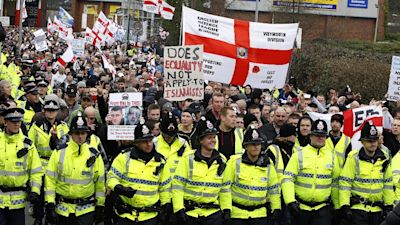
Police accompany an English Defence League march in Hyde, Greater Manchester. Credit: PA

By Wali Khan

26th March 2025

In the 21st century racism is no longer trendy; unfortunately for racists, it is now socially condemned. Despite this, the impulse to hate remains, and the racists have evolved. They target a specific group of people, crafting a narrative of threat. However, the cover story is never about ‘race’. It is about ideology. The modus operandi remains the same: smear, demonise, ostracise, while violence simmers beneath the surface. They will insist they are not those racists of the past – oh no, those monsters directly committed or contributed to horrific acts like genocide, apartheid and enslavement. Despite their misdirection, it is not difficult to see the truth when looking for it: hate cloaked in a disguise of righteousness. 

Although it may be intertwined with certain biological traits, race is not simply an objective biological reality; it is a product of our societal constructs. In the immediate aftermath of 9/11, Frank Roque murdered Balbir Singh Sodhi, an Indian-American Sikh man – mistaking him for an Arab Muslim. Sikhs and Arabs share a similar phenotype. That of a brown person, this is further exacerbated when it is a brown man with a head covering and a beard. Post 9/11, this phenotype has been demonised, linked with acts of terrorism, and turned into a race of its own. Unfortunately for Balbir Singh Sodi, he matched this description and fell victim to an Islamophobic attack despite not being a Muslim. This horrific act, and countless others like it, exposes the deep-seated racism in Islamophobia. To deny the racist underpinning of Islamophobia is to be wilfully ignorant or completely disingenuous.

In an interview last year, Sky News presenter Kay Burley suggested that former Prime Minister Rishi Sunak’s ethnicity, rather than his government’s policies or actions, somehow disprove accusations of Islamophobia within the government. Rishi Sunak is, in fact, not a Muslim, so on the surface level, Burley’s comments seem entirely nonsensical. However, in reality, they expose their true sentiments: if you are a brown man, you are considered Muslim. Again, this highlights the ridiculous nature of any arguments attempting to suggest Islamophobia has nothing to do with race. Whether intentional or not, her remarks underscore a dangerous issue: the tendency to downplay or ignore Islamophobia in society, branding it as a legitimate criticism of ideology. All while brushing the deep-rooted racism under the rug. Furthermore, Kay Burley’s reference to Sunak’s ethnicity as a defence against Islamophobia echoes a familiar pattern of tokenisation, a lazy attempt to dismiss criticism by pointing to the presence of an ethnic minority in a position of power.

More alarmingly, Islamophobic rhetoric is becoming increasingly normalised in British politics with the likes of Nigel Farage and the Reform party. Last year former Conservative MP Lee Anderson claimed that “Islamists” control Sadiq Khan, the Muslim Mayor of London. Islamists are fundamentalists who aim to establish a political system based on Sharia law. This accusation ignores Khan’s record of liberal values, for which he has received numerous death threats from actual islamists. The language used by Anderson, and the support he received from fellow MPs shows a deliberate refusal to distinguish between the majority of Muslims and radical Islamists. Islam itself is being framed as a threat.

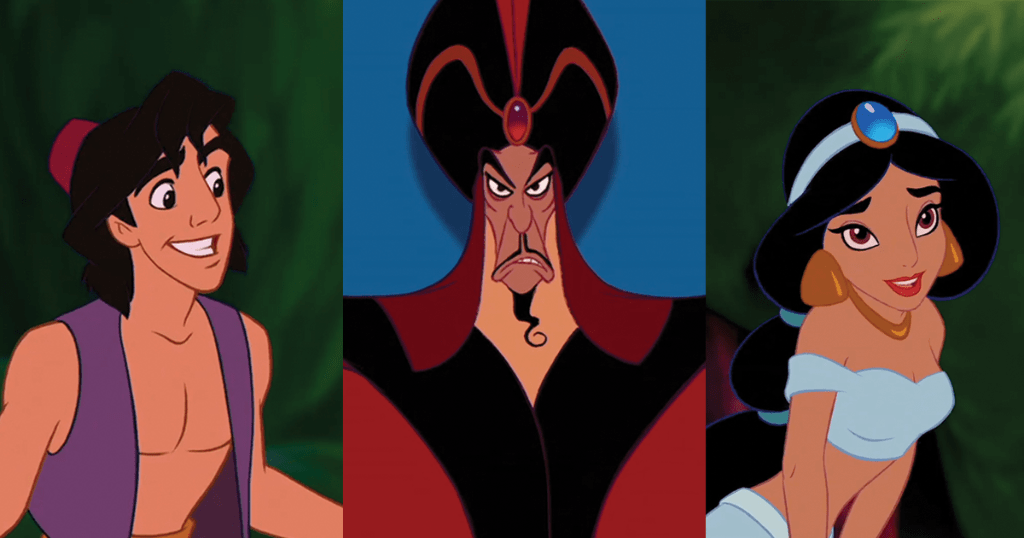
I spoke to Belal Stitan, a media graduate from the London School of Economics, about how Islamophobia is embedded in the media we consume, even in children’s films. He pointed to Aladdin as a clear example. In the film, the heroes like Aladdin and Jasmine are portrayed with more Eurocentric features and speak with American accents, while villains like Jafar have darker skin, exaggerated facial features, and thick, foreign-sounding accents.

Belal explained that this kind of visual and vocal coding sends a powerful message to young viewers: characters who look and sound “Western” are good and trustworthy, while those who don’t are suspicious, dangerous, or evil. It’s a subtle but deeply harmful form of programming that teaches children to associate eurocentricism with goodness and anything else with threat or barbarism.

Aladdin, Jafar, and Jasmine from left to right in Disney’s Aladdin

Growing Islamophobia is extremely dangerous for Muslims in the UK and all around the world, especially in such a polarised climate. in 2024 anti-Muslim assaults surged by 73%. The leaders of this country need to do more to protect this minority group. Muslims in the UK have been demonised for decades culminating in last year’s Southport riots. More broadly this language of hate and fear has manufactured consent for the murders of tens of thousands of Palestinians in 2024. 

In this week’s episode of the Young Ones Politics Hour I conducted a detailed analysis on Islamophobia with insights from an Islamophobia expert, a former member of parliament and a British-Palestinian activist. You can listen to the special feature now at Liverpool Politics Hour on Spotify.

Featured

From the Sydney Jones to Westminster: Honey Barlow Marshall

Honey Barlow Marshall, University of Liverpool Philosophy, Politics and Economics student

By Wali Khan

13th March 2025

Many of us, especially those passionate about politics, dream of making a real impact on the country we live in. But very few of us actually get the opportunity to do so. Honey Barlow Marshall, a University of Liverpool PPE student, wasn’t willing to wait for an opportunity to come to her. Instead, at just 14 years old, she took matters into her own hands and immersed herself in the world of local politics.

Informed political participation is the backbone of a functioning democracy. Historically, many philosophers, including Socrates and Plato criticised democracy, arguing that the general public lacked the knowledge to make sound political decisions. The idea that politics should be reserved for an elite few still lingers today, but young people like Honey prove otherwise. By encouraging youth involvement, we cultivate a generation capable of making informed decisions about their future, challenging the notion that only “Philosopher Kings” are fit to govern.

Honey’s journey into politics began when she became Youth Officer for the Labour Party at just 14 years old. From there, she quickly rose through the ranks, becoming Chair of her constituency and later Secretary, all while navigating the skepticism and resistance that came with being a young woman in leadership.

Moving 200 miles away from her home in Lyme Regis for university, Honey didn’t leave her work behind. While balancing her academic studies, she continued campaigning, engaging in community work, and pushing for political change. In the most recent general election, her dedication was recognised when she was selected as a candidate for her local constituency under the Labour Party. Although she declined due to university commitments, it was a testament to the years of hard work she had already put in.

A surge in youth political participation brings fresh perspectives to government, challenging outdated norms and making policymaking more inclusive. In the 2024 general election, the House of Commons welcomed 10 MP’s from Gen Z. The same election also resulted in a record 263 female MP’s being elected, making up 40.5% of Parliament.

This growing diversity means our political system is becoming more representative of society as a whole. After all, if decisions are made primarily by one demographic, they will naturally cater to that group’s experiences and needs, not necessarily out of malice, but out of familiarity. Bringing new voices into the conversation challenges long-standing biases and ensures a broader range of perspectives are considered in policy making.

On this week’s episode of The Young Ones Politics Hour, I sat down with Honey to discuss her time inside Parliament while on placement with Labour MP Richard Burgon. She shared how the experience transformed her view of politics and opened up about some fascinating encounters – including an interaction with Che Guevara’s daughter.

You can listen to the full interview now on Spotify at Liverpool Politics Hour!

The Royal Marines Commando at our University: Sebastian O’Callaghan

Sebastian O’Callaghan, University of Liverpool Economics Society President

By Wali Khan

6th March 2025

Imagine being 17 years old and instead of hearing that your whole life is ahead of you, you’re told your future is over before it even begins. That was the reality for Sebastian O’Callaghan. Not particularly academically motivated, he achieved four U grades in his first-year mock exams. His college supervisors didn’t see potential, they saw failure. At just 17, he was asked to leave. So, he did.

Many young people are in this same position. Traditional academia isn’t designed for everyone, yet every student is forced to fit within its rigid framework. Too often, young people are convinced that struggling in school means they’re incapable of success. Sure, we’ve all heard of the billionaire entrepreneurs who were poor students but went on to change the world. But for every one of those success stories, there are thousands of others who are left behind, drained into mediocrity by a system that doesn’t recognise their potential.

At the end of 2023, 16.4% of 16-18-year-olds were not in education or training. That number is a wake-up call. We need to have serious conversations about why our education system is failing so many young people. But if you’re in that position right now, Seb’s journey should serve as proof that your story isn’t over. Not even close.

Fast forward to today: Seb is studying economics at the University of Liverpool, averaging a first in his degree. He’s also the President of the Economics Society and is on track for a promising career in finance. But his road to success was anything but easy.

Between dropping out of college and starting university, Seb struggled with depression and a loss of identity. Searching for purpose, he set his sights on one of the toughest challenges out there – the Royal Marines. The odds weren’t in his favor. It’s estimated that out of 26,000 applicants each year, only 400 successfully complete training.

And then there were the doubters, including his own father. But Seb was determined. He endured the grueling training, proved everyone wrong, and earned the coveted Green Beret, becoming a Royal Marines Commando. In our interview, he shared what that experience meant to him. The same student who was told he wasn’t good enough for college had proved to himself that he was more than capable. He just needed to be in the right environment to thrive.

While deployed with the Marines, Seb didn’t stop pushing himself. He self-taught three A-levels and secured an offer to study economics at the University of Liverpool, all despite having only four GCSEs and no predicted A-level grades. That level of determination is difficult to measure by exam scores.

At university, he didn’t just study economics, he became a leader. In our interview, he talked about running for President of the Economics Society and shared some of his campaign tactics.

“Well, I think if anyone read my manifesto, it included a bit of humour… I also made sure to discredit some of the other candidates.”

– Sebastian O’Callaghan

Seb’s story is a testament to resilience and self-belief. If you’ve ever doubted yourself because of academic struggles, let this be your reminder: your potential isn’t defined by a school report card.

For the full conversation, tune into the Liverpool Politics Hour on Spotify and hear Seb talk about his journey, his time in the Marines, and what it really takes to turn things around.

Haysam Shakeel: Dismantling the South Asian Footballing Stereotype

By Wali Khan

19th February 2025

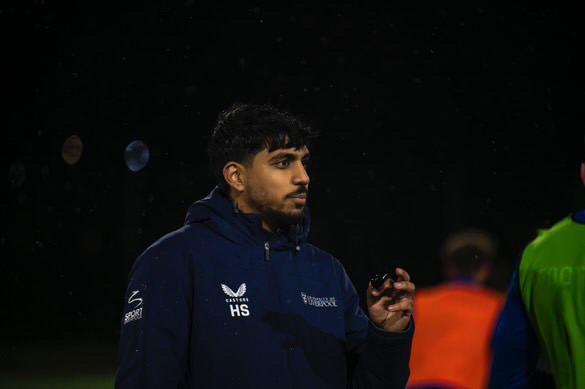
Haysam Shakeel, University of Liverpool FC first team head coach

How many South Asians are in the top five leagues of football? If you struggled to name any, it’s because there are none. Out of a population of almost 2 billion, not a single South Asian currently plays or coaches at the highest level of European football. In the UK, where South Asians make up over 3.4 million of the population, only 22 are in the professional game, just 0.25% of the total number of professional footballers.

This begs the question: why?

For years, the narrative has been that South Asians simply aren’t interested in football. But this argument falls apart when you consider that football is one of the most popular sports across the Indian subcontinent and within British South Asian communities. A recent survey from Sport England showed more than twice as many British South Asian adults played football compared to cricket. So, if the passion exists, why aren’t South Asians making it to the professional level? 

This is what I discussed with Haysam Shakeel, a South Asian football coach determined to break through the barriers.

Haysam’s coaching journey began at Manchester City’s academy in Abu Dhabi, where he gained invaluable experience working alongside top-level coaches. When he moved to Manchester, he continued his association with the club, further refining his coaching philosophy. Now, while pursuing a Philosophy degree at the University of Liverpool, he has taken on a significant role as the head coach of the university’s men’s first team, a rare achievement for someone so young.

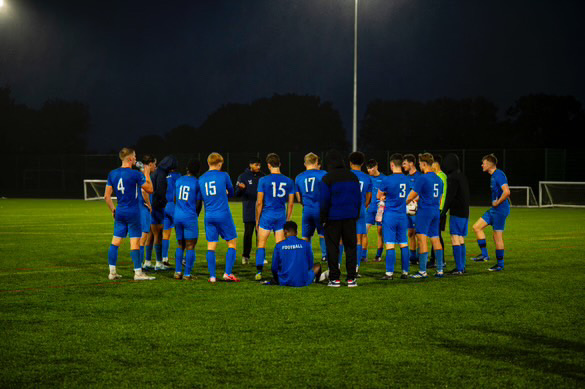
University of Liverpool First Team

We spoke about the challenges of stepping into such a high responsibility position at a young age. Managing players who are the same age as him, and in the same stage of life, has created a unique dynamic, one that requires a careful balance of authority, leadership, and camaraderie. But that’s just one of many challenges he has faced in his coaching career.

Beyond his personal journey, Haysam also shared his ambitions for the future. He is committed to breaking institutional barriers that have long prevented South Asians from reaching the highest levels of football, both as players and coaches. Drawing on his own experiences, he offered valuable insights into the systemic reasons behind South Asian underrepresentation in the sport.

Through our conversation, he painted a clear picture of the struggles South Asian footballers and coaches encounter, from limited scouting opportunities and ingrained stereotypes to the lack of a clear pathway into elite-level coaching. But he also highlighted what can be done to change the narrative and ensure that the next generation of South Asian footballers and coaches have a fair shot at success.

I want to pave the way and give coaches who are under-represented a chance to express themselves, on and off the pitch

– Haysam Shakeel

You can listen to the full interview with Haysam on Spotify at Liverpool Politics Hour

Featured

“Back then, there was nothing else to do!” – DuoVision, Queer Communities and the Importance of Clubs in the 1990s

By Harry Ashcroft

11th February 2025

Gallery image by Rob Battersby, from OpenEye’s website

This week, I had the absolute honour of speaking to artistic duo Martin Green and James Lawler, known together as DuoVision. They currently have three ongoing exhibitions: Outlaws at the Fashion and Textile Museum in London, The Holly Johnson Story at the Museum of Liverpool, and the focus of my interview with them, For Your Pleasure: 15 Years of DuoVision at the OpenEye Gallery.

The exhibition uses photography and film to “reflect on and celebrate the fledgling queer club culture of the 90s in the UK”. Martin spoke to me about his past experiences as a DJ and running the London club Smashing in the 90s, as well as how he and James met and began creating exhibitions together. They felt that certain artists had been neglected, overlooked and gone out of fashion despite contributing to the UK’s cultural landscape, and for them, DuoVision was about showcasing these artists to an inter-generational audience.

“(Smashing) was a club for misfits… and a lot of gay misfits – but a lot of those misfits ended up having huge pop careers”

– Martin Green, one half of DuoVision

Gallery image by Rob Battersby, from OpenEye’s website

We discussed the cultural movements of the 90s and the ‘straightness’ of the arts compared to the preceding decades. Martin and James explained the devastating effect that the AIDS epidemic had on queer culture in the UK and the importance of clubs in providing connections and safe spaces for these marginalised communities.

“Combination therapy (for HIV) didn’t come in until 1995… the first part of the 1990s was still a difficult time – you still had a Tory government… (and) the antithesis to that – all those awful things – was going out and clubbing”

– James Lawler, one half of DuoVision

These marginalised and LGBTQ+ communities experienced prejudice from both the Conservative government and the mainstream culture and it was simultaneously fascinating, upsetting and hopeful to hear Martin and James recount these experiences combined with the other factors listed above.

Gallery image by Rob Battersby, from OpenEye’s website

We moved on to the methods of experiencing art and the way this has shifted with the advent of new technology. James touched on their method of printing large pictures to immerse audiences in the art, a practice that forces people to reflect and react to art together. I found the entire discussion extremely captivating, and I like to think James and Martin felt the same.

“(The 90s) get retold, and I wanted to tell it again but from my perspective, which was a kind of art school, underground, queer perspective”

– Martin Green

This article is an adapted version of a Politics in Motion radio interview. You can listen to the whole interview on Spotify and below.