Featured

“Back then, there was nothing else to do!” – DuoVision, Queer Communities and the Importance of Clubs in the 1990s

By Harry Ashcroft

11th February 2025

Gallery image by Rob Battersby, from OpenEye’s website

This week, I had the absolute honour of speaking to artistic duo Martin Green and James Lawler, known together as DuoVision. They currently have three ongoing exhibitions: Outlaws at the Fashion and Textile Museum in London, The Holly Johnson Story at the Museum of Liverpool, and the focus of my interview with them, For Your Pleasure: 15 Years of DuoVision at the OpenEye Gallery.

The exhibition uses photography and film to “reflect on and celebrate the fledgling queer club culture of the 90s in the UK”. Martin spoke to me about his past experiences as a DJ and running the London club Smashing in the 90s, as well as how he and James met and began creating exhibitions together. They felt that certain artists had been neglected, overlooked and gone out of fashion despite contributing to the UK’s cultural landscape, and for them, DuoVision was about showcasing these artists to an inter-generational audience.

“(Smashing) was a club for misfits… and a lot of gay misfits – but a lot of those misfits ended up having huge pop careers”

– Martin Green, one half of DuoVision

Gallery image by Rob Battersby, from OpenEye’s website

We discussed the cultural movements of the 90s and the ‘straightness’ of the arts compared to the preceding decades. Martin and James explained the devastating effect that the AIDS epidemic had on queer culture in the UK and the importance of clubs in providing connections and safe spaces for these marginalised communities.

“Combination therapy (for HIV) didn’t come in until 1995… the first part of the 1990s was still a difficult time – you still had a Tory government… (and) the antithesis to that – all those awful things – was going out and clubbing”

– James Lawler, one half of DuoVision

These marginalised and LGBTQ+ communities experienced prejudice from both the Conservative government and the mainstream culture and it was simultaneously fascinating, upsetting and hopeful to hear Martin and James recount these experiences combined with the other factors listed above.

Gallery image by Rob Battersby, from OpenEye’s website

We moved on to the methods of experiencing art and the way this has shifted with the advent of new technology. James touched on their method of printing large pictures to immerse audiences in the art, a practice that forces people to reflect and react to art together. I found the entire discussion extremely captivating, and I like to think James and Martin felt the same.

“(The 90s) get retold, and I wanted to tell it again but from my perspective, which was a kind of art school, underground, queer perspective”

– Martin Green

This article is an adapted version of a Politics in Motion radio interview. You can listen to the whole interview on Spotify and below.
Is this Britain’s Most Eccentric Pub Landlord?

By Harry Ashcroft

November 28, 2024

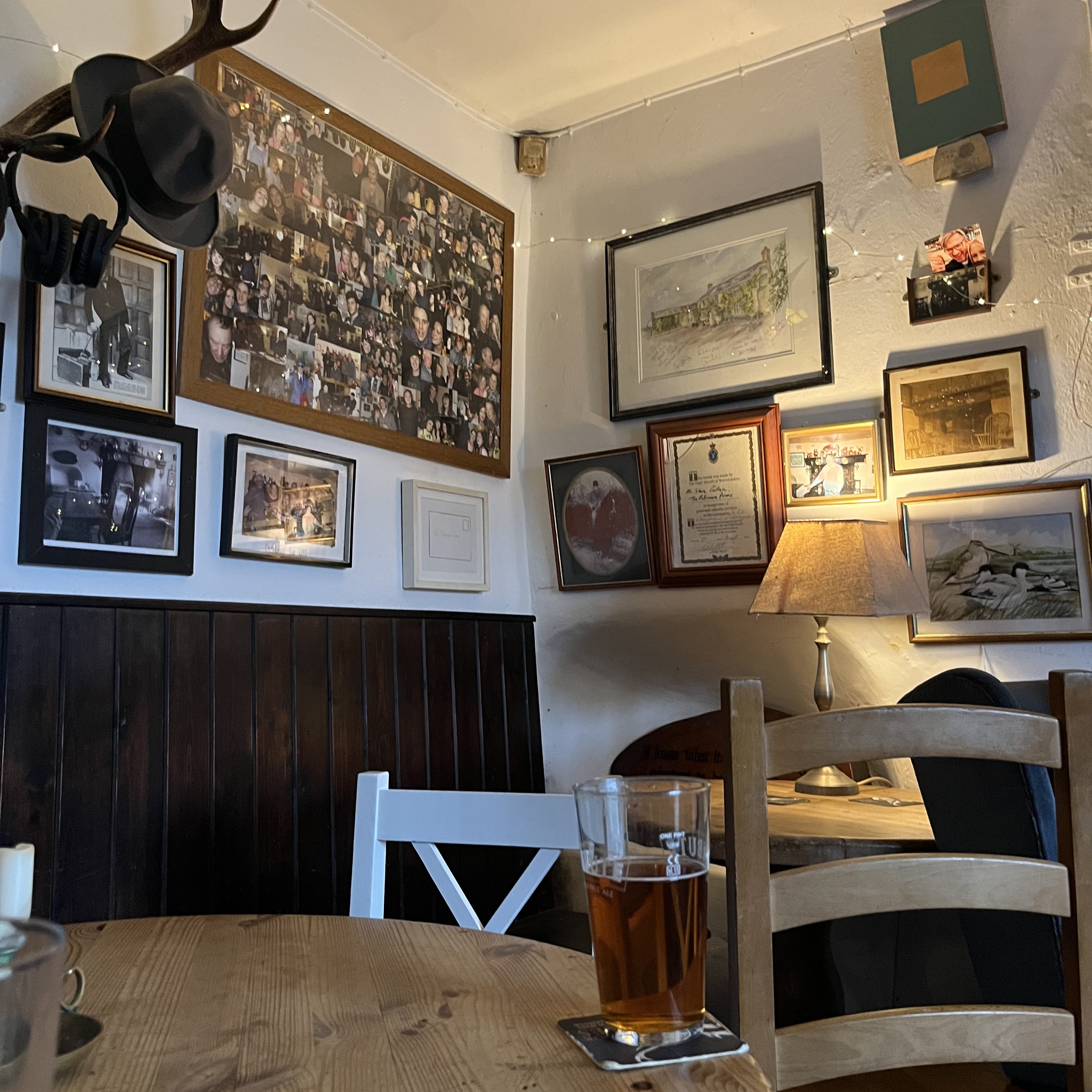
The cosy interior of the Politimore Arms, featuring a pint of the only draught drink they have, an Exeter Ale. Note also the candle on the left-hand side.

Last month I made the six-hour, England-splitting semi-circular drive from Liverpool down to North Devon to celebrate my Grandma’s 80th birthday. On the second afternoon there, as a group of us traversed the narrow country lanes, a glowing sight welcomed us in from the bleak and windy Exmoor hills. A humble and simple exterior that didn’t accurately show off the storied saga waiting for us inside.

“Whatever it takes, we don’t care. The pub is never going to shut.”

— Steve Cotten, Landlord of the Poltimore Arms

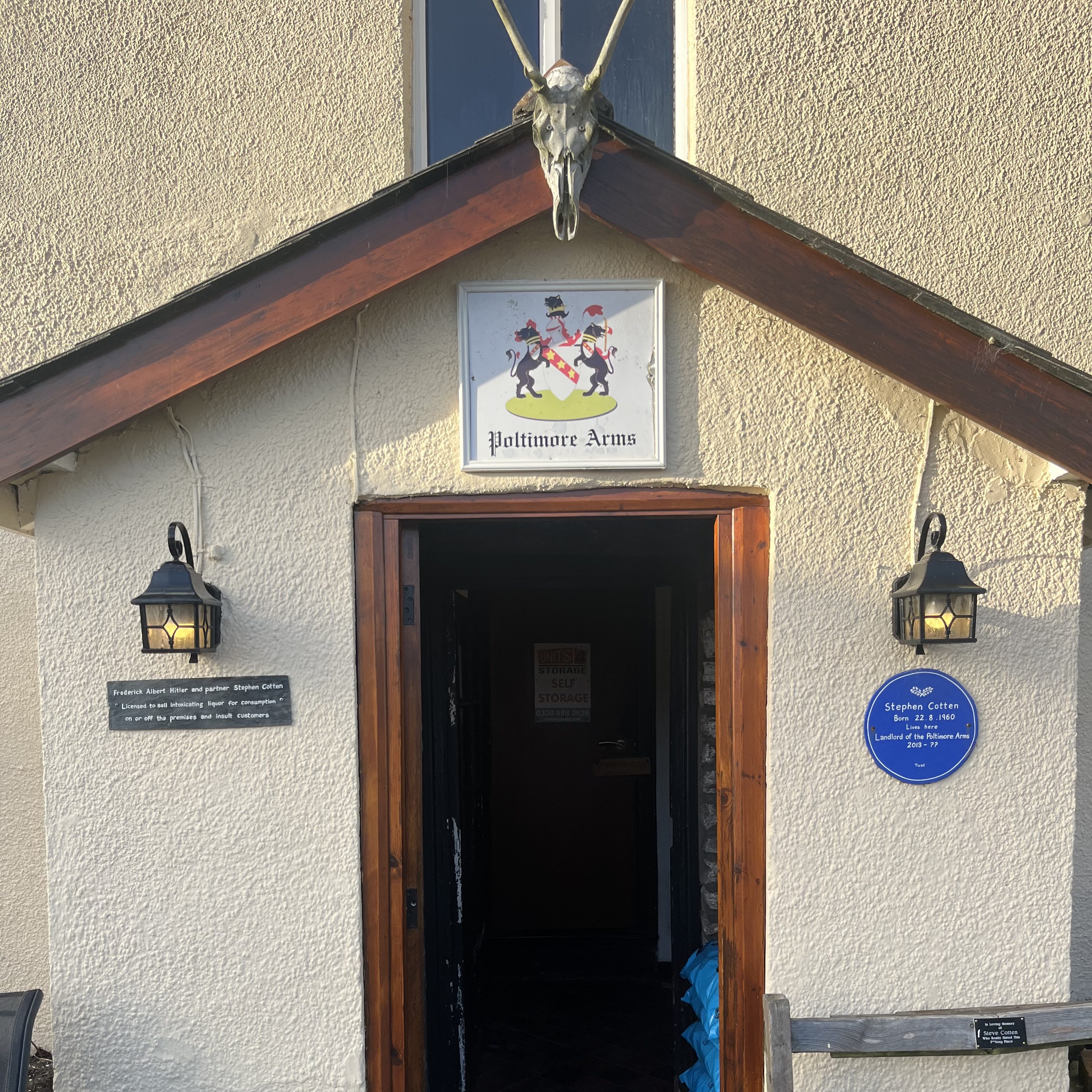
The humble yet inviting exterior of the pub. The sign on the left reads “Frederick Albert Hitler and partner Stephen Cotten. Licensed to sell intoxicating liquor for consumption on or off the premises and insult customers.” The late Fred Hitler was Steve’s old cat.

The Poltimore Arms is unlike any pub I’ve ever been in. Firmly cash only, completely off the grid and run by candles, solar panels and water from the spring up the hill. Its most notable aspect, however, is its landlord, who, much to my surprise, is already quite famous, as Britain’s Grumpiest Landlord.

Steve Cotten and his pub have been featured in major news outlets across Britain over the last few years. He is a man full of tales and anecdotes of the last decade of running the Poltimore Arms.

I asked if he would sit down and talk to me about how he runs the pub and what makes it so unique, as well as his political involvement as a parliamentary candidate for North Devon in the last two general elections. He was more than happy to oblige and the next day I returned, where before I had even begun conducting the interview he had begun working the audience of pub dwellers that consisted mainly of my extended family. Steve loves an audience.

The Interview

“My only business plan – Don’t do what the other pubs do because they’re all f***ing failing.”

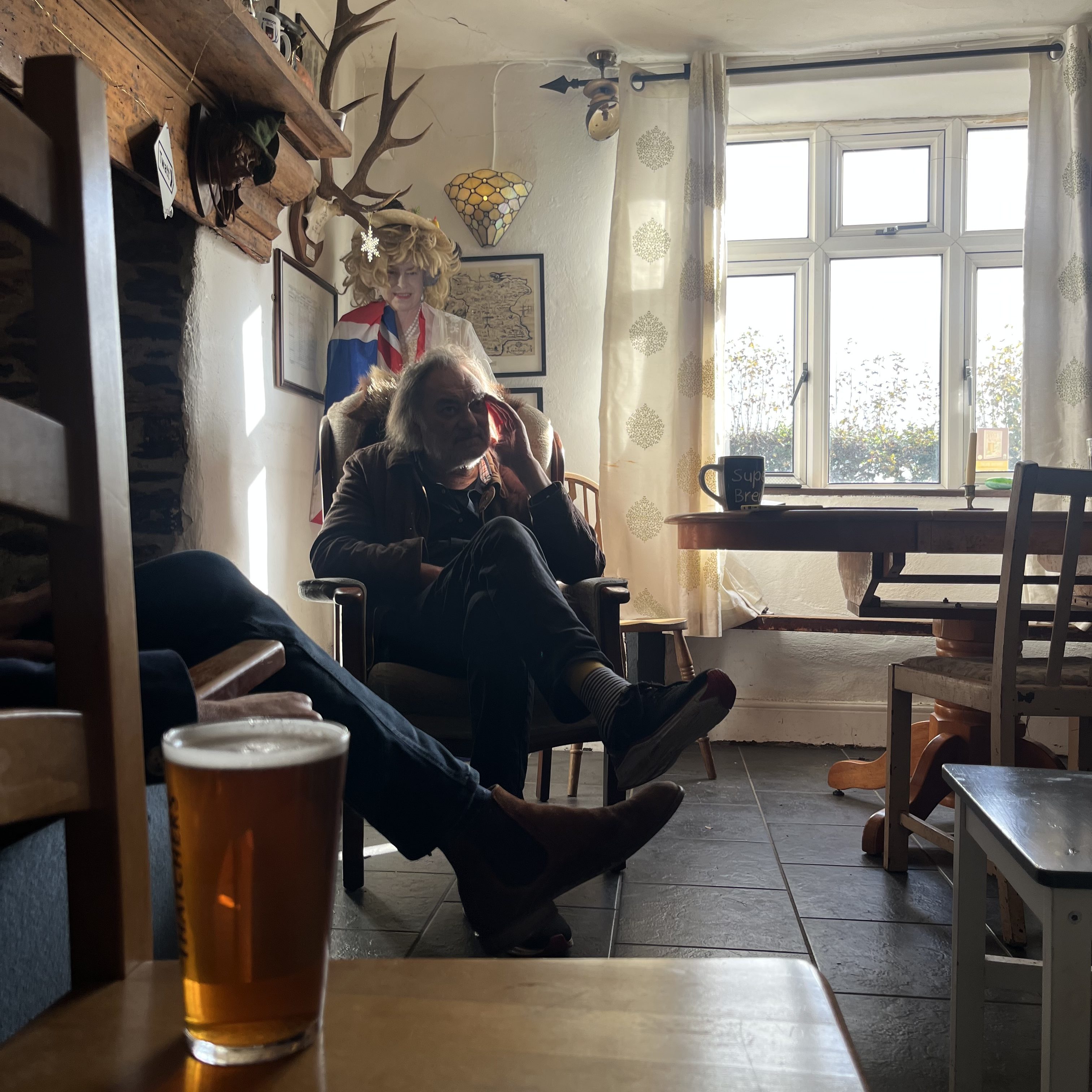
Steve in his chair surrounded by tea, tobacco and day drinkers.

Steve was invested in the interview. He informed me of his disappointment that I hadn’t brought a camera crew with me as he had “spent all morning” combing his hair. As it was only 2pm he was sat in his usual seat by the fire with a cup of tea. The rest of us in the pub had chosen to indulge in that day’s keg of Exeter Ale, self-poured so that we couldn’t “go on TripAdvisor and say the service was rude.” This created what I would call Steve’s “optimum storytelling atmosphere.”

We covered a lot of ground.

Steve explained how the pub is completely off-grid. The water comes from a spring two miles up the hill. When they run into water supply-related issues (a fairly often occurrence apparently), he puts a post on the pub’s Facebook page and the next day wakes up with five-gallon drums of water sitting outside, dropped off by local farmers. The electricity in the pub is supplied by newly set up solar panels.

“I don’t do food… Well, my barmaid cooks stuff on a Thursday night, but you wouldn’t want to eat that. I mean it really is diabolical.”

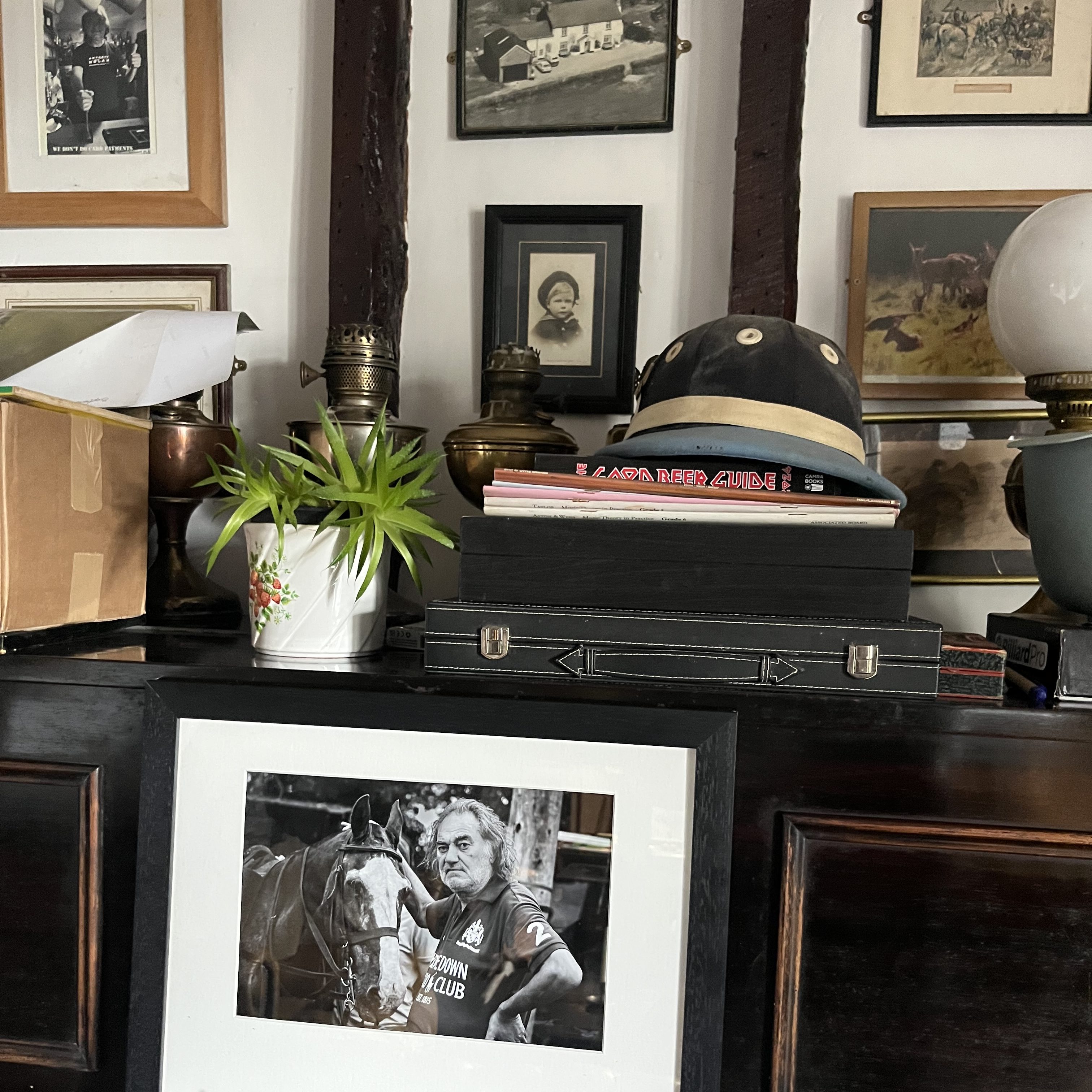
Steve explained how he had learnt to ride a horse to impress a woman who lived down the road, a Times art critic. This then led to the Poltimore Arms creating the countries only Pub Polo team. Despite being legally blind, Steve is apparently quite the polo player.

What really struck me, besides Steve’s constant jokes and his supposed parliamentary candidacy core policy of “free hair colouring on the National Health Service” for “the most oppressed minority in the world – ginger people,” was the true sense of community spirit that enveloped the foundations of the pub.

“It’s just p***heads basically, it’s all about the community working together.”

He explained how when elderly people in the community are sick or need help, the pub will ensure someone goes around to cut their grass or do their shopping. He says it’s all about looking after each other. To me, this is why the pub is so successful. Despite being in the middle of nowhere with not even a village connected to it, the sense of companionship is overwhelming. This is what makes places like this so vital in rural communities.

This article is an adapted version of a Politics in Motion radio special feature. You can listen to it, as well as my whole interview with Steve, on Spotify.