Featured

From the Sydney Jones to Westminster: Honey Barlow Marshall

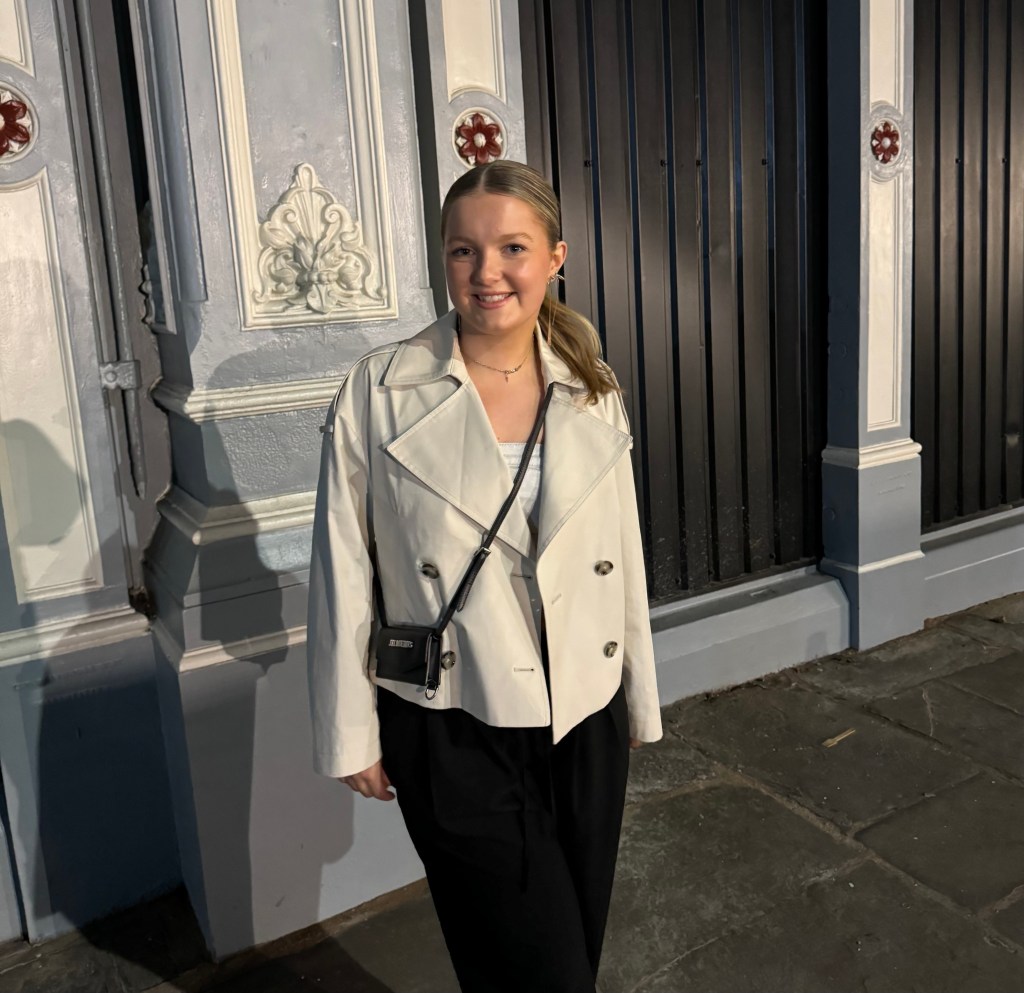
Honey Barlow Marshall, University of Liverpool Philosophy, Politics and Economics student

By Wali Khan

13th March 2025

Many of us, especially those passionate about politics, dream of making a real impact on the country we live in. But very few of us actually get the opportunity to do so. Honey Barlow Marshall, a University of Liverpool PPE student, wasn’t willing to wait for an opportunity to come to her. Instead, at just 14 years old, she took matters into her own hands and immersed herself in the world of local politics.

Informed political participation is the backbone of a functioning democracy. Historically, many philosophers, including Socrates and Plato criticised democracy, arguing that the general public lacked the knowledge to make sound political decisions. The idea that politics should be reserved for an elite few still lingers today, but young people like Honey prove otherwise. By encouraging youth involvement, we cultivate a generation capable of making informed decisions about their future, challenging the notion that only “Philosopher Kings” are fit to govern.

Honey’s journey into politics began when she became Youth Officer for the Labour Party at just 14 years old. From there, she quickly rose through the ranks, becoming Chair of her constituency and later Secretary, all while navigating the skepticism and resistance that came with being a young woman in leadership.

Moving 200 miles away from her home in Lyme Regis for university, Honey didn’t leave her work behind. While balancing her academic studies, she continued campaigning, engaging in community work, and pushing for political change. In the most recent general election, her dedication was recognised when she was selected as a candidate for her local constituency under the Labour Party. Although she declined due to university commitments, it was a testament to the years of hard work she had already put in.

A surge in youth political participation brings fresh perspectives to government, challenging outdated norms and making policymaking more inclusive. In the 2024 general election, the House of Commons welcomed 10 MP’s from Gen Z. The same election also resulted in a record 263 female MP’s being elected, making up 40.5% of Parliament.

This growing diversity means our political system is becoming more representative of society as a whole. After all, if decisions are made primarily by one demographic, they will naturally cater to that group’s experiences and needs, not necessarily out of malice, but out of familiarity. Bringing new voices into the conversation challenges long-standing biases and ensures a broader range of perspectives are considered in policy making.

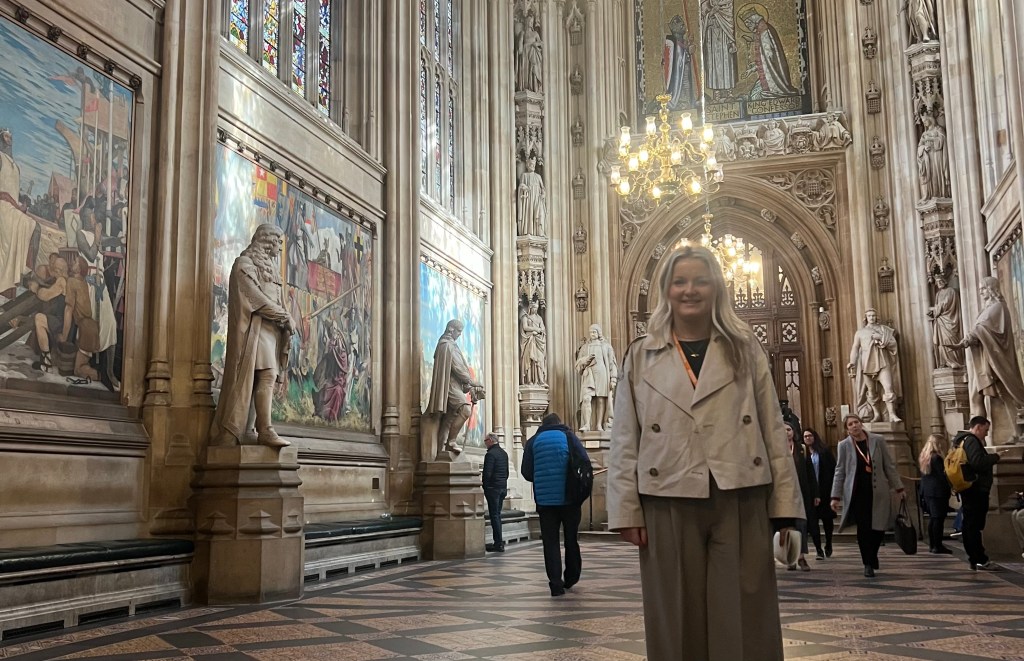
On this week’s episode of The Young Ones Politics Hour, I sat down with Honey to discuss her time inside Parliament while on placement with Labour MP Richard Burgon. She shared how the experience transformed her view of politics and opened up about some fascinating encounters – including an interaction with Che Guevara’s daughter.
You can listen to the full interview now on Spotify at Liverpool Politics Hour!
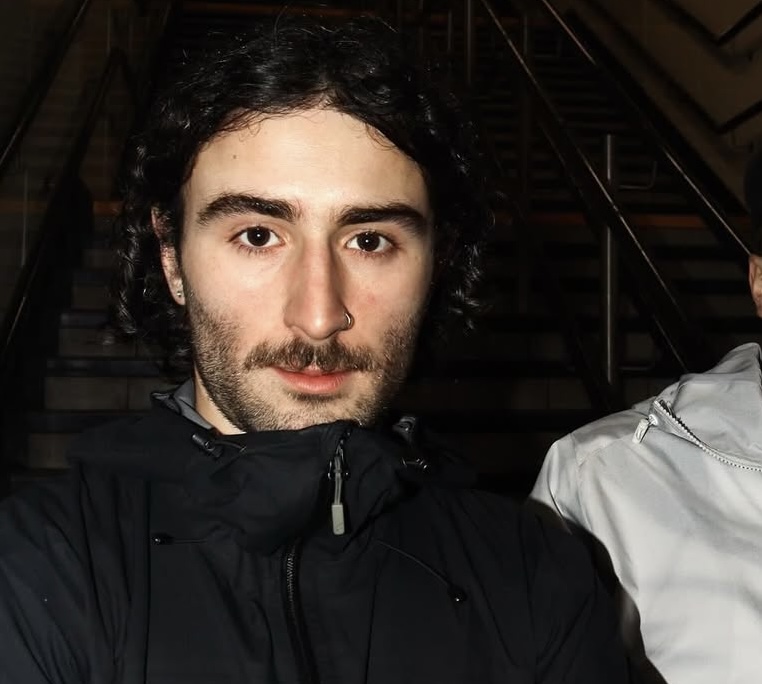

The Royal Marines Commando at our University: Sebastian O’Callaghan

Sebastian O’Callaghan, University of Liverpool Economics Society President

By Wali Khan

6th March 2025

Imagine being 17 years old and instead of hearing that your whole life is ahead of you, you’re told your future is over before it even begins. That was the reality for Sebastian O’Callaghan. Not particularly academically motivated, he achieved four U grades in his first-year mock exams. His college supervisors didn’t see potential, they saw failure. At just 17, he was asked to leave. So, he did.

Many young people are in this same position. Traditional academia isn’t designed for everyone, yet every student is forced to fit within its rigid framework. Too often, young people are convinced that struggling in school means they’re incapable of success. Sure, we’ve all heard of the billionaire entrepreneurs who were poor students but went on to change the world. But for every one of those success stories, there are thousands of others who are left behind, drained into mediocrity by a system that doesn’t recognise their potential.

At the end of 2023, 16.4% of 16-18-year-olds were not in education or training. That number is a wake-up call. We need to have serious conversations about why our education system is failing so many young people. But if you’re in that position right now, Seb’s journey should serve as proof that your story isn’t over. Not even close.

Fast forward to today: Seb is studying economics at the University of Liverpool, averaging a first in his degree. He’s also the President of the Economics Society and is on track for a promising career in finance. But his road to success was anything but easy.

Between dropping out of college and starting university, Seb struggled with depression and a loss of identity. Searching for purpose, he set his sights on one of the toughest challenges out there – the Royal Marines. The odds weren’t in his favor. It’s estimated that out of 26,000 applicants each year, only 400 successfully complete training.

And then there were the doubters, including his own father. But Seb was determined. He endured the grueling training, proved everyone wrong, and earned the coveted Green Beret, becoming a Royal Marines Commando. In our interview, he shared what that experience meant to him. The same student who was told he wasn’t good enough for college had proved to himself that he was more than capable. He just needed to be in the right environment to thrive.

While deployed with the Marines, Seb didn’t stop pushing himself. He self-taught three A-levels and secured an offer to study economics at the University of Liverpool, all despite having only four GCSEs and no predicted A-level grades. That level of determination is difficult to measure by exam scores.

At university, he didn’t just study economics, he became a leader. In our interview, he talked about running for President of the Economics Society and shared some of his campaign tactics.

“Well, I think if anyone read my manifesto, it included a bit of humour… I also made sure to discredit some of the other candidates.”

– Sebastian O’Callaghan

Seb’s story is a testament to resilience and self-belief. If you’ve ever doubted yourself because of academic struggles, let this be your reminder: your potential isn’t defined by a school report card.

For the full conversation, tune into the Liverpool Politics Hour on Spotify and hear Seb talk about his journey, his time in the Marines, and what it really takes to turn things around.

Haysam Shakeel: Dismantling the South Asian Footballing Stereotype

By Wali Khan

19th February 2025

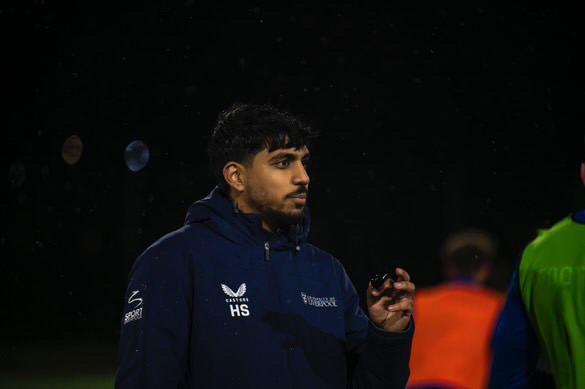
Haysam Shakeel, University of Liverpool FC first team head coach

How many South Asians are in the top five leagues of football? If you struggled to name any, it’s because there are none. Out of a population of almost 2 billion, not a single South Asian currently plays or coaches at the highest level of European football. In the UK, where South Asians make up over 3.4 million of the population, only 22 are in the professional game, just 0.25% of the total number of professional footballers.

This begs the question: why?

For years, the narrative has been that South Asians simply aren’t interested in football. But this argument falls apart when you consider that football is one of the most popular sports across the Indian subcontinent and within British South Asian communities. A recent survey from Sport England showed more than twice as many British South Asian adults played football compared to cricket. So, if the passion exists, why aren’t South Asians making it to the professional level? 

This is what I discussed with Haysam Shakeel, a South Asian football coach determined to break through the barriers.

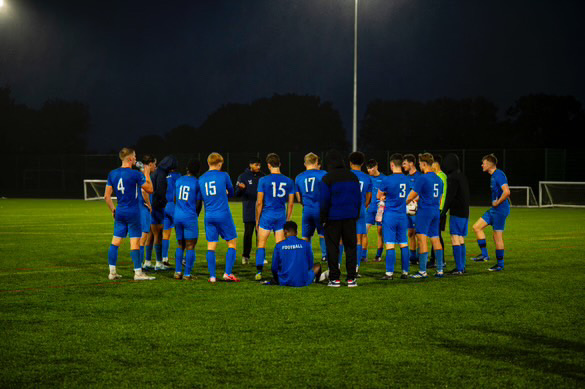
Haysam’s coaching journey began at Manchester City’s academy in Abu Dhabi, where he gained invaluable experience working alongside top-level coaches. When he moved to Manchester, he continued his association with the club, further refining his coaching philosophy. Now, while pursuing a Philosophy degree at the University of Liverpool, he has taken on a significant role as the head coach of the university’s men’s first team, a rare achievement for someone so young.

University of Liverpool First Team

We spoke about the challenges of stepping into such a high responsibility position at a young age. Managing players who are the same age as him, and in the same stage of life, has created a unique dynamic, one that requires a careful balance of authority, leadership, and camaraderie. But that’s just one of many challenges he has faced in his coaching career.

Beyond his personal journey, Haysam also shared his ambitions for the future. He is committed to breaking institutional barriers that have long prevented South Asians from reaching the highest levels of football, both as players and coaches. Drawing on his own experiences, he offered valuable insights into the systemic reasons behind South Asian underrepresentation in the sport.

Through our conversation, he painted a clear picture of the struggles South Asian footballers and coaches encounter, from limited scouting opportunities and ingrained stereotypes to the lack of a clear pathway into elite-level coaching. But he also highlighted what can be done to change the narrative and ensure that the next generation of South Asian footballers and coaches have a fair shot at success.

I want to pave the way and give coaches who are under-represented a chance to express themselves, on and off the pitch

– Haysam Shakeel

You can listen to the full interview with Haysam on Spotify at Liverpool Politics Hour