TikTok: Is it time to clock out of the app?

14th March 2022

Written by Ffion Brighton

Sometimes all you can be bothered to do is stare at your tiny screen and scroll for hours on end. When you have an app that gives you a constant stream of indulgent content, why would you spend your time on anything else?

For the past 4 years, TikTok has become a staple form of social media for young people. It’s seen as such an attractive pastime that many people feel themselves constantly reaching for their phones instead of dealing with the effort of day-to-day tasks.

“TikTok makes me procrastinate a lot. I’ll postpone things I need to do and take way longer breaks as I think I’ll be on the app for only a few minutes, but I’ve actually been on it for half an hour.”

Ebony, Liverpool

What makes this app so addictive? Does constantly consuming quick-paced content decrease young people’s attention span? What can be done to break the habit of relying on your phone for entertainment? These questions were answered in a recent interview with the wonderful Professor Peter Kinderman, a clinical psychologist and professor at the University of Liverpool.

So, what makes this app so addictive?

“I’d say TikTok has shortened my attention span to some degree. It feels like nowadays if something doesn’t draw attention within like ten seconds, then you think ‘oh never mind’ and move on”

Richie, Liverpool

Professor Kinderman explained how the app is designed for you to be a consumer, and the payment is your attention. The algorithm is created to maintain your attention by feeding you catered content, making you want to scroll constantly. In his words, it’s like going to Morrisons and seeing a 2-for-1 offer on a packet of crisps. You may have gone to the shop intending to buy only the necessities, but now your attention is drawn to the deal. Ultimately, you feel compelled to consume something you crave rather than what you actually need.

This is just like what TikTok does. Maybe you went on your phone to reply to a message from your mate, but now you find yourself on the app, scrolling for hours because you’re getting more entertainment than you bargained for.

Is TikTok decreasing our attention spans?

When asking the public about their experience with the app, the majority felt they used it as a mode of procrastination

“It really does affect my productivity and getting out of bed, things like that. I could stay glued to the screen for hours and hours and hours.”

Brooke, Northern Ireland

Personally, I can relate to this. When a massive assignment is due, sometimes it can be so overwhelming that I feel drawn to the app instead of working on the important task. It made me wonder: Is the app actively decreasing our attention spans?

Professor Kinderman doesn’t think that’s the case. For generations, young people have been known for finding it difficult to pay attention for long periods of time. It is not a matter of our attention spans decreasing, but rather that we now have an app that is formatted to be attractive to those with low attention spans.

The prefrontal cortex doesn’t fully develop until the age of 25. This area of the brain assists us in self-discipline, impulse control, and postponing immediate gratification. This means that anyone under 25 will typically be drawn to TikTok and struggle to put their phone down.

Kinderman doesn’t think it’s the fault of the user, but rather the developer of the app. It is designed to keep your attention, and with young people’s prefrontal cortex not being fully developed, it is difficult to resist the urge to stop scrolling. Those who created the app know this and make money on the fact that they can hold your attention for hours on end.

In what ways can you stop becoming addicted to the app?
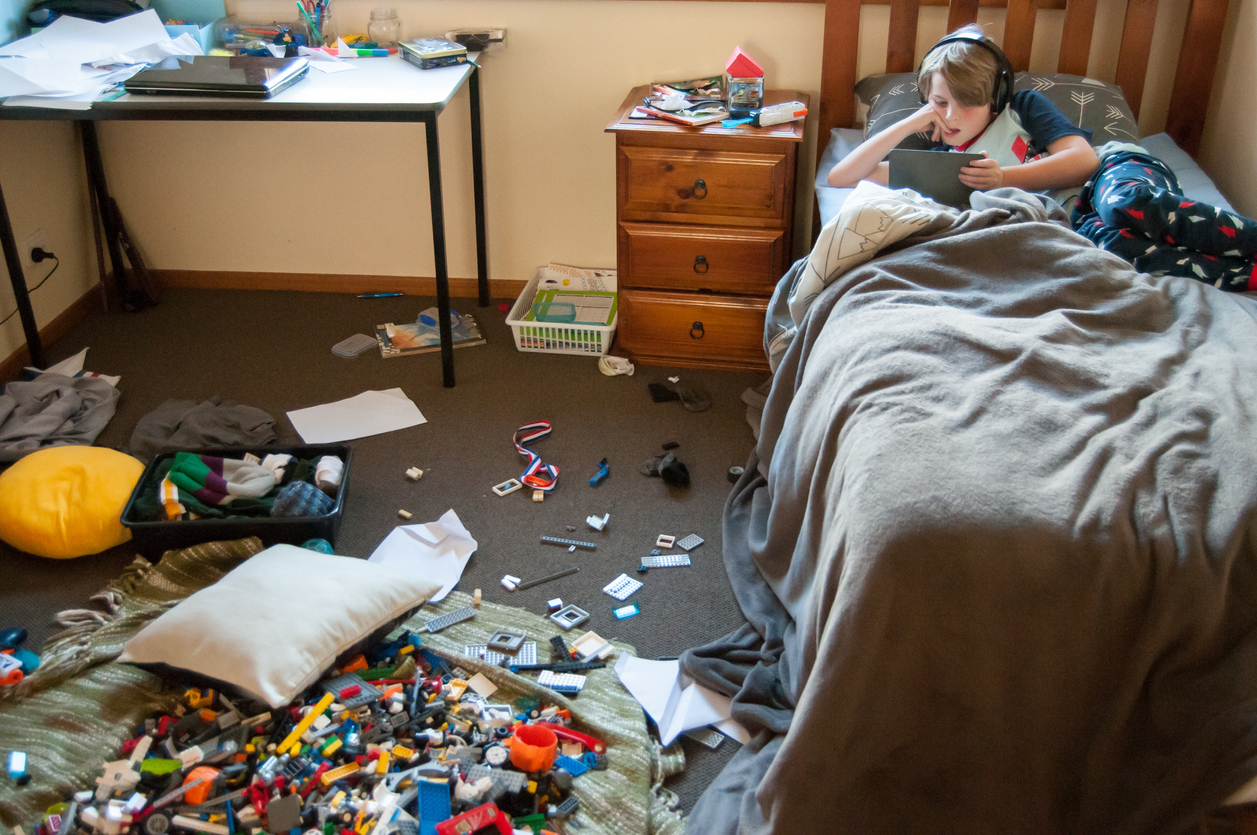
Kinderman suggests finding a process that works for you. He found that having his desk facing the window gave him enough distraction to actually focus on the work at hand. Crucially, you want to make the decision; only you have the control to want to make a change.

Deciding to better your life is a conscious choice, and thus with TikTok, it entails setting limits on ourselves. A great way to do this is to have timers on the app to limit your usage. It is also important to have a conversation with yourself about whether you are going on the app for actual enjoyment, or rather to distract yourself from the things in life that you are avoiding.

The Round-Up

Ultimately, TikTok has the potential to be addictive. It takes advantage of the fact that its users want the content they like on a continuous scroll. Its ‘For You’ page is literally designed just FOR YOU! However, listening and speaking to Prof Kinderman has made me more aware of the fact that it doesn’t have to be an app you can’t detach yourself from. And it goes without saying, the app has some terrific features. It is incredible for introducing people to new information and connecting them with others across the globe.

But, if you find yourself glued to the app, I think we both know it may be time to clock out.

Want to find out more? Head over to the Liverpool Politics Hour on Spotify, where you can listen to my interview with Peter Kinderman and get a greater insight into what makes TikTok so addictive to young people.
The BAFTAs and Oscars 2020: Diversity and Environmental Concerns, with Dr Niamh Thornton

by Toby Lawson

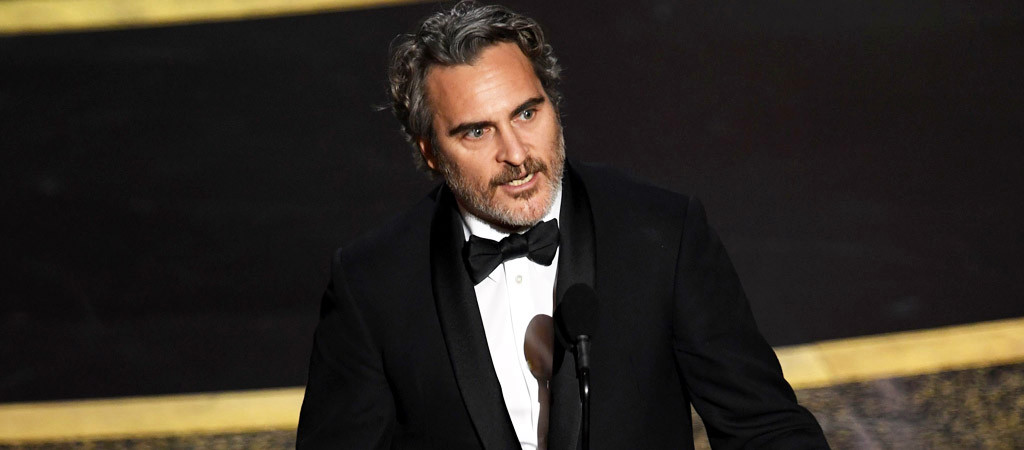
This year’s BAFTAs and Oscars, the two biggest film award ceremonies here in the UK and in America, were surrounded by discussions of diversity and environmental activism. The events were marred in controversy in respect to the lack of diversity their awards seemed to showcase, with many shocked that 2020 events seemed like a step in the wrong direction. At the BAFTAs not a single person of colour was nominated in any of the acting categories, with the Oscars only nominating one, Cynthia Eviro in her role in Harriet (2019). In respect to female diversity, there was not a single female director nominated at either event, with many feeling Greta Gerwig and her film Little Women (2019) was snubbed at the events. Indignation at these decisions were highlighted even in the events outfits, with Natalie Portman sporting a cape at the Oscars emblazoned with the names of overlooked female directors such as Gerwig. Ultimately, as host Graham Norton pointed out ironically, this became the year ‘white men broke through’, symbolised through the 11 nominations for the film Joker (2019), which Norton joked was the story where ‘a white man made himself whiter’. Joaquin Phoenix, star of Joker, was not happy to just accept this success, bringing attention in his BAFTAs victory speech to point out that these events ‘send a very clear message to people that you’re not welcome here’ when referring to the lack of diversity (https://www.theguardian.com/film/2020/feb/02/joaquin-phoenixs-attack-on-baftas-for-systemic-racism-meets-industry-wide-praise).

To try understand the issues the lack of diversity entails, I spoke to Dr Niamh Thornton, a Reader in Latin American studies in the University of Liverpool’s Film Studies department. When asking her about the importance of diversity, she said that despite these film ceremonies at first just representing a trade show, their popularity has meant it become more about a representation of ‘who do we privilege and what do we value, and also who do we value and whose stories get valued’ in the film industry. She linked this then to visual representation, the idea that ‘If you can’t see it you can’t be it’, with awards piled on films centred around white, male stories sending a clear message to those different that their story is not as valuable and that you are not part of the ‘cultured conversation’ in film. Dr Thornton argued this culture needed to adapt beyond solely films made by white people, featuring white people from ‘the west’ and instead to create and then include stories in this culture that feature more women as well as those from areas that are usually overlooked, such as Africa, crediting the work of filmmakers such as Geena Davis and Ava DuVernay in pushing these ideas. The awards however did not just send out negative messages, with the surprise win of Parasite (2019) as first non-English best picture and its director Bong Joon-Ho as winner of best director at the Oscars represented a shift at the awards. Dr Thornton highlighted how Parasite’s success showcased how the Oscars ‘have really changed the make-up’ of the panels who decide winners, incorporating more globalist inclusivity to their decision making.

As well as diversity issues, the events saw unprecedented levels of focus on environmental issues, especially climate change and single use plastics. The events promised this year to reduce waste and energy use as much as possible, with the BAFTAs taking measures such as banning single use plastics, using a recycled red carpet, introducing vegan meals, replacing the goodie bag with a ‘gifting wallet’ made of recycled plastic and encouraging guests to reuse or buy sustainable outfits. Best Actor winner at both events Joaquin Phoenix also brought attention to the importance of his diet, Veganism. An obscure diet as of several years ago, its has surged in popularity in recent years, especially in respect to the prevalence of climate change. On what was probably the high-profile endorsement of Veganism, Phoenix dedicated his Oscars acceptance speech to it, lamenting how humans ‘go into the natural world and we plunder it for its resources. We feel entitled to artificially inseminate a cow and steal her baby, even though her cries of anguish are unmistakeable’ (https://www.theguardian.com/film/2020/feb/10/joaquin-phoenixs-oscars-speech-in-full).

When talking to Dr Thornton about this new emphasis on environmentalism, I asked how the film industry can endorse such claims whilst also being a huge contributor to carbon emissions. The film industry requires huge amounts of energy through extensive air travel, in filming, lighting, special effects and the vast crews they require to be produced. The film ceremonies themselves were places Dr Thornton thought were ‘a really good place to have the conversation and provoke the conversation’ around these issues in bringing wider prevalence to these ideas, not in necessarily changing anyone’s minds but making them think about what Veganism and Climate Change. In terms of their resource use, Dr Thornton thought the Dogme-95 rules of film making, in advocating for less special effects and more natural lighting although not intended to combat energy use, might become useful as a precedent in the future for films having an energy ‘ten commandments’ when filming to in order to reduce their carbon footprint in respect to climate change. When financially backed by governments or national organisations in the UK, films are already subject certain guidelines concerning their carbon footprint and Dr Thornton would not be surprised if in the future, with the increasing seriousness of climate change these will have to be thought about ‘differently or more thoroughly’ than they are currently.

This year’s film events certainly left a lot to discuss and thank you to Dr Niamh Thornton for taking the time out to talk to me about these issues. This was only a brief overview of our discussion and our full interview can be found here https://soundcloud.com/thepoliticshour2018/week-3-uk-show. For further discussion around these events Dr Thornton has written an article focusing on how Jennifer Lopez was overlooked at this year’s events and the wider significance this has concerning diversity https://reframe.sussex.ac.uk/mediatico/2020/02/03/so-why-hasnt-j-lo-been-nominated-for-any-of-the-big-film-industry-awards/.

What does the future hold for Jeremy and Joe? – Coffee with Kilfoyle (Part two)

This is the second half of an interview conducted by Liverpool Student Radio Politics hour team member Alisha Lewis in 2018 with former Liverpool Labour MP, Peter Kilfoyle. It was conducted as part of a discussion on the past, present, and future of the Liverpool Labour Party – which you can listen to here: https://soundcloud.com/thepoliticshour2018/uk-politics-hour-week-8

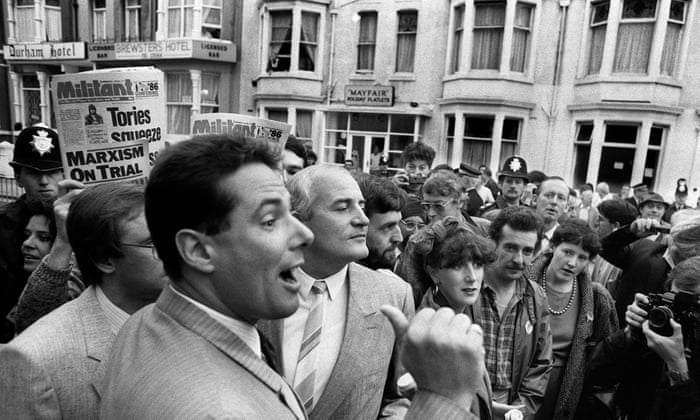
Former Labour minister Peter Kilfoyle earned the nickname “Witchfinder General” in the 1980s, as the party’s enforcer in the battle against Liverpool’s Derek Hatton lead Militant council.

In this half of the interview Alisha and Peter discuss the future of the Labour party, in Liverpool and beyond. Will Jeremy Corbyn make it to No. 10? Can Mayor Joe Anderson cling on for another term as Mayor of Liverpool? Could you be the next Labour leader?

The first half of the interview, which discusses Militant, Momentum, and the state of Liverpool Labour politics in 2018 can be found here.

Photo credit: Liverpool Express

Looking at the possibility of an early general election that always seems to be looming over us – Do you think that the Labour Party has a chance of getting into power, and Jeremy Corbyn into No. 10?

They’ve always got a chance. I’ve known Jeremy [Corbyn] for thirty years, over thirty years, and I find him a likeable enough bloke – but if I’d have still been there I’d have never nominated him, and I wouldn’t have voted for him. He doesn’t have the attributes that you need to be in that leadership position. It requires a degree, for example, of ruthlessness in dealing with people who are not producing the goods and are letting the side down. In some ways Jeremy’s too nice  a bloke, has a very consistent kind of guy. What he believes in I’m sure he believed in back in the 70s – I know he did.

But you’ve got to be adaptable, you’ve got to be flexible, that doesn’t mean you abandon your core beliefs or your values – I wouldn’t expect anybody to do that. But you need some personal skills that I am yet to see in Jeremy. One of the things that bothers me is not so much Jeremy, I’m like many people who are bothered by some of the people he’s surrounding himself with. I was no more impressed by some of the people that other leaders have surrounded themselves with. I always saw Mandelson as a dangerous individual.

But Jeremy’s people, No, they don’t seem to be up to it. Having said all of that, I acknowledge two things; Firstly that he was the duly elected leader, twice in fact, and secondly that it is up to people to do their best for the Labour Party regardless to keep it on track.

Thinking a bit more locally, and looking at Joe Anderson, we’ve got the mayorals…

Oh, not Joe Anderson, do I have to look at him?

Do your best – We’ve got the Mayoral selections coming up next year, do you think there’s a real chance he could get reselected?

I think there’s a good, there’s a chance, but whether he will or not is another matter. That’s down to people in the [Labour] Party, and all the signs are that people have seen through this charade – I mean there’s an awful lot of the [Donald] Trump in Joe Anderson. Not only the arrogance, and the lack of respect for other people in the way he conducts himself, but in the blatant untruths which he has put out about what is happening in the city. At long last I’m happy to say that people are starting to wake up, or have woken up, to all of this.

If that’s translated into meaningful action when we come to the reselection process will depend on a couple of things. It depends upon a viable alternative candidate, and what you don’t want is more of the same, that would be a nightmare. The other thing is, plainly and simply, people getting themselves organised behind that alternative candidate. Hopefully that will happen, and hopefully I think the young people in the city have got a major role to play here.

If nothing else they have a different take on what’s needed in the city, many of the students who come to the city come from other parts of the country where hopefully they’ve seen far better practice and bring with them a positivity which is often lacking in the city itself.

As somebody with an extensive and colourful history in Labour Politics in Liverpool, what advice would you give to somebody starting out in the Labour movement?

I wouldn’t advise them to go onto the council, it’s a very very different organisational structure now. It used to be that you could be influential and have your say, and have a positive input, from anywhere in the group – that seems to be lacking now.

Because of this elected mayor with all these blinking powers it gives the impression that the rest [of the Labour group] are just there to trudge the streets and give out a few leaflets – do as you’re told and that’s it. They [The Labour group] just aren’t part of the policymaking. I mean, I don’t see any policy, I don’t see any accountability, I don’t see any transparency. To see that would require the council to exercise their muscle.

Very often well meaning people go onto the council, and they end up, in order to get a position or to fulfill whatever their ambitions are, they play the game – they get sucked in. It is very hard to stay outside of that.

I’m just very cynical about local councils because, if I can take you back a bit in history, because I go back a bit in history. Following the Redcliff-Maud changes to local government, they separated the district Labour Party from the trade unions, the trades council, they became very separate entities. They started to pay councillors, and councillors then saw the option to get a few quid if they were unemployed or if they were pensioners.

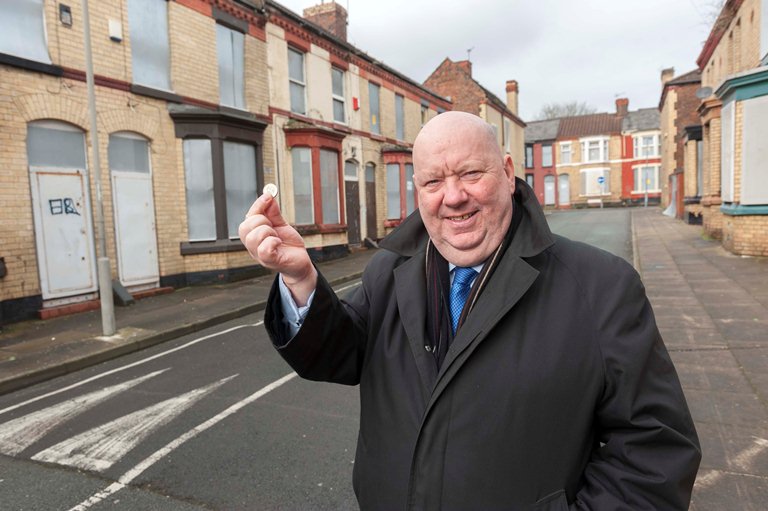
They started to meet during the day, rather than in the evenings, which reinforced the tendency for councillors to be unemployed people or pensioners. Although I can say I’m an unemployed pensioner myself, we do not represent the bulk of people in this city. I think that was a bad step, and we’ve ended up now in this position where we’ve got an absolute waste of space as an elected mayor, who is getting an extraordinary amount of money. He’s dragging the city in this direction and that, with money being lost and wasted all over the place.

What remaining policies I thought we had over things like green spaces are being lost, alienating hitherto solid voters, you couldn’t get anybody creating more mayhem. I daresay at one time he would never ever have got near to the leadership.

Taking a step back from the Labour Party, if you were the leader of the opposition group on Liverpool City council today where would you be looking to take the city?

Two words. Two words. Transparency, and accountability. I mean, in practical terms what does that mean? I would want to get rid of the elected mayor. Not because I’m against it per say, I’ve seen it work very effectively in America, but because in this city it has been a failed adventure. Maybe there will be a time for it to return in the future, although, now that we have an elected metro mayor I don’t think that that will be the case.

But, I do believe that if I was in the position that you hypothesise I would certainly want to see a more traditional leader and council kind of arrangement set up. It would introduce, I believe, more accountability. It is not a perfect solution but hopefully it would bring a lot more transparency than we get at the moment.


Is this the return of Militant in Liverpool? – Coffee with Kilfoyle (Part one)

This is the first half of an interview conducted by Liverpool Student Radio Politics hour team member Alisha Lewis in 2018 with former Liverpool Labour MP, Peter Kilfoyle. It was conducted as part of a discussion on the past, present, and future of the Liverpool Labour Party – which you can listen to here: https://soundcloud.com/thepoliticshour2018/uk-politics-hour-week-8

Former Labour minister Peter Kilfoyle earned the nickname “Witchfinder General” in the 1980s, as the party’s enforcer in the battle against Liverpool’s Derek Hatton lead Militant council.

In this half of the interview, Alisha and Peter discuss the state of Liverpool Labour politics, responding to news of a new wave of deselections and the rise of Momentum candidates, which some have claimed is the start of a new militant era for the city.

Photo credit: BBC

What would you say the state of politics in the city of Liverpool is like today?

I think what you’ve got now is, in my lifetime, the third cycle of corruption in local politics on a real scale, which is very sad because I often wonder whether it is down to ineptitude on behalf of the current incumbents or whether it’s down to deliberate maleficence on their part.

The reality remains is that everybody suffers. Students suffer. I mean there’s that unfinished project, for example, between London road and Lord Nelson street alongside Lime Street Station. There are students actually living in there, and yet I’m satisfied that the place isn’t fit for human habitation.

It encapsulates everything that is wrong [with politics in Liverpool] because contractors and subcontractors that were building the thing were ripped off, investors were ripped off, the city’s been ripped off and it was run by a bunch of crooks. If anybody had had their eyes open, and looked, they would have seen that they were crooks – I know they’re crooks – and I’m sure that those in authority locally know that they’re crooks.

So, you have to either assume that, as I say, it’s either down to ineptitude or it’s down to, shall we say, at least acquiescence in crooked activity.

I’m sure you’ve been following the news recently, and seeing all the deselections happening in the Liverpool Labour Party – as someone who lived through the Militant era and Hatton on the council would you call this a predilection to the return of that kind of politics?

No, I think what happens is – and it’s good that it happens – is that every now and then there’s like a purge of the body politic. Politics needs it, it needs to get new blood. I’m not saying that it won’t happen again, and I’m not saying that the people coming in are all pure in the driven snow. I know that there are people who’ve come back into the party who don’t belong in the Labour Party, but there are a lot of decent people who are, especially younger people, very idealistic, very driven – and you’ve got to put your faith in them sometimes, in a new generation.

We have to ask: will they make a better fist of it than the current lot have done? And that’s happened time after time after time.

I had a bit of a discussion prior to arranging this interview with the students from the radio team, and it seems really odd to me that so few people really know very much about the Militant era in the 1980s.

You lived through it politically, and were a part of dismantling it, should there be a higher sense of political literacy about this issue among those seeking to go into or influence politics in the city?

When Derek Hatton was deputy leader of the council that was the second of the cycles of corruption in my time in the Labour Party over all the years. The truth is there was a very great difference then because he was a con man, and he remains one in my view, but he was a con man supreme in that he kidded Militant that he was more in line and in tune with them than he ever was.

I’ve never, to this day, been able to figure out exactly who used who more – whether they used him more, or he used them. It was the alignment of, as I can only describe him a con man, with a highly disciplined and focused ideological group like Militant who had their own very very separate agenda which gave rise to a group that was dominating the council but were never in the majority.

That kind of approach doesn’t appear to exist anymore, and if it doesn’t exist for me that is a good thing. You’ve got to remember that when Hatton was around they were what we call ‘entrists’, they were trotskyites, they were people who had a very separate set of beliefs to that of the Labour Party. They saw its weaknesses and tried to exploit them.

I know previously in interviews you’ve suggested that Momentum is nothing like the Militant movement, is that something you’re still holding to looking at the state of Labour politics in the city today?

I don’t doubt that there are people that were involved in my generation in Militant in the 1980s who are reinventing themselves as part of Momentum, that’s my understanding, but their time has gone – these are very very different times and very different circumstances.

I can think of one very energetic member of Militant back in the 1980s who is now the head of one of the big social housing companies in this city – there’s a bit of a transformation there, but it’s a good one. Instead of banging his head against an ideological brick wall what he’s actually done is tried to put his energies into something that is positive across the city, and he’s done it very successfully to be honest.

People have gone their own ways, and they’ve grown up politically, some of them haven’t.

Momentum is more than the sum of its parts – it strikes me as a big reaction to what has gone on before.