‘I like to beautify the ugly and uglify the beautiful’: Returning to interview Sophie McQue, a Gen Z poet

Written by Tanzi Stewart-Stewart

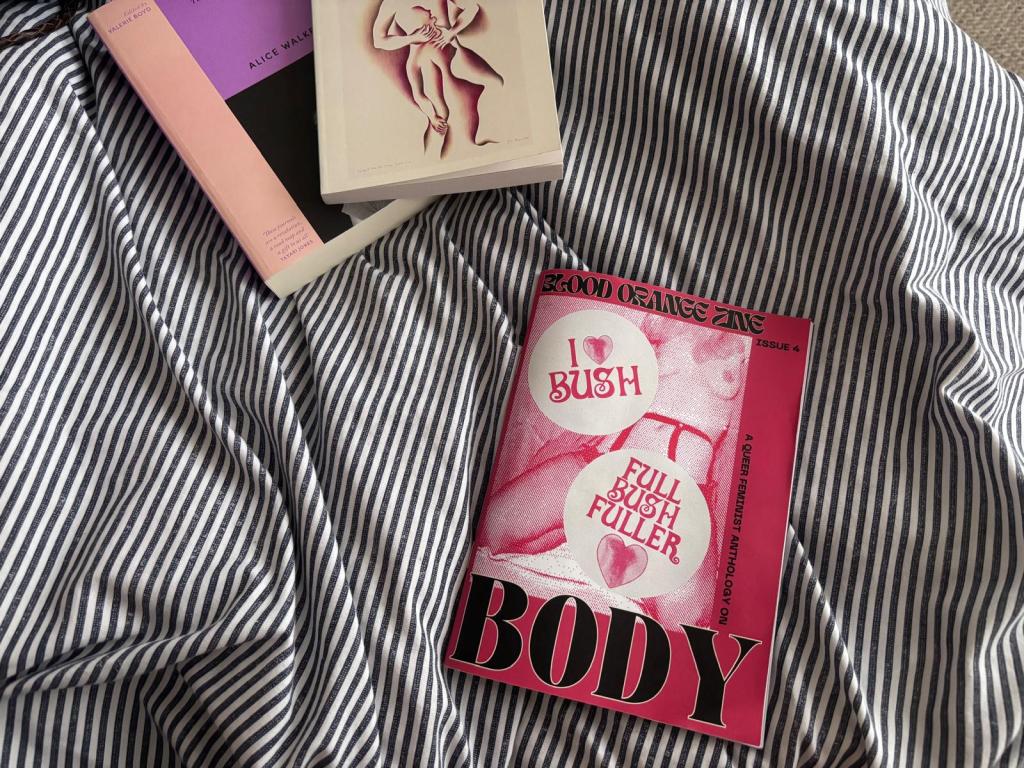
Loyal listeners may remember Sophie McQue from her interview about her and her friend Rosie’s feminist book club, Tongues of Stone. But a book club is dedicated to other authors, and Sophie herself has recently been published in a feminist zine, Blood Orange Zine, based here in Liverpool. 

Sitting in Sophie’s bedroom now, it is every inch a bohemian muse’s boudoir draped in white lace and adorned with biblical iconography. Even my interviewee herself is decorated similarly, with a stick and poke of the virgin mary on one arm and ropes of pearls and crosses cascading over her other shoulder. She is an atheist, of course.

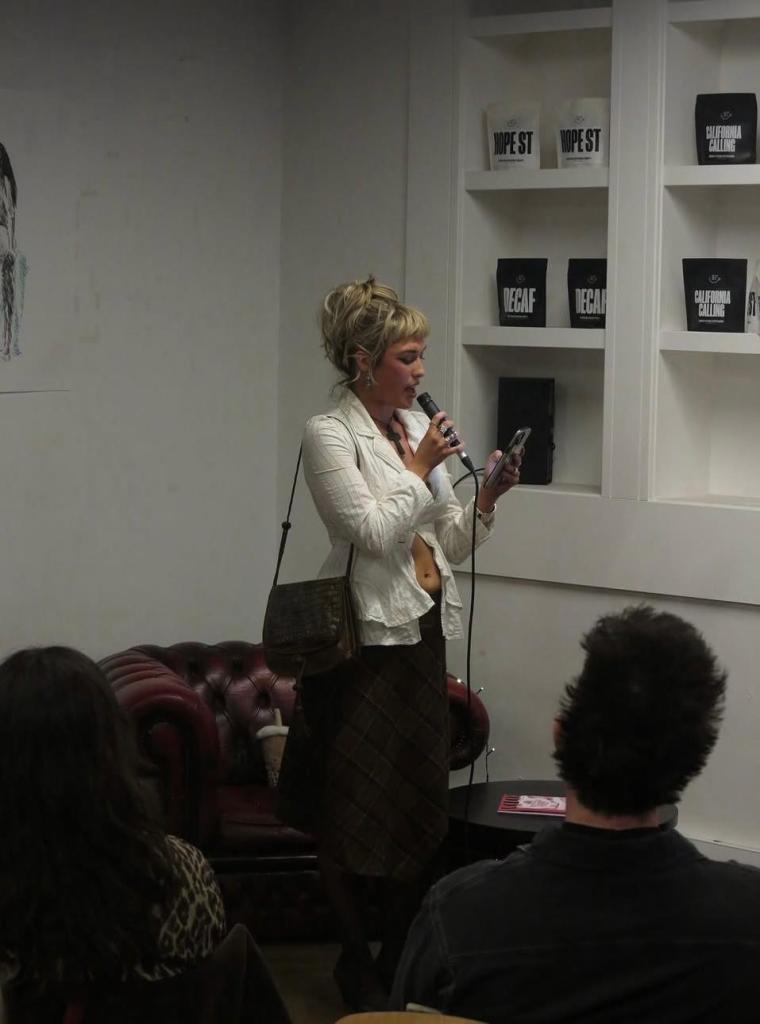
I previously interviewed Sophie on The Young Ones on the topic of young women in literature in Liverpool. On that note, Blood Orange is a queer feminist zine, with themes such as female rage, female friendships, and reclaiming the night. Their most recent publication was on the theme of Body, and both Sophie’s first publication and public poetry reading. I enjoyed my first interview with Sophie so much, and am so interested in the topic myself, that I wanted to revisit her on the occasion of her first publication. 

How did you approach the body brief?

‘I already had poems written. I had actually submitted to their female friendships theme but they didn’t publish it. But this next theme, body, I always write from the body about the body, and they published it. I always use themes of the grotesque…’

Is the female body inherently political to you?

“Yeah. Yes of course… Females have always been kind of looked at through their body and been put at a disadvantage for that. However, I don’t tend to always explore that in my writing. I explore the grotesque. Because I think women’s bodies are often expected to be held up as clean and sexy in a lot of media and I like to confront the abject and the grotesque in my writing. I like to beautify the ugly and uglify the beautiful. I confront the grotesqueness of my body while using very feminine and floral language. I use a lot of animal imagery, feminine colours, and stuff. Delicate things that represent femininity – it makes it a bit creepier I think, approaching the abject from a hyper-feminine angle.”

What was the reading like?

Well.. I mean I was terrified! And they forgot about me. There was a woman there, the creator of the magazine’s old tutor, and she went up and reminded her, so I was the closing act which was daunting for my first ever reading.. However by the end of it I was a little bit tipsy so that helped! I felt empowered- I got a nice cheer from all my friends, and I felt proud of my writing. I just had a feeling that it would be something people resonated with. It gave me confidence knowing that I could read my work with a northern accent. I speak a little bit drab. All my vowels are quite… What’s the word… flat?

(Sophie is from the North-East, with a Mackem accent.)

Final Question… What’s your favourite line from your poem?

Oooh! Dirty screw. May pole spine

For a deeper discussion on women in literature, I encourage you to revisit our broadcast on young women in literature where I originally interviewed Sophie on her book club, available below (Interview begins at 27:58).

You can find Sophie’s work on @dreamboatsophie on instagram and her book club at @tonguesofstone. You can find Blood Orange Zine and their upcoming summer zine at https://bloodorangezine.com/

Featured

From the Sydney Jones to Westminster: Honey Barlow Marshall

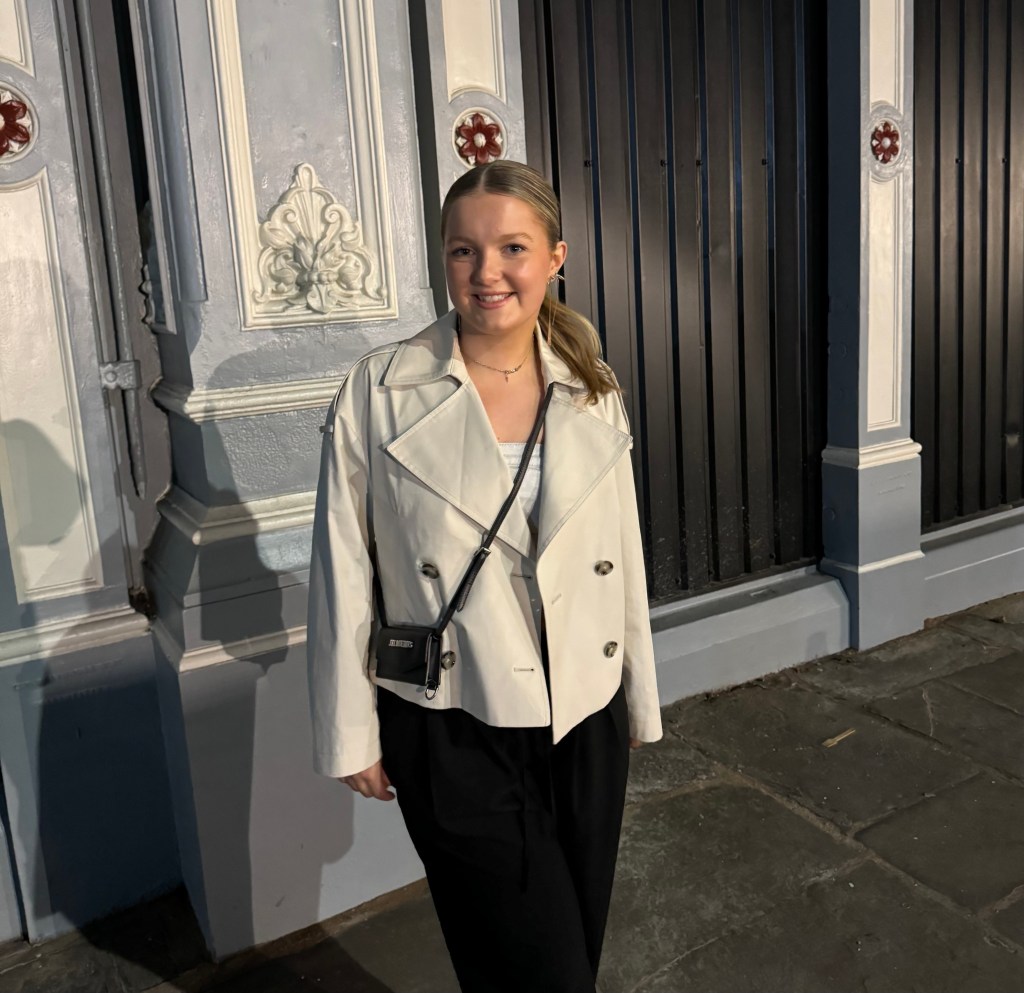
Honey Barlow Marshall, University of Liverpool Philosophy, Politics and Economics student

By Wali Khan

13th March 2025

Many of us, especially those passionate about politics, dream of making a real impact on the country we live in. But very few of us actually get the opportunity to do so. Honey Barlow Marshall, a University of Liverpool PPE student, wasn’t willing to wait for an opportunity to come to her. Instead, at just 14 years old, she took matters into her own hands and immersed herself in the world of local politics.

Informed political participation is the backbone of a functioning democracy. Historically, many philosophers, including Socrates and Plato criticised democracy, arguing that the general public lacked the knowledge to make sound political decisions. The idea that politics should be reserved for an elite few still lingers today, but young people like Honey prove otherwise. By encouraging youth involvement, we cultivate a generation capable of making informed decisions about their future, challenging the notion that only “Philosopher Kings” are fit to govern.

Honey’s journey into politics began when she became Youth Officer for the Labour Party at just 14 years old. From there, she quickly rose through the ranks, becoming Chair of her constituency and later Secretary, all while navigating the skepticism and resistance that came with being a young woman in leadership.

Moving 200 miles away from her home in Lyme Regis for university, Honey didn’t leave her work behind. While balancing her academic studies, she continued campaigning, engaging in community work, and pushing for political change. In the most recent general election, her dedication was recognised when she was selected as a candidate for her local constituency under the Labour Party. Although she declined due to university commitments, it was a testament to the years of hard work she had already put in.

A surge in youth political participation brings fresh perspectives to government, challenging outdated norms and making policymaking more inclusive. In the 2024 general election, the House of Commons welcomed 10 MP’s from Gen Z. The same election also resulted in a record 263 female MP’s being elected, making up 40.5% of Parliament.

This growing diversity means our political system is becoming more representative of society as a whole. After all, if decisions are made primarily by one demographic, they will naturally cater to that group’s experiences and needs, not necessarily out of malice, but out of familiarity. Bringing new voices into the conversation challenges long-standing biases and ensures a broader range of perspectives are considered in policy making.

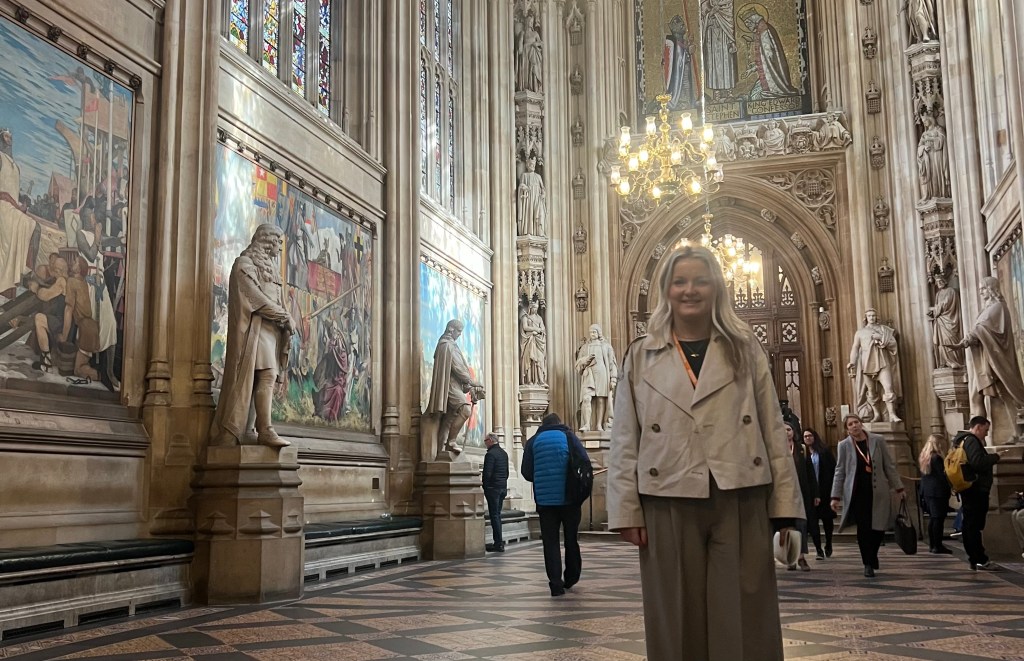
On this week’s episode of The Young Ones Politics Hour, I sat down with Honey to discuss her time inside Parliament while on placement with Labour MP Richard Burgon. She shared how the experience transformed her view of politics and opened up about some fascinating encounters – including an interaction with Che Guevara’s daughter.

You can listen to the full interview now on Spotify at Liverpool Politics Hour!

Haysam Shakeel: Dismantling the South Asian Footballing Stereotype

By Wali Khan

19th February 2025

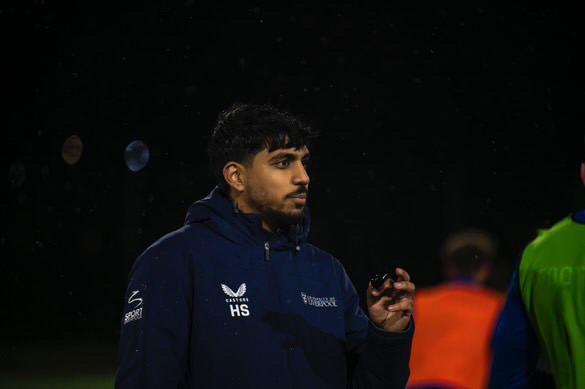
Haysam Shakeel, University of Liverpool FC first team head coach

How many South Asians are in the top five leagues of football? If you struggled to name any, it’s because there are none. Out of a population of almost 2 billion, not a single South Asian currently plays or coaches at the highest level of European football. In the UK, where South Asians make up over 3.4 million of the population, only 22 are in the professional game, just 0.25% of the total number of professional footballers.

This begs the question: why?

For years, the narrative has been that South Asians simply aren’t interested in football. But this argument falls apart when you consider that football is one of the most popular sports across the Indian subcontinent and within British South Asian communities. A recent survey from Sport England showed more than twice as many British South Asian adults played football compared to cricket. So, if the passion exists, why aren’t South Asians making it to the professional level? 

This is what I discussed with Haysam Shakeel, a South Asian football coach determined to break through the barriers.

Haysam’s coaching journey began at Manchester City’s academy in Abu Dhabi, where he gained invaluable experience working alongside top-level coaches. When he moved to Manchester, he continued his association with the club, further refining his coaching philosophy. Now, while pursuing a Philosophy degree at the University of Liverpool, he has taken on a significant role as the head coach of the university’s men’s first team, a rare achievement for someone so young.

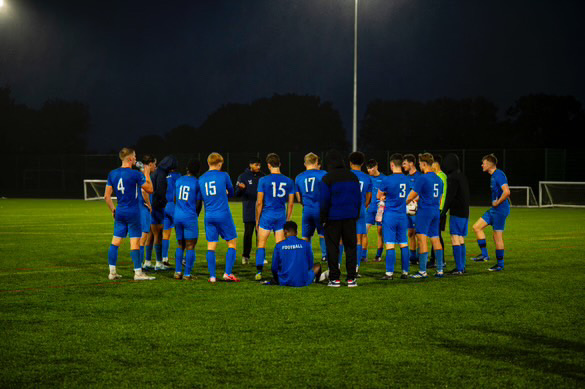
University of Liverpool First Team

We spoke about the challenges of stepping into such a high responsibility position at a young age. Managing players who are the same age as him, and in the same stage of life, has created a unique dynamic, one that requires a careful balance of authority, leadership, and camaraderie. But that’s just one of many challenges he has faced in his coaching career.

Beyond his personal journey, Haysam also shared his ambitions for the future. He is committed to breaking institutional barriers that have long prevented South Asians from reaching the highest levels of football, both as players and coaches. Drawing on his own experiences, he offered valuable insights into the systemic reasons behind South Asian underrepresentation in the sport.

Through our conversation, he painted a clear picture of the struggles South Asian footballers and coaches encounter, from limited scouting opportunities and ingrained stereotypes to the lack of a clear pathway into elite-level coaching. But he also highlighted what can be done to change the narrative and ensure that the next generation of South Asian footballers and coaches have a fair shot at success.

I want to pave the way and give coaches who are under-represented a chance to express themselves, on and off the pitch

– Haysam Shakeel

You can listen to the full interview with Haysam on Spotify at Liverpool Politics Hour

What does the future hold for Jeremy and Joe? – Coffee with Kilfoyle (Part two)

This is the second half of an interview conducted by Liverpool Student Radio Politics hour team member Alisha Lewis in 2018 with former Liverpool Labour MP, Peter Kilfoyle. It was conducted as part of a discussion on the past, present, and future of the Liverpool Labour Party – which you can listen to here: https://soundcloud.com/thepoliticshour2018/uk-politics-hour-week-8

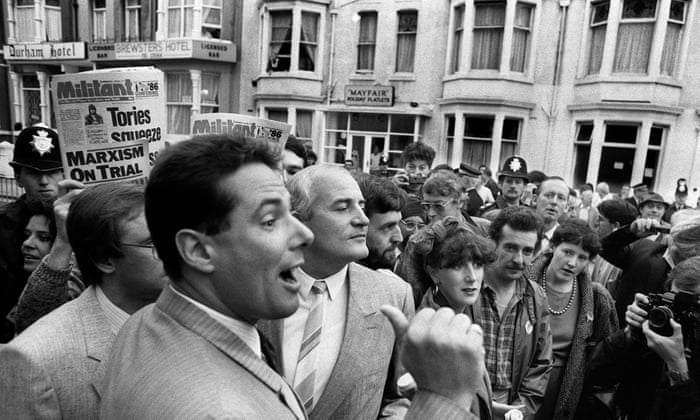
Former Labour minister Peter Kilfoyle earned the nickname “Witchfinder General” in the 1980s, as the party’s enforcer in the battle against Liverpool’s Derek Hatton lead Militant council.

In this half of the interview Alisha and Peter discuss the future of the Labour party, in Liverpool and beyond. Will Jeremy Corbyn make it to No. 10? Can Mayor Joe Anderson cling on for another term as Mayor of Liverpool? Could you be the next Labour leader?

The first half of the interview, which discusses Militant, Momentum, and the state of Liverpool Labour politics in 2018 can be found here.

Photo credit: Liverpool Express

Looking at the possibility of an early general election that always seems to be looming over us – Do you think that the Labour Party has a chance of getting into power, and Jeremy Corbyn into No. 10?

They’ve always got a chance. I’ve known Jeremy [Corbyn] for thirty years, over thirty years, and I find him a likeable enough bloke – but if I’d have still been there I’d have never nominated him, and I wouldn’t have voted for him. He doesn’t have the attributes that you need to be in that leadership position. It requires a degree, for example, of ruthlessness in dealing with people who are not producing the goods and are letting the side down. In some ways Jeremy’s too nice  a bloke, has a very consistent kind of guy. What he believes in I’m sure he believed in back in the 70s – I know he did.

But you’ve got to be adaptable, you’ve got to be flexible, that doesn’t mean you abandon your core beliefs or your values – I wouldn’t expect anybody to do that. But you need some personal skills that I am yet to see in Jeremy. One of the things that bothers me is not so much Jeremy, I’m like many people who are bothered by some of the people he’s surrounding himself with. I was no more impressed by some of the people that other leaders have surrounded themselves with. I always saw Mandelson as a dangerous individual.

But Jeremy’s people, No, they don’t seem to be up to it. Having said all of that, I acknowledge two things; Firstly that he was the duly elected leader, twice in fact, and secondly that it is up to people to do their best for the Labour Party regardless to keep it on track.

Thinking a bit more locally, and looking at Joe Anderson, we’ve got the mayorals…

Oh, not Joe Anderson, do I have to look at him?

Do your best – We’ve got the Mayoral selections coming up next year, do you think there’s a real chance he could get reselected?

I think there’s a good, there’s a chance, but whether he will or not is another matter. That’s down to people in the [Labour] Party, and all the signs are that people have seen through this charade – I mean there’s an awful lot of the [Donald] Trump in Joe Anderson. Not only the arrogance, and the lack of respect for other people in the way he conducts himself, but in the blatant untruths which he has put out about what is happening in the city. At long last I’m happy to say that people are starting to wake up, or have woken up, to all of this.

If that’s translated into meaningful action when we come to the reselection process will depend on a couple of things. It depends upon a viable alternative candidate, and what you don’t want is more of the same, that would be a nightmare. The other thing is, plainly and simply, people getting themselves organised behind that alternative candidate. Hopefully that will happen, and hopefully I think the young people in the city have got a major role to play here.

If nothing else they have a different take on what’s needed in the city, many of the students who come to the city come from other parts of the country where hopefully they’ve seen far better practice and bring with them a positivity which is often lacking in the city itself.

As somebody with an extensive and colourful history in Labour Politics in Liverpool, what advice would you give to somebody starting out in the Labour movement?

I wouldn’t advise them to go onto the council, it’s a very very different organisational structure now. It used to be that you could be influential and have your say, and have a positive input, from anywhere in the group – that seems to be lacking now.

Because of this elected mayor with all these blinking powers it gives the impression that the rest [of the Labour group] are just there to trudge the streets and give out a few leaflets – do as you’re told and that’s it. They [The Labour group] just aren’t part of the policymaking. I mean, I don’t see any policy, I don’t see any accountability, I don’t see any transparency. To see that would require the council to exercise their muscle.

Very often well meaning people go onto the council, and they end up, in order to get a position or to fulfill whatever their ambitions are, they play the game – they get sucked in. It is very hard to stay outside of that.

I’m just very cynical about local councils because, if I can take you back a bit in history, because I go back a bit in history. Following the Redcliff-Maud changes to local government, they separated the district Labour Party from the trade unions, the trades council, they became very separate entities. They started to pay councillors, and councillors then saw the option to get a few quid if they were unemployed or if they were pensioners.

They started to meet during the day, rather than in the evenings, which reinforced the tendency for councillors to be unemployed people or pensioners. Although I can say I’m an unemployed pensioner myself, we do not represent the bulk of people in this city. I think that was a bad step, and we’ve ended up now in this position where we’ve got an absolute waste of space as an elected mayor, who is getting an extraordinary amount of money. He’s dragging the city in this direction and that, with money being lost and wasted all over the place.

What remaining policies I thought we had over things like green spaces are being lost, alienating hitherto solid voters, you couldn’t get anybody creating more mayhem. I daresay at one time he would never ever have got near to the leadership.

Taking a step back from the Labour Party, if you were the leader of the opposition group on Liverpool City council today where would you be looking to take the city?

Two words. Two words. Transparency, and accountability. I mean, in practical terms what does that mean? I would want to get rid of the elected mayor. Not because I’m against it per say, I’ve seen it work very effectively in America, but because in this city it has been a failed adventure. Maybe there will be a time for it to return in the future, although, now that we have an elected metro mayor I don’t think that that will be the case.

But, I do believe that if I was in the position that you hypothesise I would certainly want to see a more traditional leader and council kind of arrangement set up. It would introduce, I believe, more accountability. It is not a perfect solution but hopefully it would bring a lot more transparency than we get at the moment.


Is this the return of Militant in Liverpool? – Coffee with Kilfoyle (Part one)

This is the first half of an interview conducted by Liverpool Student Radio Politics hour team member Alisha Lewis in 2018 with former Liverpool Labour MP, Peter Kilfoyle. It was conducted as part of a discussion on the past, present, and future of the Liverpool Labour Party – which you can listen to here: https://soundcloud.com/thepoliticshour2018/uk-politics-hour-week-8

Former Labour minister Peter Kilfoyle earned the nickname “Witchfinder General” in the 1980s, as the party’s enforcer in the battle against Liverpool’s Derek Hatton lead Militant council.

In this half of the interview, Alisha and Peter discuss the state of Liverpool Labour politics, responding to news of a new wave of deselections and the rise of Momentum candidates, which some have claimed is the start of a new militant era for the city.

Photo credit: BBC

What would you say the state of politics in the city of Liverpool is like today?

I think what you’ve got now is, in my lifetime, the third cycle of corruption in local politics on a real scale, which is very sad because I often wonder whether it is down to ineptitude on behalf of the current incumbents or whether it’s down to deliberate maleficence on their part.

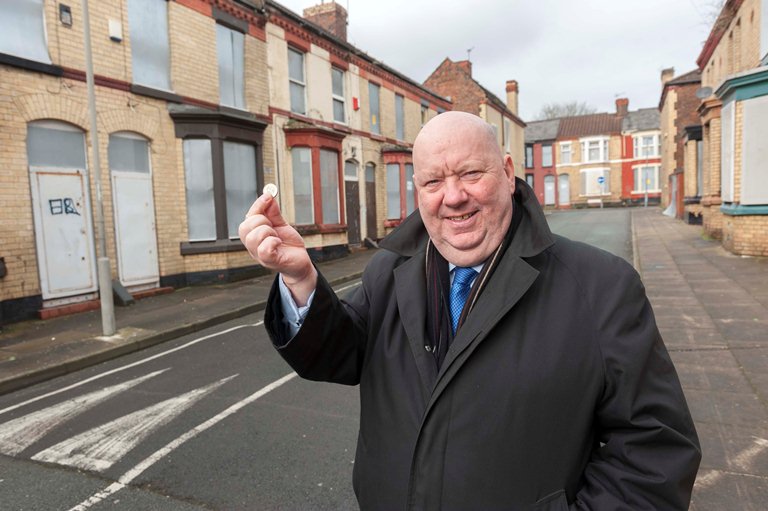
The reality remains is that everybody suffers. Students suffer. I mean there’s that unfinished project, for example, between London road and Lord Nelson street alongside Lime Street Station. There are students actually living in there, and yet I’m satisfied that the place isn’t fit for human habitation.

It encapsulates everything that is wrong [with politics in Liverpool] because contractors and subcontractors that were building the thing were ripped off, investors were ripped off, the city’s been ripped off and it was run by a bunch of crooks. If anybody had had their eyes open, and looked, they would have seen that they were crooks – I know they’re crooks – and I’m sure that those in authority locally know that they’re crooks.

So, you have to either assume that, as I say, it’s either down to ineptitude or it’s down to, shall we say, at least acquiescence in crooked activity.

I’m sure you’ve been following the news recently, and seeing all the deselections happening in the Liverpool Labour Party – as someone who lived through the Militant era and Hatton on the council would you call this a predilection to the return of that kind of politics?

No, I think what happens is – and it’s good that it happens – is that every now and then there’s like a purge of the body politic. Politics needs it, it needs to get new blood. I’m not saying that it won’t happen again, and I’m not saying that the people coming in are all pure in the driven snow. I know that there are people who’ve come back into the party who don’t belong in the Labour Party, but there are a lot of decent people who are, especially younger people, very idealistic, very driven – and you’ve got to put your faith in them sometimes, in a new generation.

We have to ask: will they make a better fist of it than the current lot have done? And that’s happened time after time after time.

I had a bit of a discussion prior to arranging this interview with the students from the radio team, and it seems really odd to me that so few people really know very much about the Militant era in the 1980s.

You lived through it politically, and were a part of dismantling it, should there be a higher sense of political literacy about this issue among those seeking to go into or influence politics in the city?

When Derek Hatton was deputy leader of the council that was the second of the cycles of corruption in my time in the Labour Party over all the years. The truth is there was a very great difference then because he was a con man, and he remains one in my view, but he was a con man supreme in that he kidded Militant that he was more in line and in tune with them than he ever was.

I’ve never, to this day, been able to figure out exactly who used who more – whether they used him more, or he used them. It was the alignment of, as I can only describe him a con man, with a highly disciplined and focused ideological group like Militant who had their own very very separate agenda which gave rise to a group that was dominating the council but were never in the majority.

That kind of approach doesn’t appear to exist anymore, and if it doesn’t exist for me that is a good thing. You’ve got to remember that when Hatton was around they were what we call ‘entrists’, they were trotskyites, they were people who had a very separate set of beliefs to that of the Labour Party. They saw its weaknesses and tried to exploit them.

I know previously in interviews you’ve suggested that Momentum is nothing like the Militant movement, is that something you’re still holding to looking at the state of Labour politics in the city today?

I don’t doubt that there are people that were involved in my generation in Militant in the 1980s who are reinventing themselves as part of Momentum, that’s my understanding, but their time has gone – these are very very different times and very different circumstances.

I can think of one very energetic member of Militant back in the 1980s who is now the head of one of the big social housing companies in this city – there’s a bit of a transformation there, but it’s a good one. Instead of banging his head against an ideological brick wall what he’s actually done is tried to put his energies into something that is positive across the city, and he’s done it very successfully to be honest.

People have gone their own ways, and they’ve grown up politically, some of them haven’t.

Momentum is more than the sum of its parts – it strikes me as a big reaction to what has gone on before.