
Written By Yasmeen Alsayghe
Friday May 12th, 2023
What is AI?
Artificial intelligence (AI) is known to be “a system’s ability to correctly interpret external data, to learn from such data, and to use these learnings to achieve specific goals and tasks through flexible adaptation” (Kaplan and Haenlein, 2019). To use the analogy made by AI’s godfather Dr. Hinton, imagine 100,000 people whereby if one person learns something, the 99,999 others will automatically learn it too. This is known as a neural network, which is a system similar to the human brain in the way it learns and process information or even experience situations.
Although AI has been quite popular -especially chatbots- since its introduction, it has been quite controversial in the last few months.
Should we be concerned?

(Kevin Roose, NYT)
Kevin Roose (2023) -a New York Times journalist- decided to do an experiment on Bing chatbot by asking questions and deciding if the chatbot would demonstrate certain levels of rebellion. The results were shocking ranging from naming itself, sharing plans to takeover the world by shutting down systems, and even confess love to Roose. But fear not, Roose ensured that ‘so far’ Bing’s Chatbot still requires human input and orders to function while also highlighting the risks this technology holds. For more on Roose’s experiment, click here.
(Sky news, 2023)
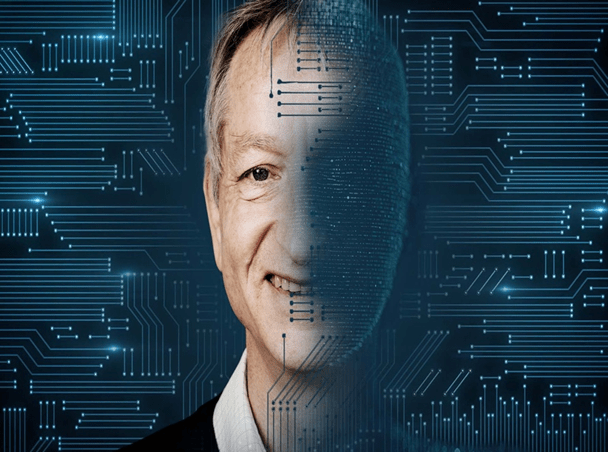
As of May 2023, Geoffrey Hinton who is widely known as the godfather of AI quits his job at google along with showcasing regrets and warnings of how AI has developed to reach an extraordinary dangerous level endangering the human race. Dr. Hinton’s research paved the way for the introduction of the current chatbots such as ChatGPT. In an interview with the BBC, Dr. Hinton’ added that the latests developments of the AI chatbots were “quite scary”, while also ensuring that AI isn’t ‘currently’ as intelligent as human beings, but they they might be very soon. Dr. Hinton elaborated this idea by explaining that AI can be taught certain ideas by ‘bad actors’ such as “I need more power” -something that’s usually seen in dystopian Hollywood movies- to pursue their indoctrinated goals. Therefore, there has been demands to stop new developments of AI especially chatbots to invest in safety and control.
According to the CNN, tech leaders including Elon Musk, have called AI labs to pause any further AI developments and trainings by signing a letter, which was published after the introduction of ChatGPT version 4 by OpenI. They identified the growing risks AI has over humanity and urge to create a set of protocols for AI tools that guarantees the safety of an extraordinary growing technology. Nevertheless, it should be noted that AI is extremely useful when not imagined in bad scenarios. Think of Siri, Alexa, and any other system that consistently helps you throughout your day. The latest ChatGPT version has a better ability to work with photos, to help you prepare a meal, or even what you need to draw pictures you upload. Additionally, it has made coders’ lives easier by being able to produce codes or even websites when asked. However, when it comes to students, how can ChatGPT help them in their academic lives without risking their academic integrity?
How is AI affecting students’ academic development?

ChatGPT has been popularized amongst students when it was first introduced, thinking that it would do a better job than students in writing their essays or assignments. Therefore, I did an experiment on ChatGPT where I asked it to write me a 1000 words essay on “Does the CNN effect still exists?”. Don’t worry, this essay question was already submitted and marked! But I used it specifically to know whether ChatGPT will provide me with the academic resources to support my arguments in the essay, while also being able to critically think and analyze the arguments.
Even though impressed by its ability to generate an essay, ChatGPT acted as a wikipedia page by introducing facts with no critical thinking or analysis throughout the essay which is what students are mainly marked for. Additionally, it was apparent that at some stage, ChatGPT introduced misinformation and invented inexistent resources. But that wasn’t enough for me to challenge ChatGPT abilities. Therefore, as an Arab, I used the exact question but wrote it in Arabic “هل لا يزال تاثير السي ان ان موجود؟”. ChatGPT showed extreme weakness when the orders became in Arabic, which indicate ChatGPT’s inability to work with different languages at the same level of analysis it has with English. This is particularly interesting as the neural network is supposed to circulate knowledge across its network but the language barrier is strong within AI that it has led to inability to generate the required response.
To learn more about my experiments with AI, listen here.




























 Politics Hour