
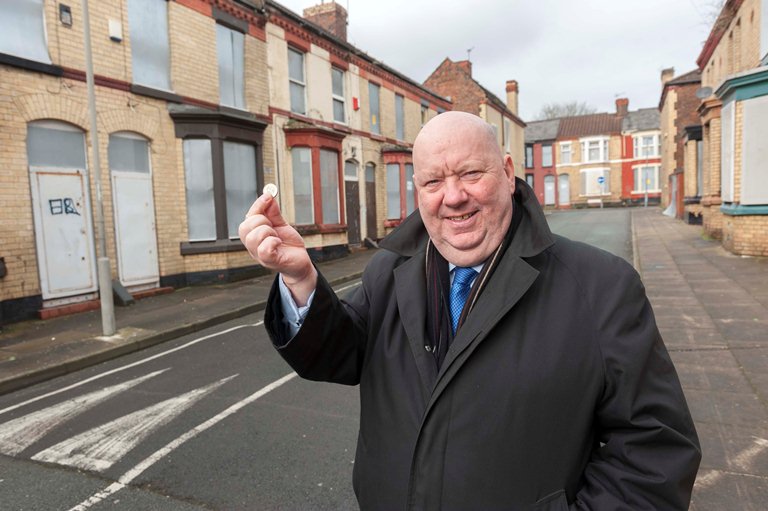
This is the second half of an interview conducted by Liverpool Student Radio Politics hour team member Alisha Lewis in 2018 with former Liverpool Labour MP, Peter Kilfoyle. It was conducted as part of a discussion on the past, present, and future of the Liverpool Labour Party – which you can listen to here: https://soundcloud.com/thepoliticshour2018/uk-politics-hour-week-8
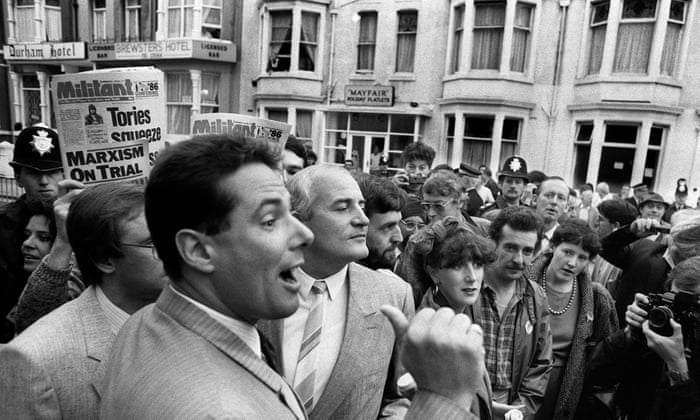
Former Labour minister Peter Kilfoyle earned the nickname “Witchfinder General” in the 1980s, as the party’s enforcer in the battle against Liverpool’s Derek Hatton lead Militant council.
In this half of the interview Alisha and Peter discuss the future of the Labour party, in Liverpool and beyond. Will Jeremy Corbyn make it to No. 10? Can Mayor Joe Anderson cling on for another term as Mayor of Liverpool? Could you be the next Labour leader?
The first half of the interview, which discusses Militant, Momentum, and the state of Liverpool Labour politics in 2018 can be found here.
Photo credit: Liverpool Express
Looking at the possibility of an early general election that always seems to be looming over us – Do you think that the Labour Party has a chance of getting into power, and Jeremy Corbyn into No. 10?
They’ve always got a chance. I’ve known Jeremy [Corbyn] for thirty years, over thirty years, and I find him a likeable enough bloke – but if I’d have still been there I’d have never nominated him, and I wouldn’t have voted for him. He doesn’t have the attributes that you need to be in that leadership position. It requires a degree, for example, of ruthlessness in dealing with people who are not producing the goods and are letting the side down. In some ways Jeremy’s too nice a bloke, has a very consistent kind of guy. What he believes in I’m sure he believed in back in the 70s – I know he did.
But you’ve got to be adaptable, you’ve got to be flexible, that doesn’t mean you abandon your core beliefs or your values – I wouldn’t expect anybody to do that. But you need some personal skills that I am yet to see in Jeremy. One of the things that bothers me is not so much Jeremy, I’m like many people who are bothered by some of the people he’s surrounding himself with. I was no more impressed by some of the people that other leaders have surrounded themselves with. I always saw Mandelson as a dangerous individual.
But Jeremy’s people, No, they don’t seem to be up to it. Having said all of that, I acknowledge two things; Firstly that he was the duly elected leader, twice in fact, and secondly that it is up to people to do their best for the Labour Party regardless to keep it on track.
Thinking a bit more locally, and looking at Joe Anderson, we’ve got the mayorals…
Oh, not Joe Anderson, do I have to look at him?
Do your best – We’ve got the Mayoral selections coming up next year, do you think there’s a real chance he could get reselected?
I think there’s a good, there’s a chance, but whether he will or not is another matter. That’s down to people in the [Labour] Party, and all the signs are that people have seen through this charade – I mean there’s an awful lot of the [Donald] Trump in Joe Anderson. Not only the arrogance, and the lack of respect for other people in the way he conducts himself, but in the blatant untruths which he has put out about what is happening in the city. At long last I’m happy to say that people are starting to wake up, or have woken up, to all of this.
If that’s translated into meaningful action when we come to the reselection process will depend on a couple of things. It depends upon a viable alternative candidate, and what you don’t want is more of the same, that would be a nightmare. The other thing is, plainly and simply, people getting themselves organised behind that alternative candidate. Hopefully that will happen, and hopefully I think the young people in the city have got a major role to play here.
If nothing else they have a different take on what’s needed in the city, many of the students who come to the city come from other parts of the country where hopefully they’ve seen far better practice and bring with them a positivity which is often lacking in the city itself.
As somebody with an extensive and colourful history in Labour Politics in Liverpool, what advice would you give to somebody starting out in the Labour movement?
I wouldn’t advise them to go onto the council, it’s a very very different organisational structure now. It used to be that you could be influential and have your say, and have a positive input, from anywhere in the group – that seems to be lacking now.
Because of this elected mayor with all these blinking powers it gives the impression that the rest [of the Labour group] are just there to trudge the streets and give out a few leaflets – do as you’re told and that’s it. They [The Labour group] just aren’t part of the policymaking. I mean, I don’t see any policy, I don’t see any accountability, I don’t see any transparency. To see that would require the council to exercise their muscle.
Very often well meaning people go onto the council, and they end up, in order to get a position or to fulfill whatever their ambitions are, they play the game – they get sucked in. It is very hard to stay outside of that.
I’m just very cynical about local councils because, if I can take you back a bit in history, because I go back a bit in history. Following the Redcliff-Maud changes to local government, they separated the district Labour Party from the trade unions, the trades council, they became very separate entities. They started to pay councillors, and councillors then saw the option to get a few quid if they were unemployed or if they were pensioners.
They started to meet during the day, rather than in the evenings, which reinforced the tendency for councillors to be unemployed people or pensioners. Although I can say I’m an unemployed pensioner myself, we do not represent the bulk of people in this city. I think that was a bad step, and we’ve ended up now in this position where we’ve got an absolute waste of space as an elected mayor, who is getting an extraordinary amount of money. He’s dragging the city in this direction and that, with money being lost and wasted all over the place.
What remaining policies I thought we had over things like green spaces are being lost, alienating hitherto solid voters, you couldn’t get anybody creating more mayhem. I daresay at one time he would never ever have got near to the leadership.
Taking a step back from the Labour Party, if you were the leader of the opposition group on Liverpool City council today where would you be looking to take the city?
Two words. Two words. Transparency, and accountability. I mean, in practical terms what does that mean? I would want to get rid of the elected mayor. Not because I’m against it per say, I’ve seen it work very effectively in America, but because in this city it has been a failed adventure. Maybe there will be a time for it to return in the future, although, now that we have an elected metro mayor I don’t think that that will be the case.
But, I do believe that if I was in the position that you hypothesise I would certainly want to see a more traditional leader and council kind of arrangement set up. It would introduce, I believe, more accountability. It is not a perfect solution but hopefully it would bring a lot more transparency than we get at the moment.
 Politics Hour