‘I like to beautify the ugly and uglify the beautiful’: Returning to interview Sophie McQue, a Gen Z poet

Written by Tanzi Stewart-Stewart

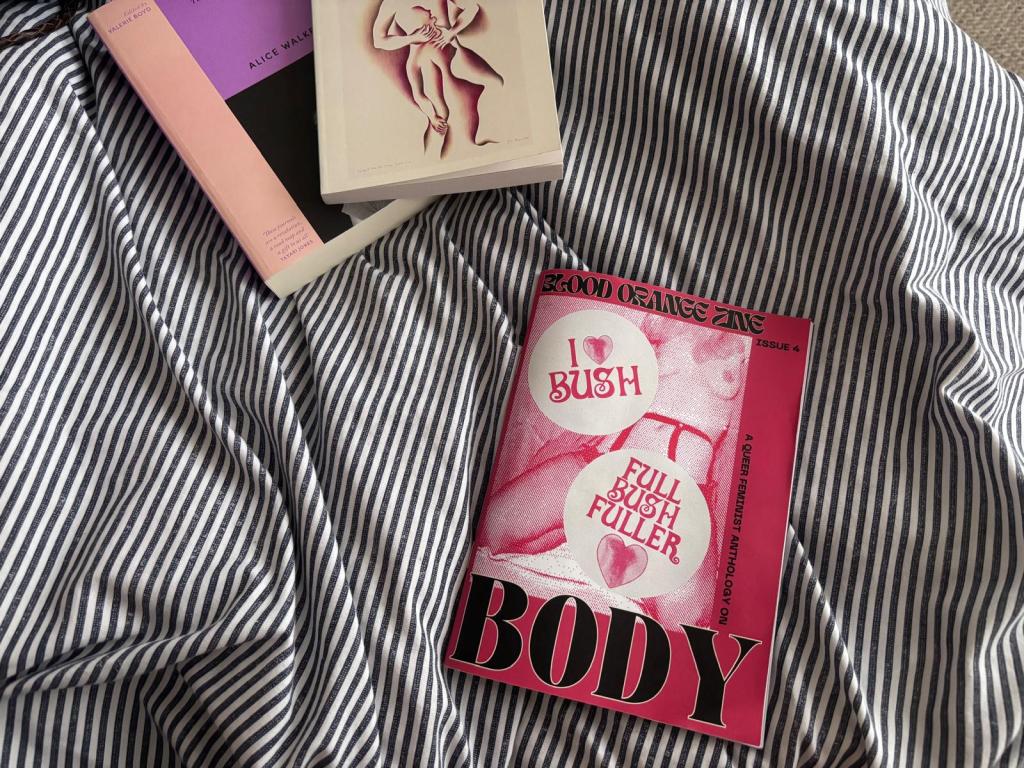
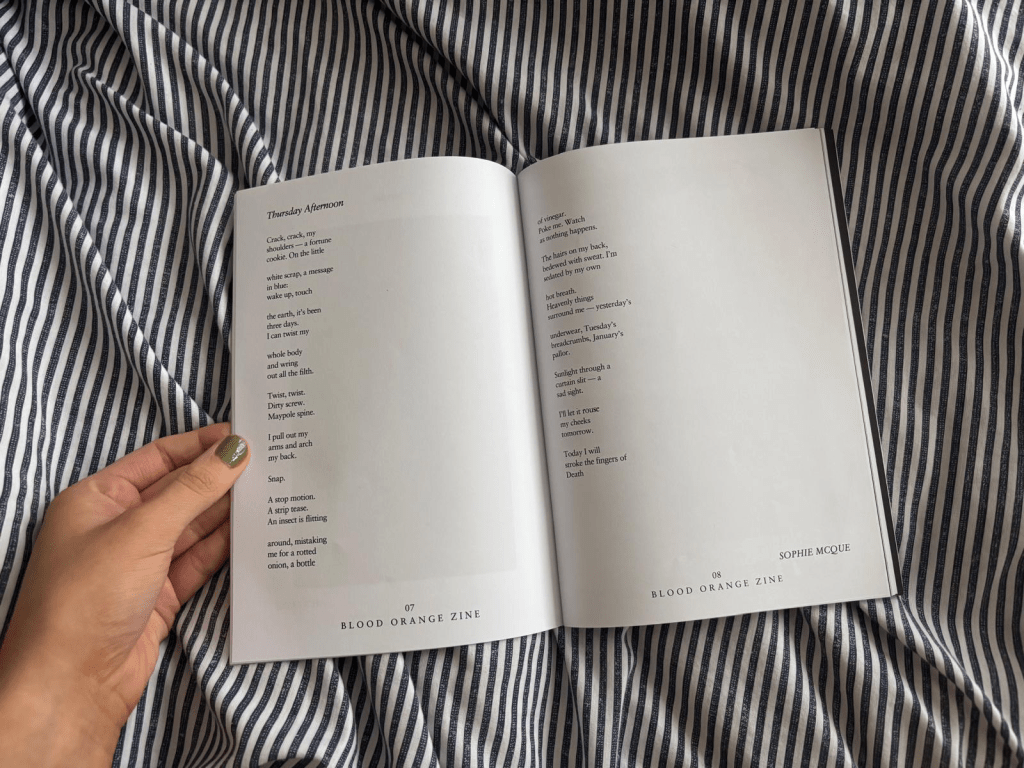
Loyal listeners may remember Sophie McQue from her interview about her and her friend Rosie’s feminist book club, Tongues of Stone. But a book club is dedicated to other authors, and Sophie herself has recently been published in a feminist zine, Blood Orange Zine, based here in Liverpool. 

Sitting in Sophie’s bedroom now, it is every inch a bohemian muse’s boudoir draped in white lace and adorned with biblical iconography. Even my interviewee herself is decorated similarly, with a stick and poke of the virgin mary on one arm and ropes of pearls and crosses cascading over her other shoulder. She is an atheist, of course.

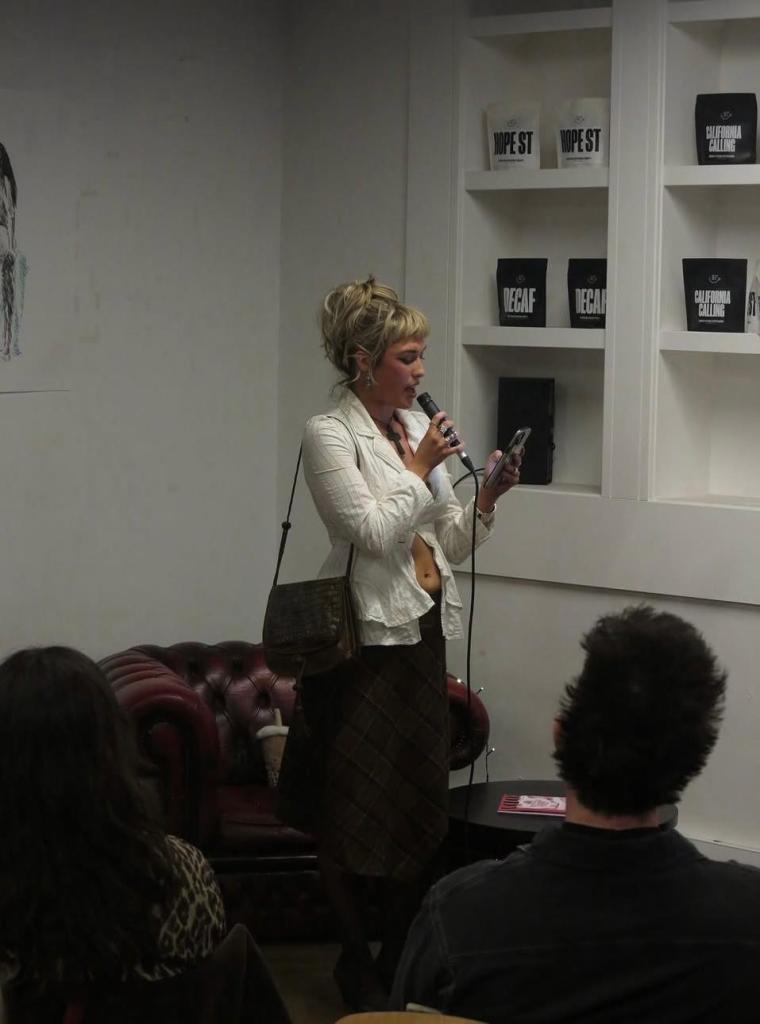
I previously interviewed Sophie on The Young Ones on the topic of young women in literature in Liverpool. On that note, Blood Orange is a queer feminist zine, with themes such as female rage, female friendships, and reclaiming the night. Their most recent publication was on the theme of Body, and both Sophie’s first publication and public poetry reading. I enjoyed my first interview with Sophie so much, and am so interested in the topic myself, that I wanted to revisit her on the occasion of her first publication. 
How did you approach the body brief?

‘I already had poems written. I had actually submitted to their female friendships theme but they didn’t publish it. But this next theme, body, I always write from the body about the body, and they published it. I always use themes of the grotesque…’

Is the female body inherently political to you?

“Yeah. Yes of course… Females have always been kind of looked at through their body and been put at a disadvantage for that. However, I don’t tend to always explore that in my writing. I explore the grotesque. Because I think women’s bodies are often expected to be held up as clean and sexy in a lot of media and I like to confront the abject and the grotesque in my writing. I like to beautify the ugly and uglify the beautiful. I confront the grotesqueness of my body while using very feminine and floral language. I use a lot of animal imagery, feminine colours, and stuff. Delicate things that represent femininity – it makes it a bit creepier I think, approaching the abject from a hyper-feminine angle.”

What was the reading like?

Well.. I mean I was terrified! And they forgot about me. There was a woman there, the creator of the magazine’s old tutor, and she went up and reminded her, so I was the closing act which was daunting for my first ever reading.. However by the end of it I was a little bit tipsy so that helped! I felt empowered- I got a nice cheer from all my friends, and I felt proud of my writing. I just had a feeling that it would be something people resonated with. It gave me confidence knowing that I could read my work with a northern accent. I speak a little bit drab. All my vowels are quite… What’s the word… flat?

(Sophie is from the North-East, with a Mackem accent.)

Final Question… What’s your favourite line from your poem?

Oooh! Dirty screw. May pole spine
For a deeper discussion on women in literature, I encourage you to revisit our broadcast on young women in literature where I originally interviewed Sophie on her book club, available below (Interview begins at 27:58).

You can find Sophie’s work on @dreamboatsophie on instagram and her book club at @tonguesofstone. You can find Blood Orange Zine and their upcoming summer zine at https://bloodorangezine.com/

The Royal Marines Commando at our University: Sebastian O’Callaghan

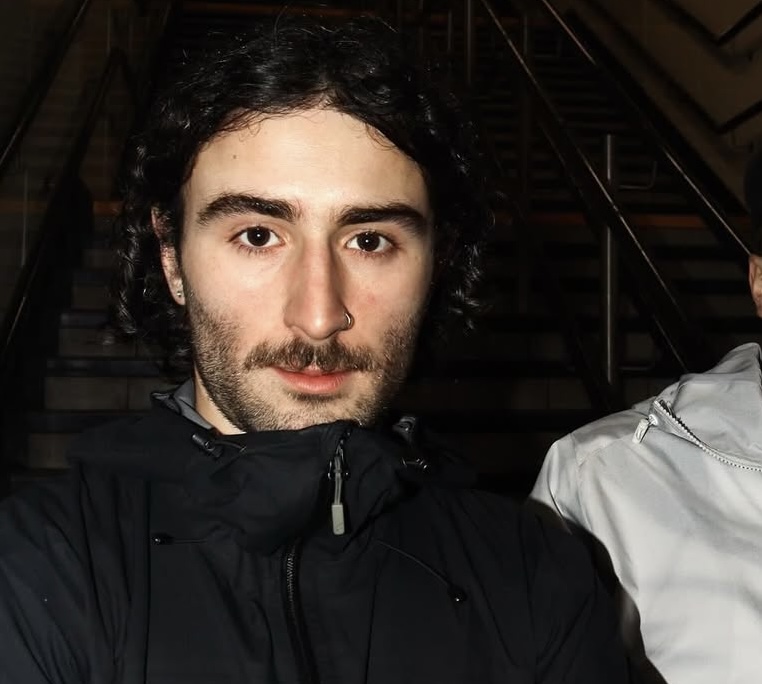
Sebastian O’Callaghan, University of Liverpool Economics Society President

By Wali Khan

6th March 2025

Imagine being 17 years old and instead of hearing that your whole life is ahead of you, you’re told your future is over before it even begins. That was the reality for Sebastian O’Callaghan. Not particularly academically motivated, he achieved four U grades in his first-year mock exams. His college supervisors didn’t see potential, they saw failure. At just 17, he was asked to leave. So, he did.

Many young people are in this same position. Traditional academia isn’t designed for everyone, yet every student is forced to fit within its rigid framework. Too often, young people are convinced that struggling in school means they’re incapable of success. Sure, we’ve all heard of the billionaire entrepreneurs who were poor students but went on to change the world. But for every one of those success stories, there are thousands of others who are left behind, drained into mediocrity by a system that doesn’t recognise their potential.

At the end of 2023, 16.4% of 16-18-year-olds were not in education or training. That number is a wake-up call. We need to have serious conversations about why our education system is failing so many young people. But if you’re in that position right now, Seb’s journey should serve as proof that your story isn’t over. Not even close.

Fast forward to today: Seb is studying economics at the University of Liverpool, averaging a first in his degree. He’s also the President of the Economics Society and is on track for a promising career in finance. But his road to success was anything but easy.

Between dropping out of college and starting university, Seb struggled with depression and a loss of identity. Searching for purpose, he set his sights on one of the toughest challenges out there – the Royal Marines. The odds weren’t in his favor. It’s estimated that out of 26,000 applicants each year, only 400 successfully complete training.

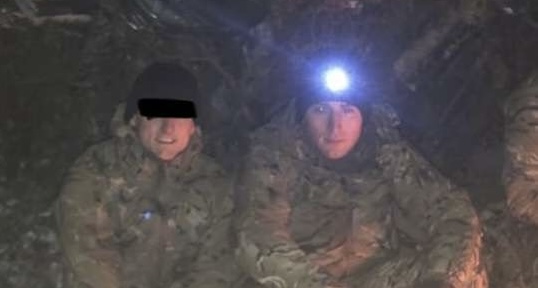
And then there were the doubters, including his own father. But Seb was determined. He endured the grueling training, proved everyone wrong, and earned the coveted Green Beret, becoming a Royal Marines Commando. In our interview, he shared what that experience meant to him. The same student who was told he wasn’t good enough for college had proved to himself that he was more than capable. He just needed to be in the right environment to thrive.

While deployed with the Marines, Seb didn’t stop pushing himself. He self-taught three A-levels and secured an offer to study economics at the University of Liverpool, all despite having only four GCSEs and no predicted A-level grades. That level of determination is difficult to measure by exam scores.

At university, he didn’t just study economics, he became a leader. In our interview, he talked about running for President of the Economics Society and shared some of his campaign tactics.

“Well, I think if anyone read my manifesto, it included a bit of humour… I also made sure to discredit some of the other candidates.”

– Sebastian O’Callaghan

Seb’s story is a testament to resilience and self-belief. If you’ve ever doubted yourself because of academic struggles, let this be your reminder: your potential isn’t defined by a school report card.

For the full conversation, tune into the Liverpool Politics Hour on Spotify and hear Seb talk about his journey, his time in the Marines, and what it really takes to turn things around.