The Royal Marines Commando at our University: Sebastian O’Callaghan

Sebastian O’Callaghan, University of Liverpool Economics Society President

By Wali Khan

6th March 2025

Imagine being 17 years old and instead of hearing that your whole life is ahead of you, you’re told your future is over before it even begins. That was the reality for Sebastian O’Callaghan. Not particularly academically motivated, he achieved four U grades in his first-year mock exams. His college supervisors didn’t see potential, they saw failure. At just 17, he was asked to leave. So, he did.

Many young people are in this same position. Traditional academia isn’t designed for everyone, yet every student is forced to fit within its rigid framework. Too often, young people are convinced that struggling in school means they’re incapable of success. Sure, we’ve all heard of the billionaire entrepreneurs who were poor students but went on to change the world. But for every one of those success stories, there are thousands of others who are left behind, drained into mediocrity by a system that doesn’t recognise their potential.

At the end of 2023, 16.4% of 16-18-year-olds were not in education or training. That number is a wake-up call. We need to have serious conversations about why our education system is failing so many young people. But if you’re in that position right now, Seb’s journey should serve as proof that your story isn’t over. Not even close.

Fast forward to today: Seb is studying economics at the University of Liverpool, averaging a first in his degree. He’s also the President of the Economics Society and is on track for a promising career in finance. But his road to success was anything but easy.

Between dropping out of college and starting university, Seb struggled with depression and a loss of identity. Searching for purpose, he set his sights on one of the toughest challenges out there – the Royal Marines. The odds weren’t in his favor. It’s estimated that out of 26,000 applicants each year, only 400 successfully complete training.

And then there were the doubters, including his own father. But Seb was determined. He endured the grueling training, proved everyone wrong, and earned the coveted Green Beret, becoming a Royal Marines Commando. In our interview, he shared what that experience meant to him. The same student who was told he wasn’t good enough for college had proved to himself that he was more than capable. He just needed to be in the right environment to thrive.

While deployed with the Marines, Seb didn’t stop pushing himself. He self-taught three A-levels and secured an offer to study economics at the University of Liverpool, all despite having only four GCSEs and no predicted A-level grades. That level of determination is difficult to measure by exam scores.

At university, he didn’t just study economics, he became a leader. In our interview, he talked about running for President of the Economics Society and shared some of his campaign tactics.

“Well, I think if anyone read my manifesto, it included a bit of humour… I also made sure to discredit some of the other candidates.”

– Sebastian O’Callaghan

Seb’s story is a testament to resilience and self-belief. If you’ve ever doubted yourself because of academic struggles, let this be your reminder: your potential isn’t defined by a school report card.

For the full conversation, tune into the Liverpool Politics Hour on Spotify and hear Seb talk about his journey, his time in the Marines, and what it really takes to turn things around.
Pigeon Racing and its growth in China

Pigeon Racing and its growth in China

What is Pigeon Racing?

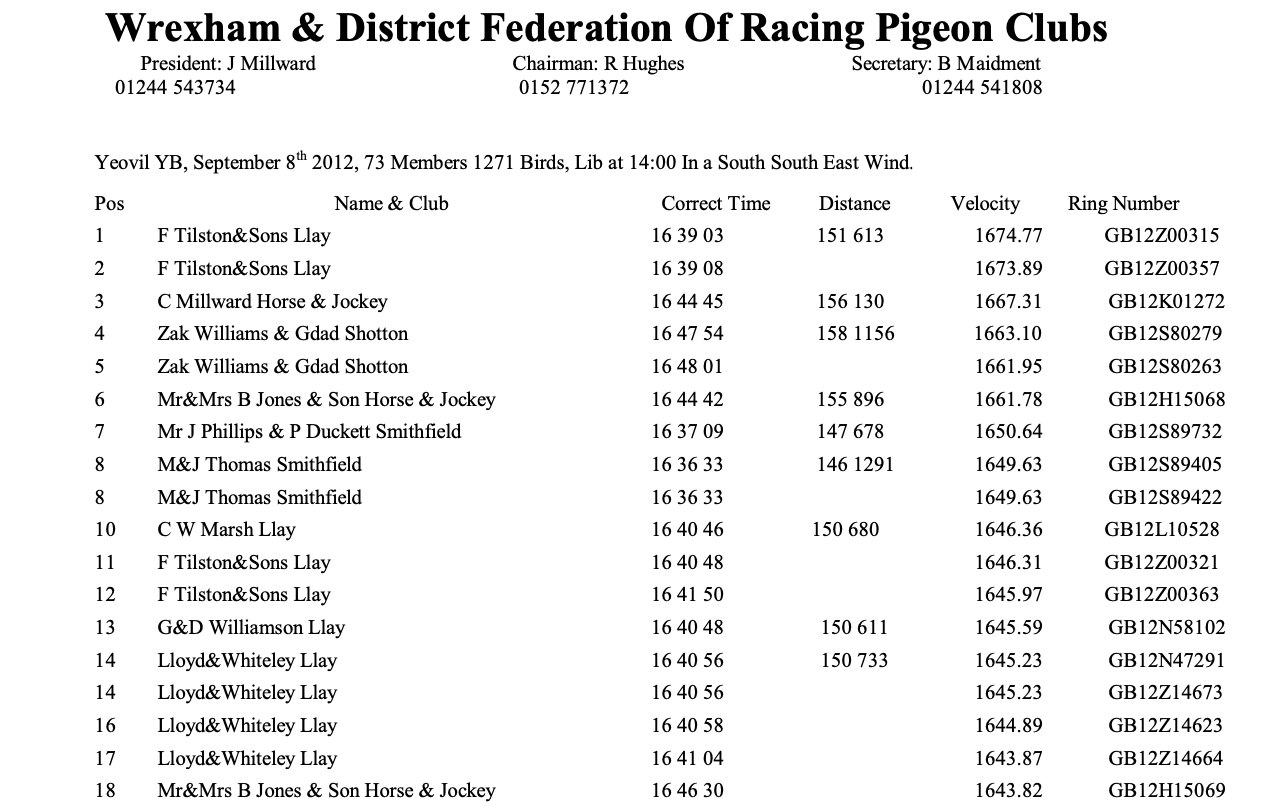
 Pigeon Racing is typically conducted from April to September. In the UK the old birds (anything from 1 years and older) race from April to July, and the young birds race from July to September. The pigeons typically fly from distances of 70 miles up to 700 miles. The pigeons are marked, typically on a Friday (sometimes a Wednesday or Thursday for longer races overseas) and are then sent off on a lorry to the race point. The birds are released normally the next morning, or a couple of days after if the race is from France, Belgium or Spain, weather permitting. As some flyers live closer to the race point than others, all flyers are given distances (measured in miles and yards). This allows for the velocity of a bird to be calculated, which is usually distance divided by time. Once the birds arrive home, they are clocked into the flyers pigeon loft, usually by a pad, where the ring on the pigeons leg sends a signal to the pigeon clock of the birds ID number. The clock recognises the bird and the race it was entered into when they were marked before being put on to the lorry and transported to the race point. In countries such as Belgium and China, the race results can be calculated as quickly as the birds enter the loft of their respective owners. Big races in the UK are also going this way, with the National races enforcing a rule that the flyer must verify the time of arrival of their first bird home within an hour of clocking, which is then translated into a leader board for all to see online as the race is unfolding.

 So what is the demographic of Pigeon Racing?

Pigeon Racing is a sport that is most associated with older men, who are retired. However this is not exactly the case, and is actually a quite damaging stereotype for the sport – particularly because of the issue of recruiting younger members into the sport. There is no doubt though that a majority of pigeon fanciers in Britain and Belgium have been working class men, however. But this does not mean that pigeon racing is solely an older, male sport. In recent times the sport has lost a massive number of fanciers since 1990, with figures going from 60,000 to 21,000 in 2019.

Story of China: a sport on the up.

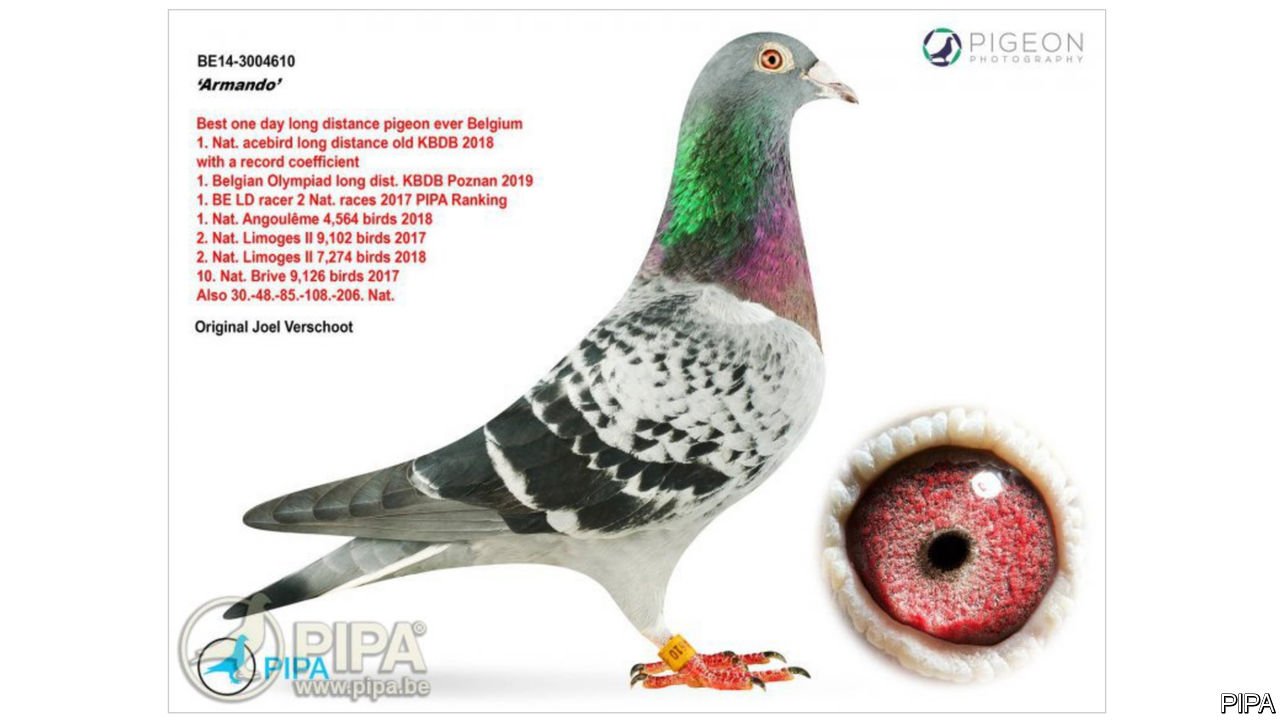
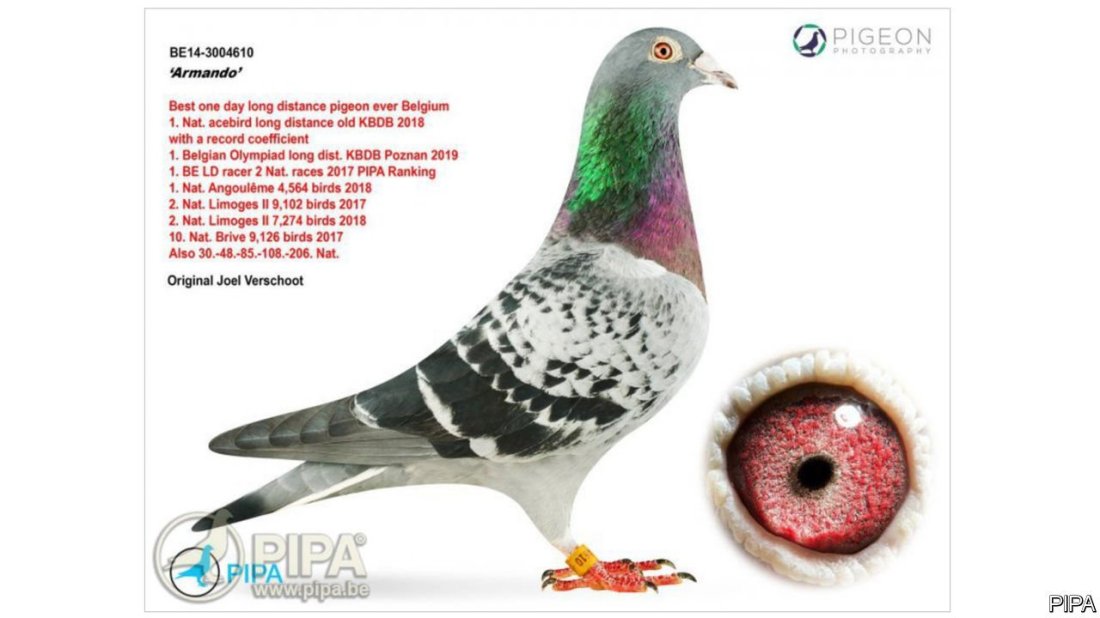
The story in China is different, however. The sport is increasing in popularity year on year, and the prize pots are increasing too. For example, the Iron Eagle race prize pot, which is a 500km race at the end of the season, is currently 49-million-pound sterling. This is leading to an inflation in the price of birds in countries such as Belgium and the UK who have some of the most prized birds in the world. This is exemplified in the recent world-record price of 1.25 million euro for the bird called “Armando”. “Armando” is a champion bird in Belgium and considered one of the greatest long-distance pigeons of all time. Long distance is defined as longer races, over 300km most of the time. Mr Xing, the new owner of “Armando”, visited PIPA, also known as Pigeon Paradise, not so long ago. PIPA is the organisation which sells prized birds. They represent a professionalisation of the sport, where DNA tests of the birds are taken to ensure that they are the correct offspring off the champions.

Screenshot 2020-03-06 at 22.59.59
A typical race result sheet, with the time of arrival, distance, velocity, and ID number of each bird. 

Armando
Armando, who was recently sold for 1.2 million euro to Chinese owner Mr Xing.

Screenshot 2020-03-06 at 23.10.04
A typical pigeon clock which records the arrival of the pigeons.

The issue that this growth in China flags up is the embourgeoisement of pigeon racing in recent years. Birds are now being bought by businessmen as prized assets, not just to breed and race off, but as symbolisms of status and wealth. This has led to fears that the working-class origins of the sport are slowly being hollowed out, with more and more of the top fanciers being a closed off circle of elite businessmen. Whether this carries on is to be seen, but the increase in information technology means that fanciers all around the world can find out which birds are winning races all around the world, pretty much instantly after that race has taken place and the results have been published. Many years ago, this wasn’t the case, mainly as results were slow to be calculated due to having to be processed via hand. But now, with the rise of ETS (Electronic Timing System), the results of races are posted online as soon as the birds enter their respective lofts and are then published online. This has revolutionized the sport but also flags up the wider issue of the digital divide in society. Them who have access to the internet have a massive advantage in being able to buy the best birds all around the world. Again whether this leads to a further diminishment of the sport is up for debate.

Charlie Millward (6/3/20).

Screenshot 2020-03-06 at 23.11.39
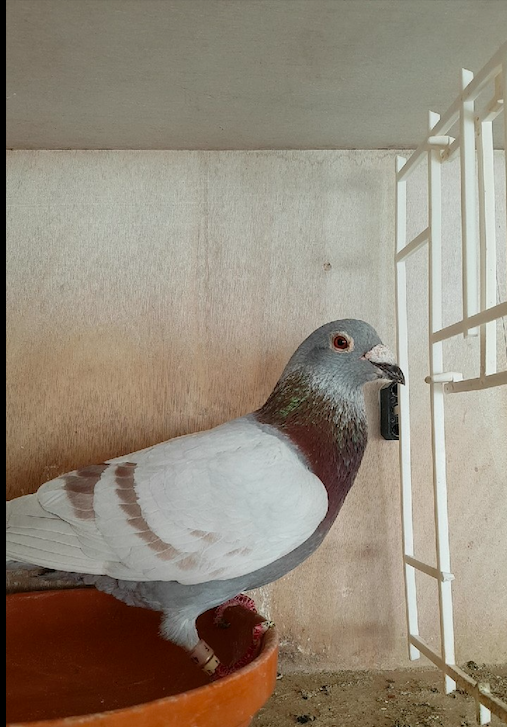
A picture of a racing pigeon, taken five minutes after arrival after being liberated with 1,500 other pigeons in Ancenis, France. The bird made the 412 mile trip home to Buckley, Norh Wales, in 11 hours and 20 minutes.