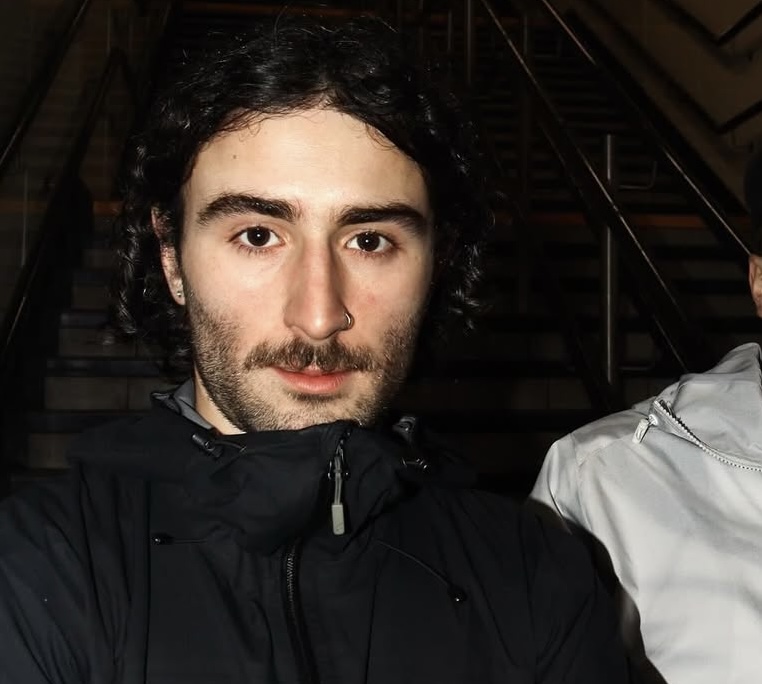
The Royal Marines Commando at our University: Sebastian O’Callaghan

Sebastian O’Callaghan, University of Liverpool Economics Society President

By Wali Khan

6th March 2025

Imagine being 17 years old and instead of hearing that your whole life is ahead of you, you’re told your future is over before it even begins. That was the reality for Sebastian O’Callaghan. Not particularly academically motivated, he achieved four U grades in his first-year mock exams. His college supervisors didn’t see potential, they saw failure. At just 17, he was asked to leave. So, he did.

Many young people are in this same position. Traditional academia isn’t designed for everyone, yet every student is forced to fit within its rigid framework. Too often, young people are convinced that struggling in school means they’re incapable of success. Sure, we’ve all heard of the billionaire entrepreneurs who were poor students but went on to change the world. But for every one of those success stories, there are thousands of others who are left behind, drained into mediocrity by a system that doesn’t recognise their potential.

At the end of 2023, 16.4% of 16-18-year-olds were not in education or training. That number is a wake-up call. We need to have serious conversations about why our education system is failing so many young people. But if you’re in that position right now, Seb’s journey should serve as proof that your story isn’t over. Not even close.

Fast forward to today: Seb is studying economics at the University of Liverpool, averaging a first in his degree. He’s also the President of the Economics Society and is on track for a promising career in finance. But his road to success was anything but easy.

Between dropping out of college and starting university, Seb struggled with depression and a loss of identity. Searching for purpose, he set his sights on one of the toughest challenges out there – the Royal Marines. The odds weren’t in his favor. It’s estimated that out of 26,000 applicants each year, only 400 successfully complete training.

And then there were the doubters, including his own father. But Seb was determined. He endured the grueling training, proved everyone wrong, and earned the coveted Green Beret, becoming a Royal Marines Commando. In our interview, he shared what that experience meant to him. The same student who was told he wasn’t good enough for college had proved to himself that he was more than capable. He just needed to be in the right environment to thrive.

While deployed with the Marines, Seb didn’t stop pushing himself. He self-taught three A-levels and secured an offer to study economics at the University of Liverpool, all despite having only four GCSEs and no predicted A-level grades. That level of determination is difficult to measure by exam scores.

At university, he didn’t just study economics, he became a leader. In our interview, he talked about running for President of the Economics Society and shared some of his campaign tactics.

“Well, I think if anyone read my manifesto, it included a bit of humour… I also made sure to discredit some of the other candidates.”

– Sebastian O’Callaghan

Seb’s story is a testament to resilience and self-belief. If you’ve ever doubted yourself because of academic struggles, let this be your reminder: your potential isn’t defined by a school report card.

For the full conversation, tune into the Liverpool Politics Hour on Spotify and hear Seb talk about his journey, his time in the Marines, and what it really takes to turn things around.
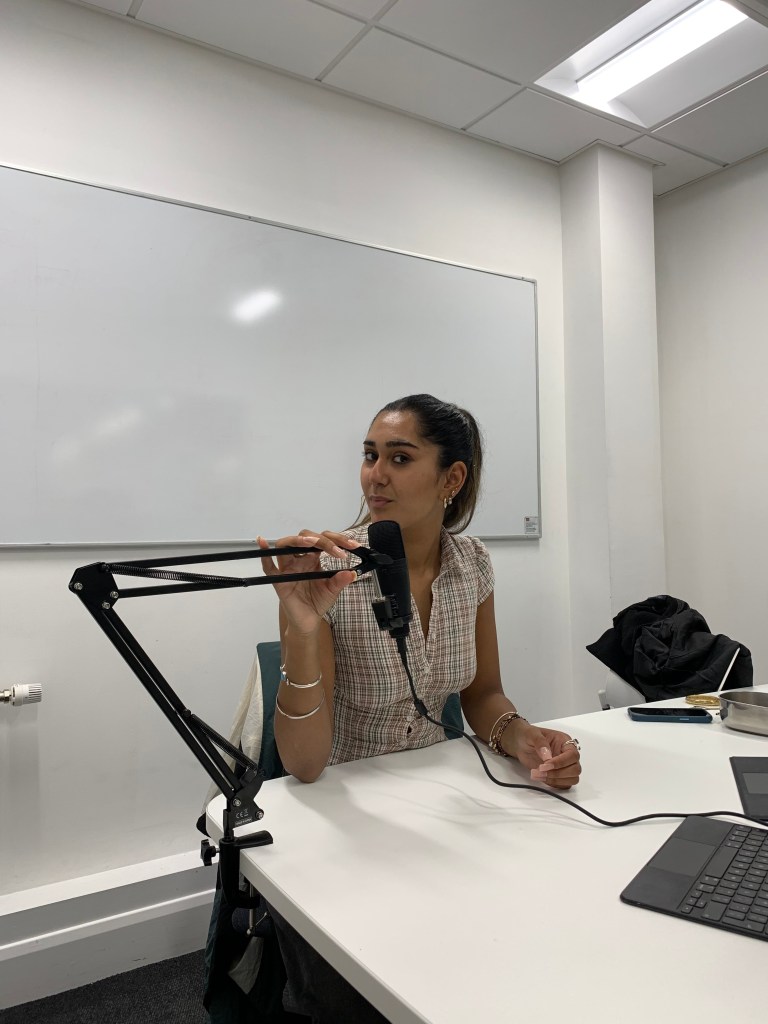
Female sexual health: the good, the bad, the ugly.

By Simi Ojla

November 28, 2024

A conversation universal to women everywhere always starts with “I had a friend who tried [form of contraception], and she had a terrible experience”. Contraceptive horror stories circulate like exchanges made at a cash counter. Women trade stories, using one of the oldest forms of education to highlight one of the largest gendered issues affecting women today.

In one of our earlier episodes, I investigated this issue, focusing on two stories and three conversations. The link between gendered disparities in treatment within healthcare and University students’ experiences of contraception are key to this discussion. After engaging in conversations here at the University of Liverpool, it was clear that this was affecting students.

During my research, it was apparent that female sexual health was isolated from other gendered issues. Historically, contraception has been made a woman’s responsibility, meaning the progression of contraception has been slow and healthcare issues within this field amass. The effects of this neglect have manifested, targeting female students who are disregarded in conversations surrounding their own sexual health.

In the case of the first student I spoke to, it was just that. She was coerced, belittled and disrespected during her appointment in the Brownlow student health centre. After having consulted her GP at home, she decided it was in her best interest to remove her IUD. Despite the careful planning and research she had prepared, she was met with confusion over why she would want to replace “a Rolls Royce with a clapped out Old Ford”. Having been at the appointment with her, I can recall the blatant level of disrespect the female practitioner had presented, viewing my friend as someone who she could speak down to. Unfortunately, this is one example of a recurring pattern in which women are being diminished.

“Initially refused to do either a pregnancy test or an SDI test and I was only 19 at the time, but I used the phrase I think. Please stop pressuring me. The issue of SDI tests for me and my personal relationship is non existent. What if it was actually a real risk? You know how would they have been spoken to. Both pregnancy and STI tests came back negative but I was intensely pressured into doing them.

I did not want to do them in the slightest. I was just sobbing on you in the toilet because we were both just so taken aback that this happened to a student at a sexual health clinic as well. I then, after having been pressured and spoken down to and horrid comments made about me and I then had to, you know, get undressed and had a very invasive and vulnerable procedure done to me and there wasn’t a lot of bedside manner given in that respect. You know, it wasn’t, it was the way that my GP described it to me.

(Excerpt from an interview with first student)

There is a pattern that consistently shows how women are having bad experiences when discussing changes they want, that affect their own body. However, what is most disappointing is that this has occurred within the University sexual health clinic.

The second story reflects disparities within the wider NHS framework. I spoke to a student who told me her story, which was retold on the show using a voice actor.

The second student’s story retold.

Not only was this story uncomfortable and shocking to hear, it was even more disturbing to listen about the way the student’s pain was ignored. This case, like many others, signifies the gendered disparities between the ways physical pain is acknowledged among men and women. Women’s pain appears to be ignored or made to seem exaggerated, and this boils down to misogynistic stereotypes of the ‘overly emotional’ woman. The student’s statement exposes the issues regarding the lack of interest, awareness and education surrounding female sexual health.

Both these stories highlight the neglected nature of the area of female sexual health, symbolizing a much bigger network of stories that are told between many female friend groups.

This article is an adapted version of a special feature I did with the Politics in Motion team. You can find the episode here on Spotify.