
Triumph or two steps back?
By Ceri Jones
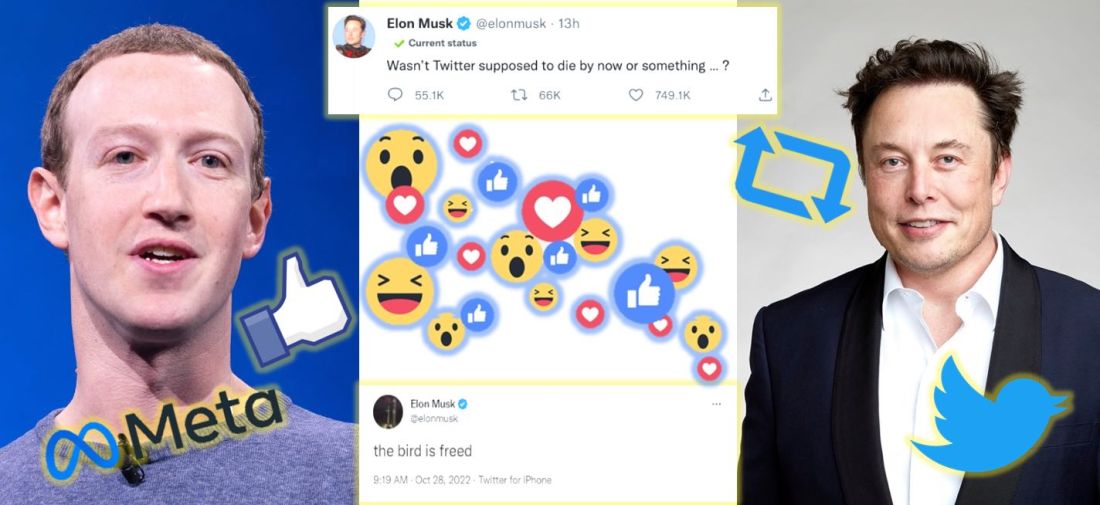
It’s been yet another chaotic week in the online world as Elon Musk continues on what can only be described as his Twitter rampage. After securing a $44 billion deal, Musk took ownership of the social media giant on October 27th. He swiftly dissolved Twitter’s board of directors and laid off almost 50% of hist staff. Seemingly, Musk has no regrets with the decision after posting a joke where he welcomes back “Ligma & Johnson”- two people who have never worked for Twitter.
Promising “free speech”, and envisioning a “digital town square”, Musk has invited former President Donald Trump back to the site following a poll he posted on the site. But what does Musk’s free speech agenda mean for democracy?
The promise of wider liberty and weaker censorship in some ways appears fruitful for democracy with its lucrative appeal of freedom of expression and removal of restrictions. Opinions that go against the hegemonic grain of society could be freely expressed without repercussions or the fear of being removed from the site.
Yet below the surface lurks a worrying and dark reality. The freedom to express hate speech, for bullying and discrimination. The freedom to spread more misinformation, to mislead and fabricate. These online dangers translate into real world violence and discrimination- a reason for Trump being removed from the site back in 2021. Does Musk’s invitation open the door to more of this? This is just one area in which Musk has faced staunch criticism.
“Please note that Twitter will do lots of dumb things in coming months. We will keep what works & change what doesn’t.”
@elonmusk
In turmoil for different reasons this month has been Meta, the parent company of Facebook, Instagram and WhatsApp. The company value has dropped by a whopping 74% this year as Zuckerberg focuses on the creation of the Metaverse at the expense of other businesses areas like the Facebook site, which is attracting too few young people and too little advertising.
The concept of the Metaverse- a virtual world made up of very real people who have digital avatars– is not new. Some see it as a digital dystopia, others see it as a technological revolution.
Mark Zuckerberg sees the metaverse as a successor to the mobile Internet. He believes that the metaverse will remove passivity from people’s online experience.
metamandrill
Zuckerberg has been prioritising the so-called Metaverse over other areas of his business model, which has angered some of his shareholders. chilly, he maintains 54% of voting rights so has been able to continue his Metaverse mission.
But his vision of a parallel reality where avatars are a representation of the human self is yet to prove itself profitable. Will users truly buy into his vision of an immersive reality?
We spoke to Dr Liam McLoughlin, lecturer in Communications and Media at the University of Liverpool, to gain more insight into Twitter and Meta’s trials and tribulations. Listen to the extended interview below.
For more on big tech, as well as climate coverage, the World Cup, and more, listen to our show on Spotify.
Don’t forget to listen live every Thursday at 9:30 here!
 Politics Hour