Strain on Scottish Independence as Sturgeon Resigns

By Ceri Jones

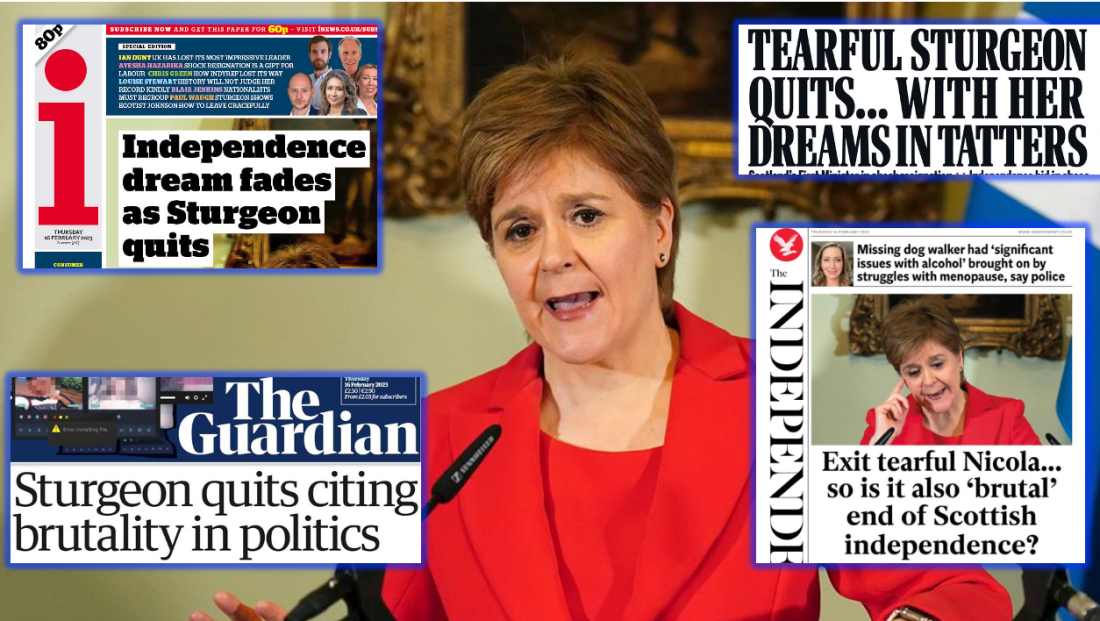
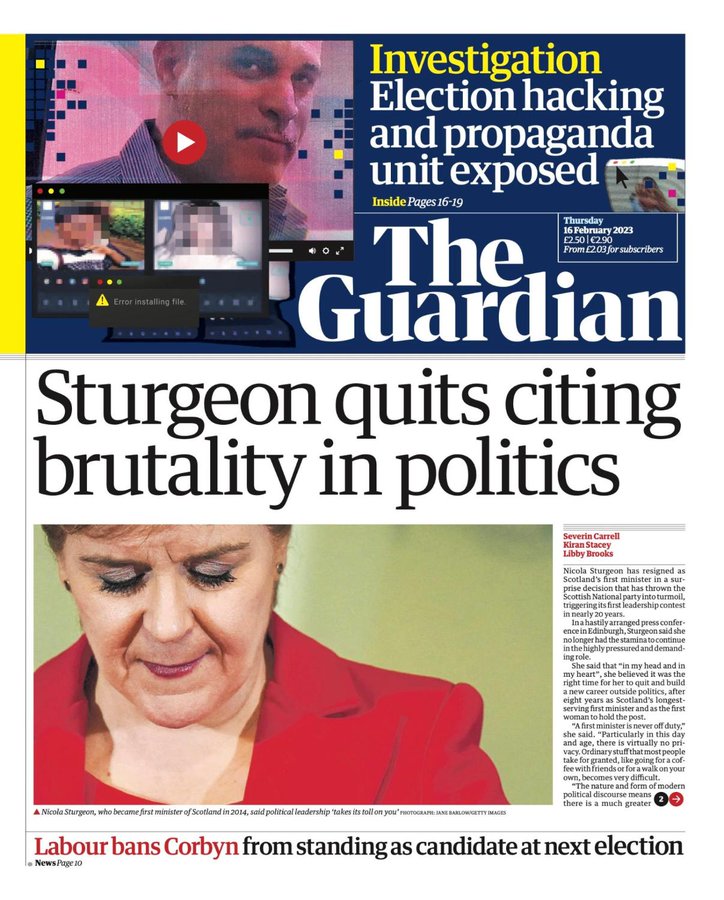
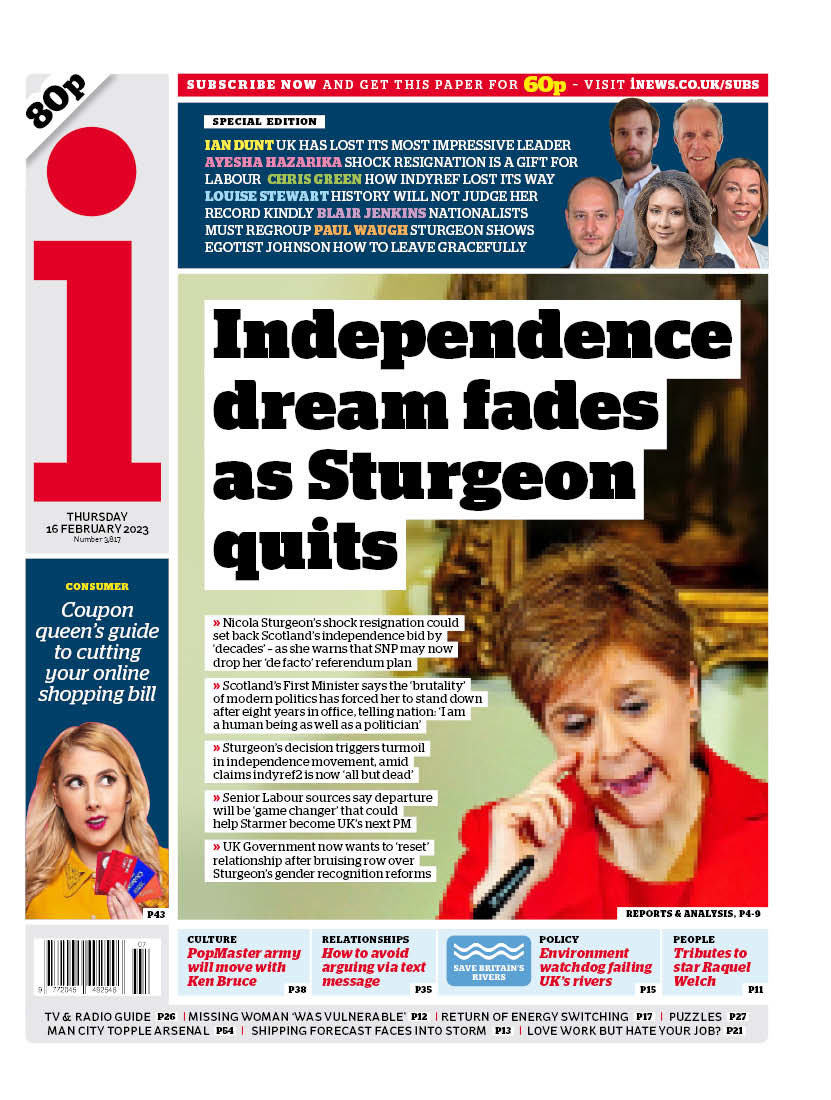
This week in the headlines came the shock resignation of Scotland’s First Minister Nicola Sturgeon after eight years in the role. Sturgeon will remain in post until her party chooses her successor as SNP leader. She has refused to back anyone as a successor, insisting there is a wealth of talent within the SNP.

"I have believed that part of serving well would be to know almost instinctively when the time is right to make way for someone else. And when that time came, to have the courage to do so, even if to many across the country and in my party it might feel too soon. In my head and in my heart I know that time is now. That it is right for me, for my party, and for the country."- Nicola Sturgeon

As she announced her decision to quit she said there was an increase in the “brutality of politics”. She insisted that this was a decision in the making over several weeks, although she had a recent clash in parliament over gender reform laws. Still, the news has come at huge surprise to many. And it seems Sturgeon is thinking about it both politically and personally, as she mentions her family in her speech and the toll it has taken.

“Now, to be clear, I’m not expecting violins here, but I am a human being as well as a politician.”

Nicola Sturgeon

But there are, of course, wider implications for the independence movement. Her predecessor has expressed concerns that the movement is now left with no clear strategy.

“…the movement has been left with no clear strategy for independence. The previously accepted referendum route has been closed and the de facto referendum/election proposal is now, at best, up in the air”.

Alex Salmond

Whilst Sturgeon has stated she will not be endorsing any candidate as her successor, what does appear is that whoever takes over the reigns will face a “range of serious Government policy challenges”. Potential successors include Finance Secretary Kate Forbes, Angus Robertson, Health Secretary Humza Yousaf, Mairi McAllan and Deputy First Minister John Swinney, amongst others.

Regardless, for many, Sturgeon’s resignation has incited an expression of gratitude for her efforts and respect for her time as First Minister.

This week I spoke to Professor Jonathon Tonge from the Department of Politics at the University of Liverpool. He specialises in devolution and kindly gave his time to speak to us on Beyond the Headlines to shed more light on the news and its potential implications.

“Under Nicola Sturgeon, the SNP got more votes than the Conservatives and Labour put together in Scotland.”

From being the first female First Minister in Scotland to her “remarkable” electoral success, the interview sheds light on Sturgeon’s lengthy political career and the troubles lying ahead for her new successor in achieving Scottish independence. Maintaining the SNP’s electoral popularity will be a crucial task for the next leader if they are to keep up the same momentum of the independence movement.

His outlook stressed how there is no real chance of a second independence referendum in the near future regardless, due to the refusal of the UK Supreme Court back in November 2022.

To hear the interview in full and for more stories, stream here on Spotify.

Special thanks to our guests who dedicated their time and knowledge this week- Professor Jonathon Tonge, Demi Babalola,  Robert Routledge and Emma Carroll.

For more from Beyond the Headlines, follow our Instagram and Twitter and stream live every Friday at 9:30AM.

Tough Times and Turbulence: Big Tech in Focus

Triumph or two steps back?

By Ceri Jones

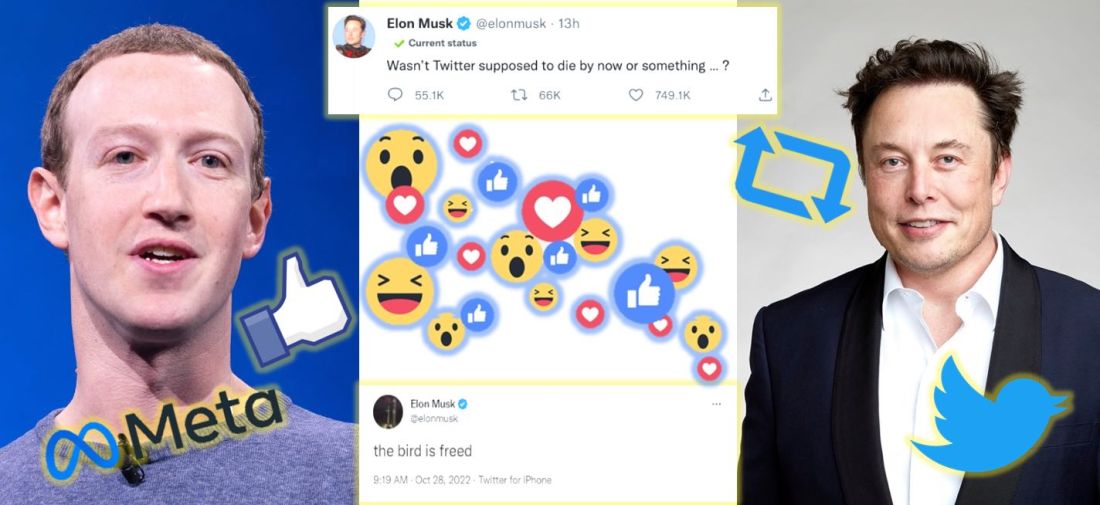
It’s been yet another chaotic week in the online world as Elon Musk continues on what can only be described as his Twitter rampage. After securing a $44 billion deal, Musk took ownership of the social media giant on October 27th. He swiftly dissolved Twitter’s board of directors and laid off almost 50% of hist staff. Seemingly, Musk has no regrets with the decision after posting a joke where he welcomes back “Ligma & Johnson”- two people who have never worked for Twitter.

Promising “free speech”, and envisioning a “digital town square”, Musk has invited former President Donald Trump back to the site following a poll he posted on the site. But what does Musk’s free speech agenda mean for democracy?

The promise of wider liberty and weaker censorship in some ways appears fruitful for democracy with its lucrative appeal of freedom of expression and removal of restrictions. Opinions that go against the hegemonic grain of society could be freely expressed without repercussions or the fear of being removed from the site.

Yet below the surface lurks a worrying and dark reality. The freedom to express hate speech, for bullying and discrimination. The freedom to spread more misinformation, to mislead and fabricate. These online dangers translate into real world violence and discrimination- a reason for Trump being removed from the site back in 2021. Does Musk’s invitation open the door to more of this? This is just one area in which Musk has faced staunch criticism.

“Please note that Twitter will do lots of dumb things in coming months. We will keep what works & change what doesn’t.”

@elonmusk

In turmoil for different reasons this month has been Meta, the parent company of Facebook, Instagram and WhatsApp. The company value has dropped by a whopping 74% this year as Zuckerberg focuses on the creation of the Metaverse at the expense of other businesses areas like the Facebook site, which is attracting too few young people and too little advertising.

The concept of the Metaverse-  a virtual world made up of very real people who have digital avatars– is not new. Some see it as a digital dystopia, others see it as a technological revolution.

Mark Zuckerberg sees the metaverse as a successor to the mobile Internet. He believes that the metaverse will remove passivity from people’s online experience.

metamandrill

Zuckerberg has been prioritising the so-called Metaverse over other areas of his business model, which has angered some of his shareholders. chilly, he maintains 54% of voting rights so has been able to continue his Metaverse mission.

 But his vision of a parallel reality where avatars are a representation of the human self is yet to prove itself profitable.  Will users truly buy into his vision of an immersive reality?

We spoke to Dr Liam McLoughlin, lecturer in Communications and Media at the University of Liverpool, to gain more insight into Twitter and Meta’s trials and tribulations. Listen to the extended interview below.

For more on big tech, as well as climate coverage, the World Cup, and more, listen to our show on Spotify.

Don’t forget to listen live every Thursday at 9:30 here!

UCU STRIKES- from an international perspective

Today, strikes have begun across 56 universities today including the University of Liverpool. The University and College Union (UCU) have demanded a £2,500 pay increase for members, an end to “pay injustice”, a re-evaluation of the pensions scheme and zero-hours contracts action to tackle “unmanageable workloads”. But what does this mean for students? Do they attend or avoid classes, or should they join the picket itself?

On the one hand, the message from University of Liverpool’s Pro Vice-Chancellor Gavin Brown asks students in an open email to “assume all activities are going ahead and attend as planned unless you hear definitively from your lecturer or School Office that a teaching event will not take place”. On the other hand, the guild announced last night that their ‘preferendum’ (a referendum with more than one choice) on whether to support lecturers’ strikes passed. This was with 2184 points to fully support, 1564 votes to support UCU in their disputes but not in industrial action and 885 votes against. Subsequently they are calling on students to support the strike and not cross the picket line. Here are their six resolutions for the coming days:

  1. To officially support any industrial action that may take place.
  2. To release an immediate public statement showing support if staff take industrial action.
  3. To help educate students about any industrial action and explain why they should support it.
  4. To organise ‘teach-out’ events to bring staff and students together to learn and discuss a range of topics including the industrial action, trade unionism and higher education.
  5. To lobby the university to meet the demands made the University and College Union. 
  6. To not cross the picket line and safeguard students without ‘breaking the strike.’

But for international students and lecturers, even if they wanted to, striking isn’t really an option. International students with VISAS are required to have an 80% attendance rate to comply with their VISA. This means that they cannot miss out on more than just sixteen days of lessons. As a result, students are forced to decide between crossing the picket line to achieve attendance or risking deportation. For years, calls have been made for universities to stop monitoring the attendance of students during strikes by staff. Last year, the University of Liverpool came under criticism for warning undergraduates in an open email that it was “unlawful” to join pickets and for international students to remember they would be jeopardising their visa by not crossing the picket line.

 Ex- Liverpool University student Yidan Gao from Suzhou, China wrote to me about her troubles with VISAs and strikes in her time at the University. “I was really worried about my VISA situation, from first year to last I would be scared about getting ill and missing university and then when the strikes started me and my friends didn’t know what to do, we wanted to strike but how could we do that and risk getting sent back home?”

As these new strikes begin, whether you choose to cross the picket line or not, it’s important to remember our privilege in being able to decide whether or not we want to support the strike. Additionally, we should remember when seeing international students crossing the picket that the consequences for them are far more severe than for non-international students.

If you’d like to find out more on strikes, why they are happening and what students think, tune in to our podcast from last week to hear more:

An Interview with Peter Hitchens

An Interview with Peter Hitchens

Peter Hitchens is a journalist I have followed for some time. I remember an extract of his coming up in my AS Level Politics exam on First Past The Post, many years ago now. I had watched his Oxford Union debate on free speech and decided that he would be a perfect individual to interview on such a contentious issue. Getting hold of him was a case of ringing up the Mail on Sunday and asking for his email, after all, Peter is very private when it comes to sharing contact details on twitter. He was very professional and quick on replying, and very generously gave up his time to speak with me.

The question formulation prior to the interview was difficult at the time. I wanted to make sure that the questions were open enough to encourage free-flow dialogue, but at the same time I wanted to ensure it was concise. The aim was for it to be around 10 minutes once broadcast. The questions I decided to go with were putting Peter’s argument under scrutiny, which felt to me like the best way to go about the interview. I studied and learnt about Peter’s arguments and many of the counter arguments that are currently discussed in the debate on free speech, such as safe spaces and offense. At times it felt a bit daunting to scrutinise, particularly due to Peter’s long-standing reputation and well-thought out points. But this is something I have learnt is a necessary part of being a journalist. I also wanted to have the Guild’s opinion broadcast, mainly as a counter to Peter’s arguments. I found a piece written by the Guild shortly after Peter’s visit to Liverpool in 2017. I did email the Guild for a reply, but they didn’t answer unfortunately. So instead, Kitty Ward, my fellow colleague, read out the response by the Guild after the interview. I thought this was fair and well-reasoned.

The actual interview was a little daunting at first. I was very nervous. But Peter was very polite and answered every question, and when I mean answered, he actually directly answered the question! The interview ended after about 12 minutes. I was glad that I made sure it was kept to an appropriate time. This made the editing process much simpler. I decided to cut out my parts of the interview and ask the questions on air, and then play each answer afterwards. This made it seem more organic and concise than simply not editing the interview at all. I was pleased with how it came across on air. There was always the worry that after so much preparation, something would go wrong! I am also extremely pleased with how many listens to the interview has had on Soundcloud. I decided to cut the interview from the two hour broadcast and upload it to Soundcloud as a single segment. This upload alone currently has 860 listens on Soundcloud.

Overall this interview was a wonderful experience. I learnt the process of getting in touch and arranging an interview with a prominent journalist. As well as the importance of the formulation of questions, which was arguably the toughest task of this experience. In the future I think it would be beneficial for me to have made sure I managed my time better in regard to the time and date of the interview. The interview was delayed a little due to uncertainty about when I wanted to do the interview, and when Peter was free to do so. Next time I would be more precise and give more clarification to the interviewee regarding the time and date of the interview. In addition, I would ensure that I countered some of the points made by the interviewee during the interview.

Link to the interview: https://soundcloud.com/thepoliticshour2018/peter-hitchens-on-free-speech-at-universities

Charlie Millward

Featured Image: Peter Hitchens debating at Sussex College, University of Cambridge, England. Courtesy of Nigel Luckhurst.

What does the future hold for Jeremy and Joe? – Coffee with Kilfoyle (Part two)

This is the second half of an interview conducted by Liverpool Student Radio Politics hour team member Alisha Lewis in 2018 with former Liverpool Labour MP, Peter Kilfoyle. It was conducted as part of a discussion on the past, present, and future of the Liverpool Labour Party – which you can listen to here: https://soundcloud.com/thepoliticshour2018/uk-politics-hour-week-8

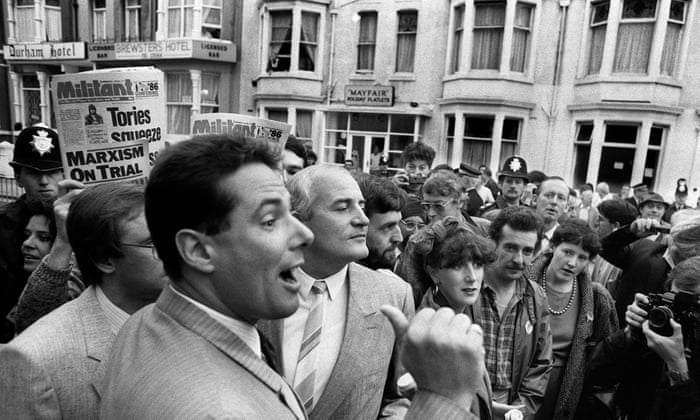
Former Labour minister Peter Kilfoyle earned the nickname “Witchfinder General” in the 1980s, as the party’s enforcer in the battle against Liverpool’s Derek Hatton lead Militant council.

In this half of the interview Alisha and Peter discuss the future of the Labour party, in Liverpool and beyond. Will Jeremy Corbyn make it to No. 10? Can Mayor Joe Anderson cling on for another term as Mayor of Liverpool? Could you be the next Labour leader?

The first half of the interview, which discusses Militant, Momentum, and the state of Liverpool Labour politics in 2018 can be found here.

Photo credit: Liverpool Express

Looking at the possibility of an early general election that always seems to be looming over us – Do you think that the Labour Party has a chance of getting into power, and Jeremy Corbyn into No. 10?

They’ve always got a chance. I’ve known Jeremy [Corbyn] for thirty years, over thirty years, and I find him a likeable enough bloke – but if I’d have still been there I’d have never nominated him, and I wouldn’t have voted for him. He doesn’t have the attributes that you need to be in that leadership position. It requires a degree, for example, of ruthlessness in dealing with people who are not producing the goods and are letting the side down. In some ways Jeremy’s too nice  a bloke, has a very consistent kind of guy. What he believes in I’m sure he believed in back in the 70s – I know he did.

But you’ve got to be adaptable, you’ve got to be flexible, that doesn’t mean you abandon your core beliefs or your values – I wouldn’t expect anybody to do that. But you need some personal skills that I am yet to see in Jeremy. One of the things that bothers me is not so much Jeremy, I’m like many people who are bothered by some of the people he’s surrounding himself with. I was no more impressed by some of the people that other leaders have surrounded themselves with. I always saw Mandelson as a dangerous individual.

But Jeremy’s people, No, they don’t seem to be up to it. Having said all of that, I acknowledge two things; Firstly that he was the duly elected leader, twice in fact, and secondly that it is up to people to do their best for the Labour Party regardless to keep it on track.

Thinking a bit more locally, and looking at Joe Anderson, we’ve got the mayorals…

Oh, not Joe Anderson, do I have to look at him?

Do your best – We’ve got the Mayoral selections coming up next year, do you think there’s a real chance he could get reselected?

I think there’s a good, there’s a chance, but whether he will or not is another matter. That’s down to people in the [Labour] Party, and all the signs are that people have seen through this charade – I mean there’s an awful lot of the [Donald] Trump in Joe Anderson. Not only the arrogance, and the lack of respect for other people in the way he conducts himself, but in the blatant untruths which he has put out about what is happening in the city. At long last I’m happy to say that people are starting to wake up, or have woken up, to all of this.

If that’s translated into meaningful action when we come to the reselection process will depend on a couple of things. It depends upon a viable alternative candidate, and what you don’t want is more of the same, that would be a nightmare. The other thing is, plainly and simply, people getting themselves organised behind that alternative candidate. Hopefully that will happen, and hopefully I think the young people in the city have got a major role to play here.

If nothing else they have a different take on what’s needed in the city, many of the students who come to the city come from other parts of the country where hopefully they’ve seen far better practice and bring with them a positivity which is often lacking in the city itself.

As somebody with an extensive and colourful history in Labour Politics in Liverpool, what advice would you give to somebody starting out in the Labour movement?

I wouldn’t advise them to go onto the council, it’s a very very different organisational structure now. It used to be that you could be influential and have your say, and have a positive input, from anywhere in the group – that seems to be lacking now.

Because of this elected mayor with all these blinking powers it gives the impression that the rest [of the Labour group] are just there to trudge the streets and give out a few leaflets – do as you’re told and that’s it. They [The Labour group] just aren’t part of the policymaking. I mean, I don’t see any policy, I don’t see any accountability, I don’t see any transparency. To see that would require the council to exercise their muscle.

Very often well meaning people go onto the council, and they end up, in order to get a position or to fulfill whatever their ambitions are, they play the game – they get sucked in. It is very hard to stay outside of that.

I’m just very cynical about local councils because, if I can take you back a bit in history, because I go back a bit in history. Following the Redcliff-Maud changes to local government, they separated the district Labour Party from the trade unions, the trades council, they became very separate entities. They started to pay councillors, and councillors then saw the option to get a few quid if they were unemployed or if they were pensioners.

They started to meet during the day, rather than in the evenings, which reinforced the tendency for councillors to be unemployed people or pensioners. Although I can say I’m an unemployed pensioner myself, we do not represent the bulk of people in this city. I think that was a bad step, and we’ve ended up now in this position where we’ve got an absolute waste of space as an elected mayor, who is getting an extraordinary amount of money. He’s dragging the city in this direction and that, with money being lost and wasted all over the place.

What remaining policies I thought we had over things like green spaces are being lost, alienating hitherto solid voters, you couldn’t get anybody creating more mayhem. I daresay at one time he would never ever have got near to the leadership.

Taking a step back from the Labour Party, if you were the leader of the opposition group on Liverpool City council today where would you be looking to take the city?

Two words. Two words. Transparency, and accountability. I mean, in practical terms what does that mean? I would want to get rid of the elected mayor. Not because I’m against it per say, I’ve seen it work very effectively in America, but because in this city it has been a failed adventure. Maybe there will be a time for it to return in the future, although, now that we have an elected metro mayor I don’t think that that will be the case.

But, I do believe that if I was in the position that you hypothesise I would certainly want to see a more traditional leader and council kind of arrangement set up. It would introduce, I believe, more accountability. It is not a perfect solution but hopefully it would bring a lot more transparency than we get at the moment.


Is this the return of Militant in Liverpool? – Coffee with Kilfoyle (Part one)

This is the first half of an interview conducted by Liverpool Student Radio Politics hour team member Alisha Lewis in 2018 with former Liverpool Labour MP, Peter Kilfoyle. It was conducted as part of a discussion on the past, present, and future of the Liverpool Labour Party – which you can listen to here: https://soundcloud.com/thepoliticshour2018/uk-politics-hour-week-8

Former Labour minister Peter Kilfoyle earned the nickname “Witchfinder General” in the 1980s, as the party’s enforcer in the battle against Liverpool’s Derek Hatton lead Militant council.

In this half of the interview, Alisha and Peter discuss the state of Liverpool Labour politics, responding to news of a new wave of deselections and the rise of Momentum candidates, which some have claimed is the start of a new militant era for the city.

Photo credit: BBC

What would you say the state of politics in the city of Liverpool is like today?

I think what you’ve got now is, in my lifetime, the third cycle of corruption in local politics on a real scale, which is very sad because I often wonder whether it is down to ineptitude on behalf of the current incumbents or whether it’s down to deliberate maleficence on their part.

The reality remains is that everybody suffers. Students suffer. I mean there’s that unfinished project, for example, between London road and Lord Nelson street alongside Lime Street Station. There are students actually living in there, and yet I’m satisfied that the place isn’t fit for human habitation.

It encapsulates everything that is wrong [with politics in Liverpool] because contractors and subcontractors that were building the thing were ripped off, investors were ripped off, the city’s been ripped off and it was run by a bunch of crooks. If anybody had had their eyes open, and looked, they would have seen that they were crooks – I know they’re crooks – and I’m sure that those in authority locally know that they’re crooks.

So, you have to either assume that, as I say, it’s either down to ineptitude or it’s down to, shall we say, at least acquiescence in crooked activity.

I’m sure you’ve been following the news recently, and seeing all the deselections happening in the Liverpool Labour Party – as someone who lived through the Militant era and Hatton on the council would you call this a predilection to the return of that kind of politics?

No, I think what happens is – and it’s good that it happens – is that every now and then there’s like a purge of the body politic. Politics needs it, it needs to get new blood. I’m not saying that it won’t happen again, and I’m not saying that the people coming in are all pure in the driven snow. I know that there are people who’ve come back into the party who don’t belong in the Labour Party, but there are a lot of decent people who are, especially younger people, very idealistic, very driven – and you’ve got to put your faith in them sometimes, in a new generation.

We have to ask: will they make a better fist of it than the current lot have done? And that’s happened time after time after time.

I had a bit of a discussion prior to arranging this interview with the students from the radio team, and it seems really odd to me that so few people really know very much about the Militant era in the 1980s.

You lived through it politically, and were a part of dismantling it, should there be a higher sense of political literacy about this issue among those seeking to go into or influence politics in the city?

When Derek Hatton was deputy leader of the council that was the second of the cycles of corruption in my time in the Labour Party over all the years. The truth is there was a very great difference then because he was a con man, and he remains one in my view, but he was a con man supreme in that he kidded Militant that he was more in line and in tune with them than he ever was.

I’ve never, to this day, been able to figure out exactly who used who more – whether they used him more, or he used them. It was the alignment of, as I can only describe him a con man, with a highly disciplined and focused ideological group like Militant who had their own very very separate agenda which gave rise to a group that was dominating the council but were never in the majority.

That kind of approach doesn’t appear to exist anymore, and if it doesn’t exist for me that is a good thing. You’ve got to remember that when Hatton was around they were what we call ‘entrists’, they were trotskyites, they were people who had a very separate set of beliefs to that of the Labour Party. They saw its weaknesses and tried to exploit them.

I know previously in interviews you’ve suggested that Momentum is nothing like the Militant movement, is that something you’re still holding to looking at the state of Labour politics in the city today?

I don’t doubt that there are people that were involved in my generation in Militant in the 1980s who are reinventing themselves as part of Momentum, that’s my understanding, but their time has gone – these are very very different times and very different circumstances.

I can think of one very energetic member of Militant back in the 1980s who is now the head of one of the big social housing companies in this city – there’s a bit of a transformation there, but it’s a good one. Instead of banging his head against an ideological brick wall what he’s actually done is tried to put his energies into something that is positive across the city, and he’s done it very successfully to be honest.

People have gone their own ways, and they’ve grown up politically, some of them haven’t.

Momentum is more than the sum of its parts – it strikes me as a big reaction to what has gone on before.