Featured

From the Sydney Jones to Westminster: Honey Barlow Marshall

Honey Barlow Marshall, University of Liverpool Philosophy, Politics and Economics student

By Wali Khan

13th March 2025

Many of us, especially those passionate about politics, dream of making a real impact on the country we live in. But very few of us actually get the opportunity to do so. Honey Barlow Marshall, a University of Liverpool PPE student, wasn’t willing to wait for an opportunity to come to her. Instead, at just 14 years old, she took matters into her own hands and immersed herself in the world of local politics.

Informed political participation is the backbone of a functioning democracy. Historically, many philosophers, including Socrates and Plato criticised democracy, arguing that the general public lacked the knowledge to make sound political decisions. The idea that politics should be reserved for an elite few still lingers today, but young people like Honey prove otherwise. By encouraging youth involvement, we cultivate a generation capable of making informed decisions about their future, challenging the notion that only “Philosopher Kings” are fit to govern.

Honey’s journey into politics began when she became Youth Officer for the Labour Party at just 14 years old. From there, she quickly rose through the ranks, becoming Chair of her constituency and later Secretary, all while navigating the skepticism and resistance that came with being a young woman in leadership.

Moving 200 miles away from her home in Lyme Regis for university, Honey didn’t leave her work behind. While balancing her academic studies, she continued campaigning, engaging in community work, and pushing for political change. In the most recent general election, her dedication was recognised when she was selected as a candidate for her local constituency under the Labour Party. Although she declined due to university commitments, it was a testament to the years of hard work she had already put in.

A surge in youth political participation brings fresh perspectives to government, challenging outdated norms and making policymaking more inclusive. In the 2024 general election, the House of Commons welcomed 10 MP’s from Gen Z. The same election also resulted in a record 263 female MP’s being elected, making up 40.5% of Parliament.

This growing diversity means our political system is becoming more representative of society as a whole. After all, if decisions are made primarily by one demographic, they will naturally cater to that group’s experiences and needs, not necessarily out of malice, but out of familiarity. Bringing new voices into the conversation challenges long-standing biases and ensures a broader range of perspectives are considered in policy making.

On this week’s episode of The Young Ones Politics Hour, I sat down with Honey to discuss her time inside Parliament while on placement with Labour MP Richard Burgon. She shared how the experience transformed her view of politics and opened up about some fascinating encounters – including an interaction with Che Guevara’s daughter.
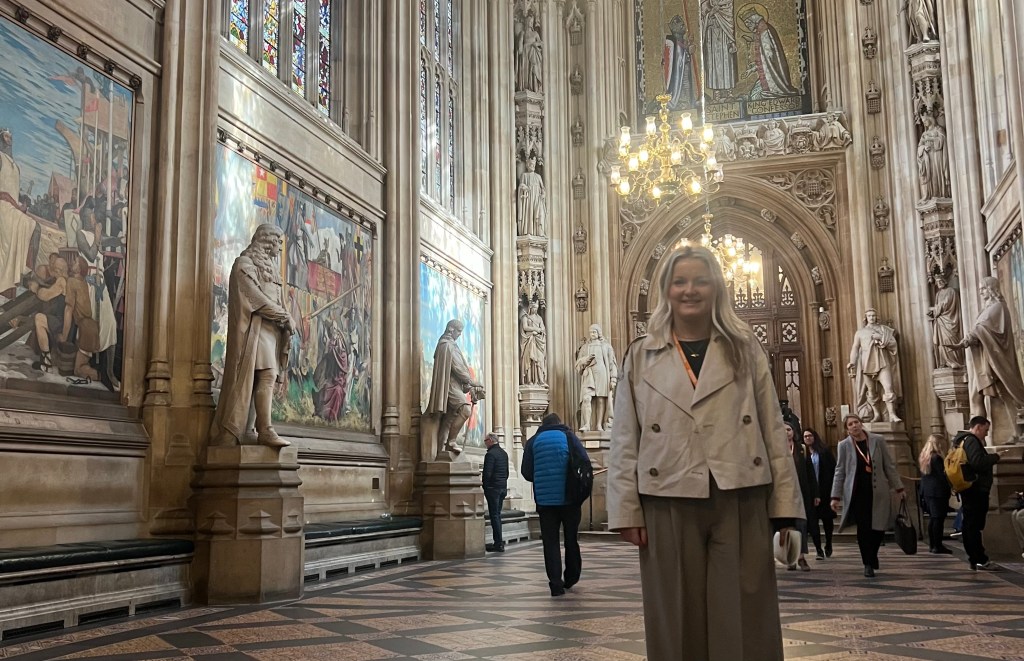
You can listen to the full interview now on Spotify at Liverpool Politics Hour!
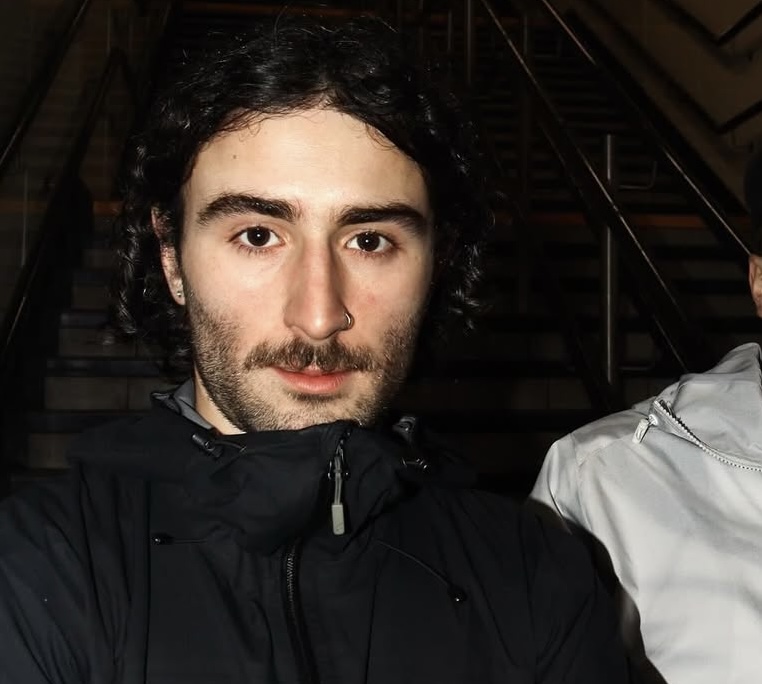

The Royal Marines Commando at our University: Sebastian O’Callaghan

Sebastian O’Callaghan, University of Liverpool Economics Society President

By Wali Khan

6th March 2025

Imagine being 17 years old and instead of hearing that your whole life is ahead of you, you’re told your future is over before it even begins. That was the reality for Sebastian O’Callaghan. Not particularly academically motivated, he achieved four U grades in his first-year mock exams. His college supervisors didn’t see potential, they saw failure. At just 17, he was asked to leave. So, he did.

Many young people are in this same position. Traditional academia isn’t designed for everyone, yet every student is forced to fit within its rigid framework. Too often, young people are convinced that struggling in school means they’re incapable of success. Sure, we’ve all heard of the billionaire entrepreneurs who were poor students but went on to change the world. But for every one of those success stories, there are thousands of others who are left behind, drained into mediocrity by a system that doesn’t recognise their potential.

At the end of 2023, 16.4% of 16-18-year-olds were not in education or training. That number is a wake-up call. We need to have serious conversations about why our education system is failing so many young people. But if you’re in that position right now, Seb’s journey should serve as proof that your story isn’t over. Not even close.

Fast forward to today: Seb is studying economics at the University of Liverpool, averaging a first in his degree. He’s also the President of the Economics Society and is on track for a promising career in finance. But his road to success was anything but easy.

Between dropping out of college and starting university, Seb struggled with depression and a loss of identity. Searching for purpose, he set his sights on one of the toughest challenges out there – the Royal Marines. The odds weren’t in his favor. It’s estimated that out of 26,000 applicants each year, only 400 successfully complete training.

And then there were the doubters, including his own father. But Seb was determined. He endured the grueling training, proved everyone wrong, and earned the coveted Green Beret, becoming a Royal Marines Commando. In our interview, he shared what that experience meant to him. The same student who was told he wasn’t good enough for college had proved to himself that he was more than capable. He just needed to be in the right environment to thrive.

While deployed with the Marines, Seb didn’t stop pushing himself. He self-taught three A-levels and secured an offer to study economics at the University of Liverpool, all despite having only four GCSEs and no predicted A-level grades. That level of determination is difficult to measure by exam scores.

At university, he didn’t just study economics, he became a leader. In our interview, he talked about running for President of the Economics Society and shared some of his campaign tactics.

“Well, I think if anyone read my manifesto, it included a bit of humour… I also made sure to discredit some of the other candidates.”

– Sebastian O’Callaghan

Seb’s story is a testament to resilience and self-belief. If you’ve ever doubted yourself because of academic struggles, let this be your reminder: your potential isn’t defined by a school report card.

For the full conversation, tune into the Liverpool Politics Hour on Spotify and hear Seb talk about his journey, his time in the Marines, and what it really takes to turn things around.

Featured

What Bad Bunny’s new album tells us about immigration, neocolonialism and gentrification in Puerto Rico

By Simi Ojla

The release of Bad Bunny’s new album comes at a time when songs of protest are needed more than ever.

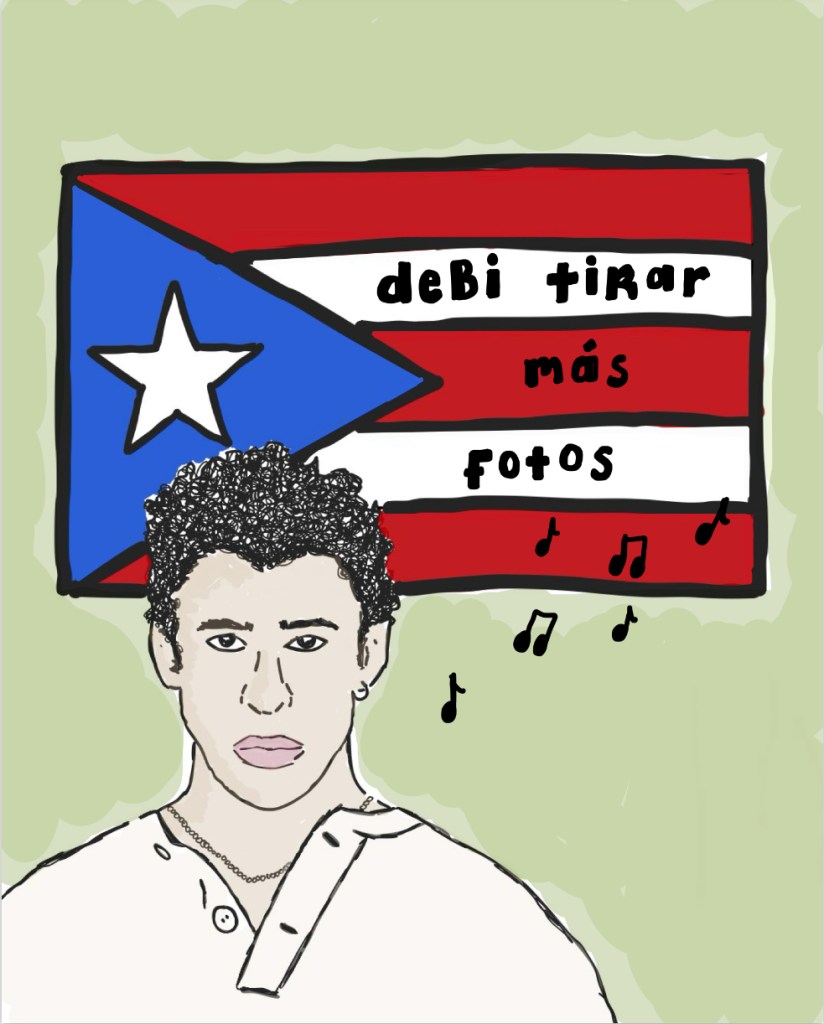
The 30 year old Puerto Rican rapper, otherwise known as Benito Antonio Martínez Ocasio, released his new album, Debi Tirar Mas Fotos on the 5th January and its been heralded his ‘love letter to Puerto Rico’. In this week’s episode of Politics in Motion, I broke down the relevance of his songs without being able to reference the songs themselves. As a result, I’ve decided to move over to the blog, for some deeper analysis of what this album means and how it ties music with politics.

Moving away from his usual music, laced with themes of heartbreak and centred around relationships, his new songs have much deeper layers of meaning. The blend of rich plena and salsa rhythms, coupled with his modern version of storytelling, reignite the best of traditional Puerto Rican music in an energetic and moving manner.

Despite being known for being outspoken about the social and political issues within the US-controlled island, the release of an entire album reveals a more personal and vulnerable element to his politics. Through his songs he has masterfully articulated both his love and concern for his home country.

Chronologically, the album begins with “Nuevayol!”, where he calls out to the Puerto Rican diasporas in New York. This is followed by his song “VOY A LLeVARTE PA PR”, meaning “I am going to take you to PR”, where the rest of the album remains. The album has gained significant popularity, and it is clear that the project has been a personal source of healing, as he said in a recent Time interview. “I found what my roots are: the sound that represents me.”

But what are those sounds saying?

Debi Tirar Mas Fotos, translated to, ‘I should have taken more photos’, refers to the historical culture of taking pictures that savour important moments in time. The meaning behind the song ‘DTMF’, an abbreviation of the album title, refers to the idea of regretting not savouring the beauty of something that once was.

“I should’ve taken more pictures when I had you
I should’ve given you more kisses and hugs whenever I could
I hope my people never move away”

The translation above emulates the core concept of the project: cherishing what is truly important before it’s gone. This applies to his family and friends but also to his country. In this sense, he sets the tone for the other songs in the album, and teases at the political statements surrounding the effects of US control on Puerto Rico.

This has picked up popularity, as fans have rushed to social media spaces like TikTok and Instagram to share their thoughts. Through this it is clear that the message of the album translates across many cultures, with users referring to the gentrification of their home countries and realising the slow eradication of their cultures.

Benito has utilised his power as one of the most powerful global artists to shed light on the political and social issues of his home country. He has used songs like “Turista” and “LO QUE LE PASÓ A HAWAii” to stress the harm that tourism and gentrification have done to the Island. This has been illustrated with the short film he put out in parallel with the album, which shows the detrimental impact gentrification has had in erasing the culture of his home.

“[Chorus]
Thеy want to take my river and my beach too
They want my neighborhood and grandma to leave
No, don’t let go of the flag nor forget the lelolai
‘Cause I don’t want them to do to you what happened to Hawaii”

Drawing parallels to Hawaii, Benito warns his people of a possible future where Puerto Rico becomes another US state. His music calls to them to protect their nationhood.

Since the aftermath of the Spanish-American war in 1898, the US government took control of Puerto Rico, marking it as a neocolony. Debi Tiras Mas Fotos exposes the truths of the political situation, hinting at neglect of locals in favour of US citizens coupled with gentrification.

All in all, the album is a searing representation of the rich and diverse history of Puerto Rico and also the unstable future for the country. Not only does it reinvigorate more traditional music, but it creates a new space for it in a modern context and shows that protest music is no longer facing extinction.

Female sexual health: the good, the bad, the ugly.

By Simi Ojla

November 28, 2024

A conversation universal to women everywhere always starts with “I had a friend who tried [form of contraception], and she had a terrible experience”. Contraceptive horror stories circulate like exchanges made at a cash counter. Women trade stories, using one of the oldest forms of education to highlight one of the largest gendered issues affecting women today.

In one of our earlier episodes, I investigated this issue, focusing on two stories and three conversations. The link between gendered disparities in treatment within healthcare and University students’ experiences of contraception are key to this discussion. After engaging in conversations here at the University of Liverpool, it was clear that this was affecting students.

During my research, it was apparent that female sexual health was isolated from other gendered issues. Historically, contraception has been made a woman’s responsibility, meaning the progression of contraception has been slow and healthcare issues within this field amass. The effects of this neglect have manifested, targeting female students who are disregarded in conversations surrounding their own sexual health.

In the case of the first student I spoke to, it was just that. She was coerced, belittled and disrespected during her appointment in the Brownlow student health centre. After having consulted her GP at home, she decided it was in her best interest to remove her IUD. Despite the careful planning and research she had prepared, she was met with confusion over why she would want to replace “a Rolls Royce with a clapped out Old Ford”. Having been at the appointment with her, I can recall the blatant level of disrespect the female practitioner had presented, viewing my friend as someone who she could speak down to. Unfortunately, this is one example of a recurring pattern in which women are being diminished.

“Initially refused to do either a pregnancy test or an SDI test and I was only 19 at the time, but I used the phrase I think. Please stop pressuring me. The issue of SDI tests for me and my personal relationship is non existent. What if it was actually a real risk? You know how would they have been spoken to. Both pregnancy and STI tests came back negative but I was intensely pressured into doing them.

I did not want to do them in the slightest. I was just sobbing on you in the toilet because we were both just so taken aback that this happened to a student at a sexual health clinic as well. I then, after having been pressured and spoken down to and horrid comments made about me and I then had to, you know, get undressed and had a very invasive and vulnerable procedure done to me and there wasn’t a lot of bedside manner given in that respect. You know, it wasn’t, it was the way that my GP described it to me.

(Excerpt from an interview with first student)

There is a pattern that consistently shows how women are having bad experiences when discussing changes they want, that affect their own body. However, what is most disappointing is that this has occurred within the University sexual health clinic.

The second story reflects disparities within the wider NHS framework. I spoke to a student who told me her story, which was retold on the show using a voice actor.

The second student’s story retold.

Not only was this story uncomfortable and shocking to hear, it was even more disturbing to listen about the way the student’s pain was ignored. This case, like many others, signifies the gendered disparities between the ways physical pain is acknowledged among men and women. Women’s pain appears to be ignored or made to seem exaggerated, and this boils down to misogynistic stereotypes of the ‘overly emotional’ woman. The student’s statement exposes the issues regarding the lack of interest, awareness and education surrounding female sexual health.

Both these stories highlight the neglected nature of the area of female sexual health, symbolizing a much bigger network of stories that are told between many female friend groups.

This article is an adapted version of a special feature I did with the Politics in Motion team. You can find the episode here on Spotify.

Tough Times and Turbulence: Big Tech in Focus

Triumph or two steps back?

By Ceri Jones

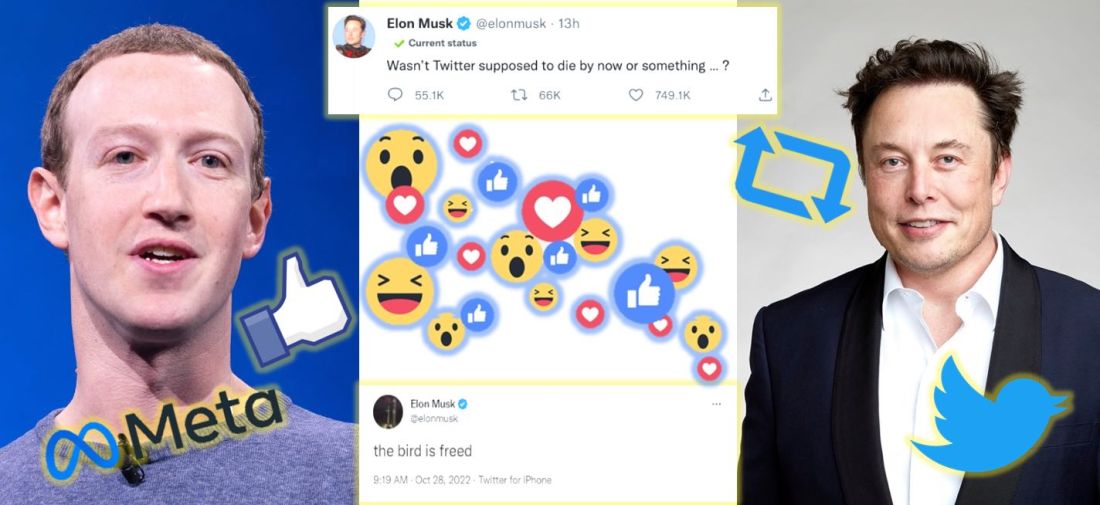
It’s been yet another chaotic week in the online world as Elon Musk continues on what can only be described as his Twitter rampage. After securing a $44 billion deal, Musk took ownership of the social media giant on October 27th. He swiftly dissolved Twitter’s board of directors and laid off almost 50% of hist staff. Seemingly, Musk has no regrets with the decision after posting a joke where he welcomes back “Ligma & Johnson”- two people who have never worked for Twitter.

Promising “free speech”, and envisioning a “digital town square”, Musk has invited former President Donald Trump back to the site following a poll he posted on the site. But what does Musk’s free speech agenda mean for democracy?

The promise of wider liberty and weaker censorship in some ways appears fruitful for democracy with its lucrative appeal of freedom of expression and removal of restrictions. Opinions that go against the hegemonic grain of society could be freely expressed without repercussions or the fear of being removed from the site.

Yet below the surface lurks a worrying and dark reality. The freedom to express hate speech, for bullying and discrimination. The freedom to spread more misinformation, to mislead and fabricate. These online dangers translate into real world violence and discrimination- a reason for Trump being removed from the site back in 2021. Does Musk’s invitation open the door to more of this? This is just one area in which Musk has faced staunch criticism.

“Please note that Twitter will do lots of dumb things in coming months. We will keep what works & change what doesn’t.”

@elonmusk

In turmoil for different reasons this month has been Meta, the parent company of Facebook, Instagram and WhatsApp. The company value has dropped by a whopping 74% this year as Zuckerberg focuses on the creation of the Metaverse at the expense of other businesses areas like the Facebook site, which is attracting too few young people and too little advertising.

The concept of the Metaverse-  a virtual world made up of very real people who have digital avatars– is not new. Some see it as a digital dystopia, others see it as a technological revolution.

Mark Zuckerberg sees the metaverse as a successor to the mobile Internet. He believes that the metaverse will remove passivity from people’s online experience.

metamandrill

Zuckerberg has been prioritising the so-called Metaverse over other areas of his business model, which has angered some of his shareholders. chilly, he maintains 54% of voting rights so has been able to continue his Metaverse mission.

 But his vision of a parallel reality where avatars are a representation of the human self is yet to prove itself profitable.  Will users truly buy into his vision of an immersive reality?

We spoke to Dr Liam McLoughlin, lecturer in Communications and Media at the University of Liverpool, to gain more insight into Twitter and Meta’s trials and tribulations. Listen to the extended interview below.

For more on big tech, as well as climate coverage, the World Cup, and more, listen to our show on Spotify.

Don’t forget to listen live every Thursday at 9:30 here!