Featured

What Bad Bunny’s new album tells us about immigration, neocolonialism and gentrification in Puerto Rico

By Simi Ojla

The release of Bad Bunny’s new album comes at a time when songs of protest are needed more than ever.

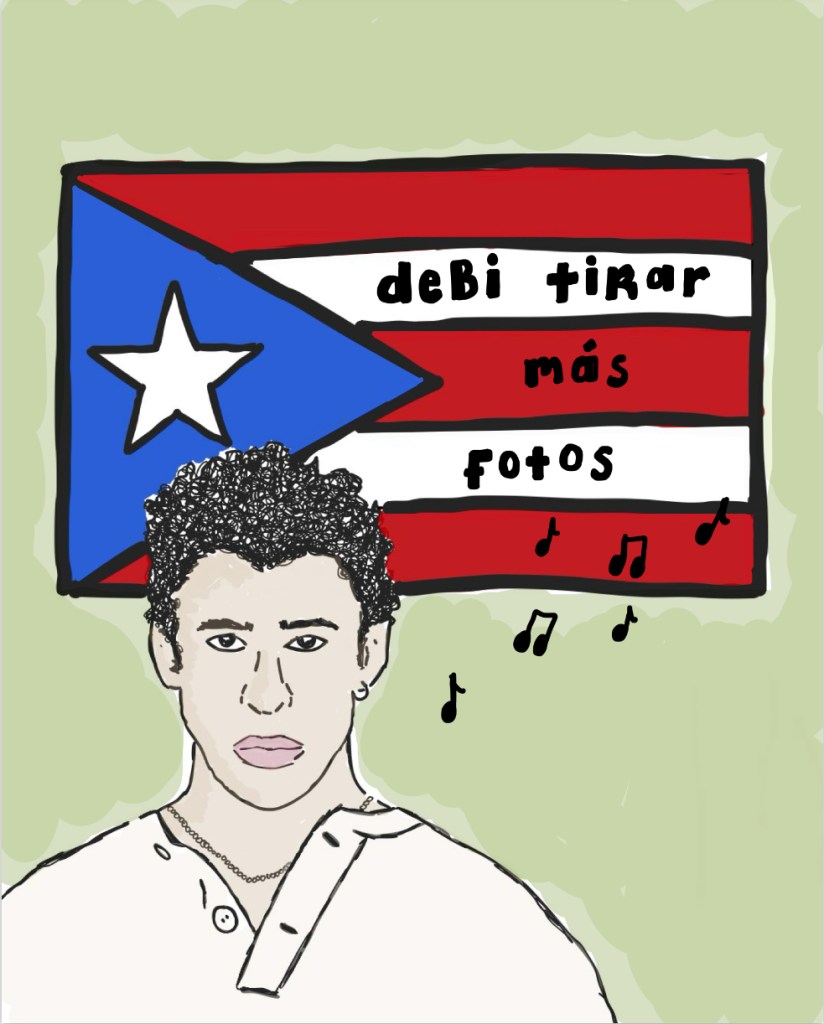
The 30 year old Puerto Rican rapper, otherwise known as Benito Antonio Martínez Ocasio, released his new album, Debi Tirar Mas Fotos on the 5th January and its been heralded his ‘love letter to Puerto Rico’. In this week’s episode of Politics in Motion, I broke down the relevance of his songs without being able to reference the songs themselves. As a result, I’ve decided to move over to the blog, for some deeper analysis of what this album means and how it ties music with politics.

Moving away from his usual music, laced with themes of heartbreak and centred around relationships, his new songs have much deeper layers of meaning. The blend of rich plena and salsa rhythms, coupled with his modern version of storytelling, reignite the best of traditional Puerto Rican music in an energetic and moving manner.

Despite being known for being outspoken about the social and political issues within the US-controlled island, the release of an entire album reveals a more personal and vulnerable element to his politics. Through his songs he has masterfully articulated both his love and concern for his home country.

Chronologically, the album begins with “Nuevayol!”, where he calls out to the Puerto Rican diasporas in New York. This is followed by his song “VOY A LLeVARTE PA PR”, meaning “I am going to take you to PR”, where the rest of the album remains. The album has gained significant popularity, and it is clear that the project has been a personal source of healing, as he said in a recent Time interview. “I found what my roots are: the sound that represents me.”

But what are those sounds saying?

Debi Tirar Mas Fotos, translated to, ‘I should have taken more photos’, refers to the historical culture of taking pictures that savour important moments in time. The meaning behind the song ‘DTMF’, an abbreviation of the album title, refers to the idea of regretting not savouring the beauty of something that once was.

“I should’ve taken more pictures when I had you
I should’ve given you more kisses and hugs whenever I could
I hope my people never move away”

The translation above emulates the core concept of the project: cherishing what is truly important before it’s gone. This applies to his family and friends but also to his country. In this sense, he sets the tone for the other songs in the album, and teases at the political statements surrounding the effects of US control on Puerto Rico.

This has picked up popularity, as fans have rushed to social media spaces like TikTok and Instagram to share their thoughts. Through this it is clear that the message of the album translates across many cultures, with users referring to the gentrification of their home countries and realising the slow eradication of their cultures.

Benito has utilised his power as one of the most powerful global artists to shed light on the political and social issues of his home country. He has used songs like “Turista” and “LO QUE LE PASÓ A HAWAii” to stress the harm that tourism and gentrification have done to the Island. This has been illustrated with the short film he put out in parallel with the album, which shows the detrimental impact gentrification has had in erasing the culture of his home.

“[Chorus]
Thеy want to take my river and my beach too
They want my neighborhood and grandma to leave
No, don’t let go of the flag nor forget the lelolai
‘Cause I don’t want them to do to you what happened to Hawaii”

Drawing parallels to Hawaii, Benito warns his people of a possible future where Puerto Rico becomes another US state. His music calls to them to protect their nationhood.

Since the aftermath of the Spanish-American war in 1898, the US government took control of Puerto Rico, marking it as a neocolony. Debi Tiras Mas Fotos exposes the truths of the political situation, hinting at neglect of locals in favour of US citizens coupled with gentrification.

All in all, the album is a searing representation of the rich and diverse history of Puerto Rico and also the unstable future for the country. Not only does it reinvigorate more traditional music, but it creates a new space for it in a modern context and shows that protest music is no longer facing extinction.
Is this Britain’s Most Eccentric Pub Landlord?

By Harry Ashcroft

November 28, 2024

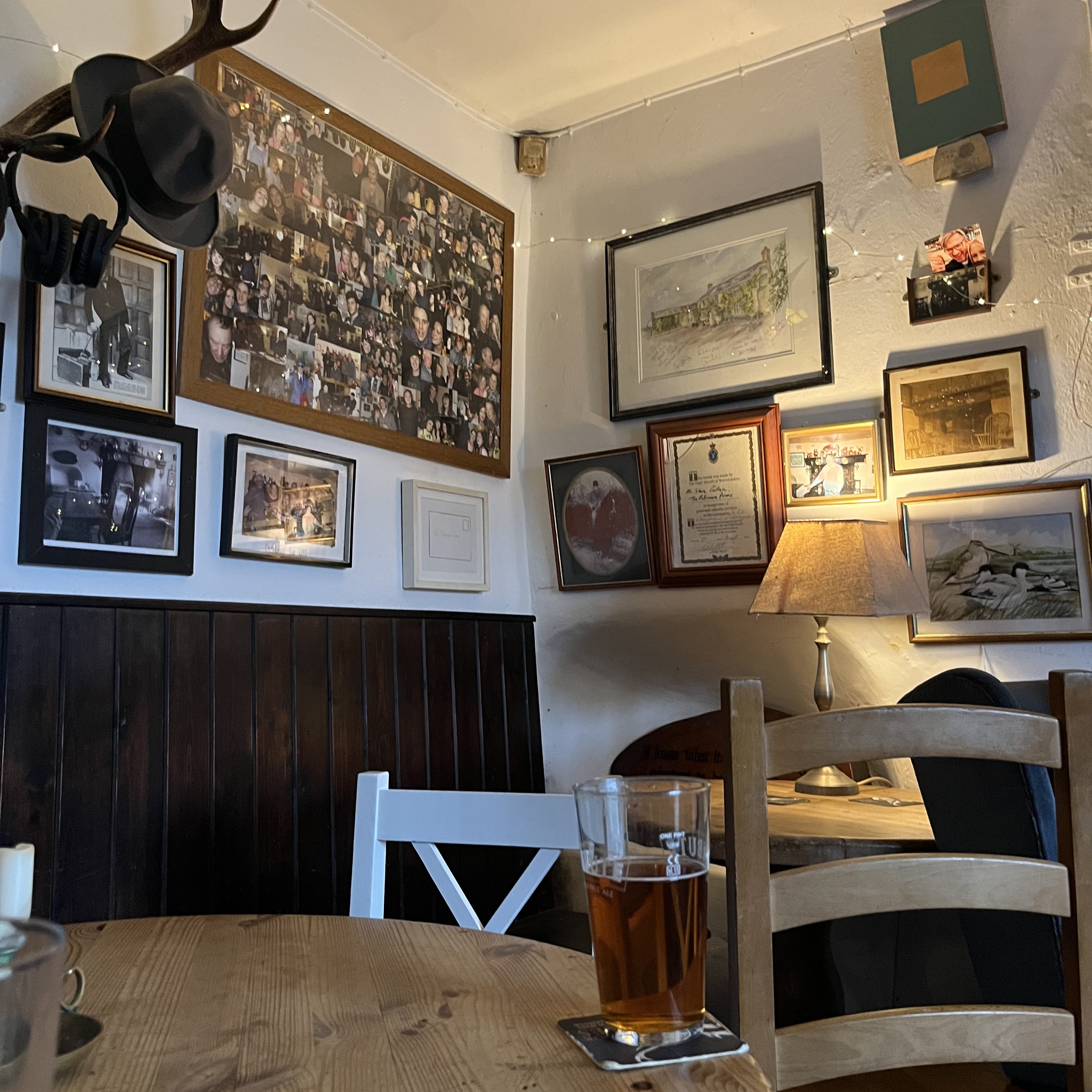
The cosy interior of the Politimore Arms, featuring a pint of the only draught drink they have, an Exeter Ale. Note also the candle on the left-hand side.

Last month I made the six-hour, England-splitting semi-circular drive from Liverpool down to North Devon to celebrate my Grandma’s 80th birthday. On the second afternoon there, as a group of us traversed the narrow country lanes, a glowing sight welcomed us in from the bleak and windy Exmoor hills. A humble and simple exterior that didn’t accurately show off the storied saga waiting for us inside.

“Whatever it takes, we don’t care. The pub is never going to shut.”

— Steve Cotten, Landlord of the Poltimore Arms

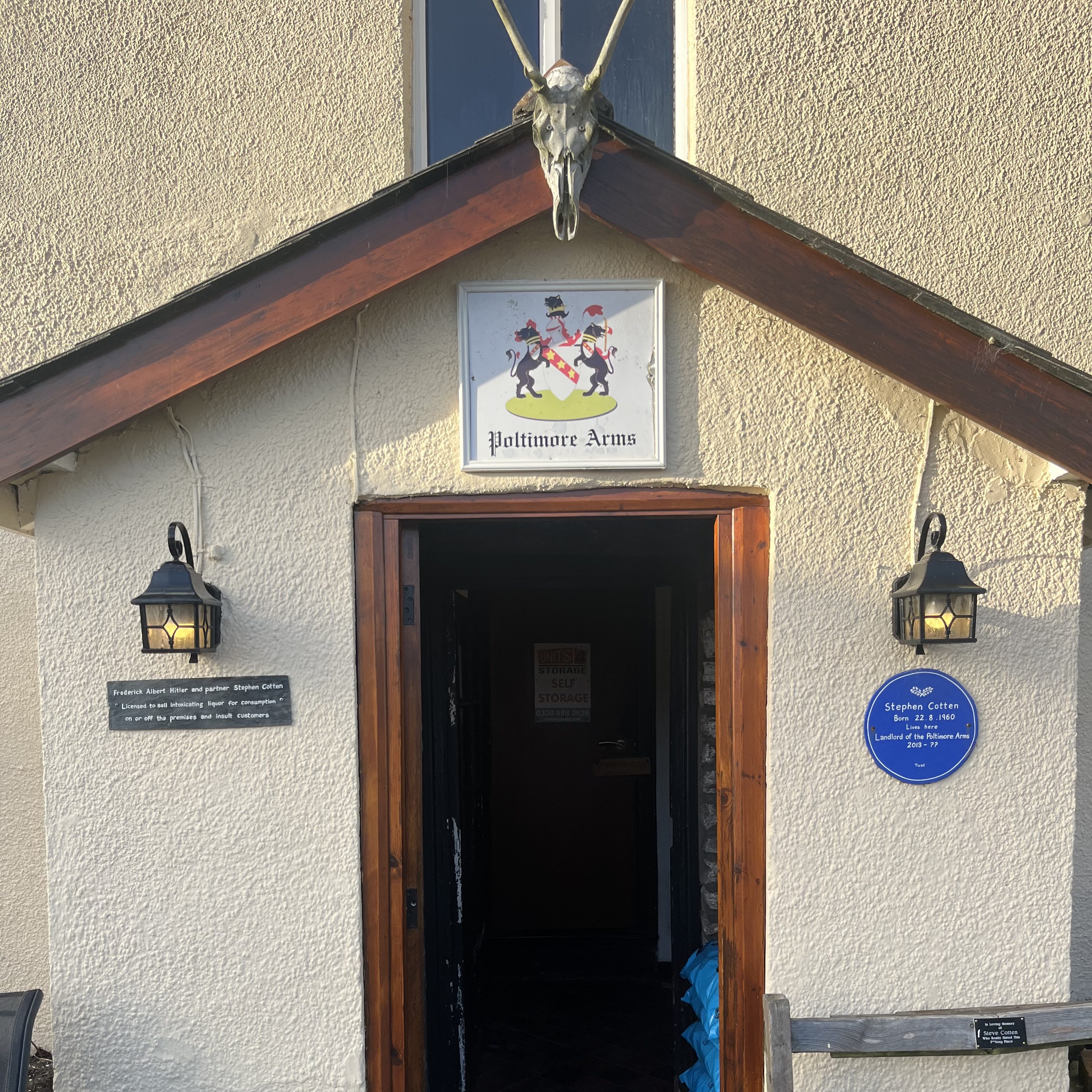
The humble yet inviting exterior of the pub. The sign on the left reads “Frederick Albert Hitler and partner Stephen Cotten. Licensed to sell intoxicating liquor for consumption on or off the premises and insult customers.” The late Fred Hitler was Steve’s old cat.

The Poltimore Arms is unlike any pub I’ve ever been in. Firmly cash only, completely off the grid and run by candles, solar panels and water from the spring up the hill. Its most notable aspect, however, is its landlord, who, much to my surprise, is already quite famous, as Britain’s Grumpiest Landlord.

Steve Cotten and his pub have been featured in major news outlets across Britain over the last few years. He is a man full of tales and anecdotes of the last decade of running the Poltimore Arms.

I asked if he would sit down and talk to me about how he runs the pub and what makes it so unique, as well as his political involvement as a parliamentary candidate for North Devon in the last two general elections. He was more than happy to oblige and the next day I returned, where before I had even begun conducting the interview he had begun working the audience of pub dwellers that consisted mainly of my extended family. Steve loves an audience.

The Interview

“My only business plan – Don’t do what the other pubs do because they’re all f***ing failing.”

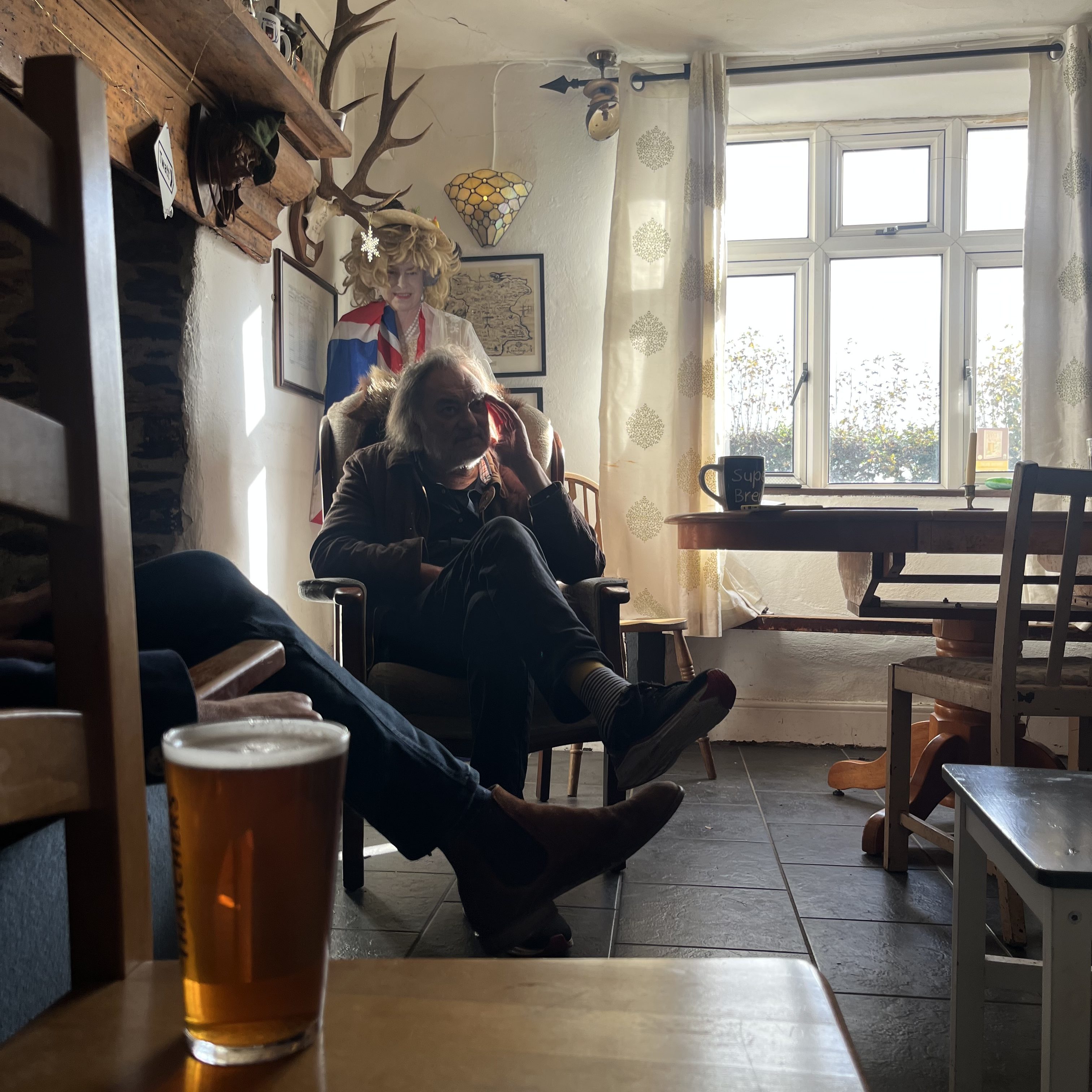
Steve in his chair surrounded by tea, tobacco and day drinkers.

Steve was invested in the interview. He informed me of his disappointment that I hadn’t brought a camera crew with me as he had “spent all morning” combing his hair. As it was only 2pm he was sat in his usual seat by the fire with a cup of tea. The rest of us in the pub had chosen to indulge in that day’s keg of Exeter Ale, self-poured so that we couldn’t “go on TripAdvisor and say the service was rude.” This created what I would call Steve’s “optimum storytelling atmosphere.”

We covered a lot of ground.

Steve explained how the pub is completely off-grid. The water comes from a spring two miles up the hill. When they run into water supply-related issues (a fairly often occurrence apparently), he puts a post on the pub’s Facebook page and the next day wakes up with five-gallon drums of water sitting outside, dropped off by local farmers. The electricity in the pub is supplied by newly set up solar panels.

“I don’t do food… Well, my barmaid cooks stuff on a Thursday night, but you wouldn’t want to eat that. I mean it really is diabolical.”

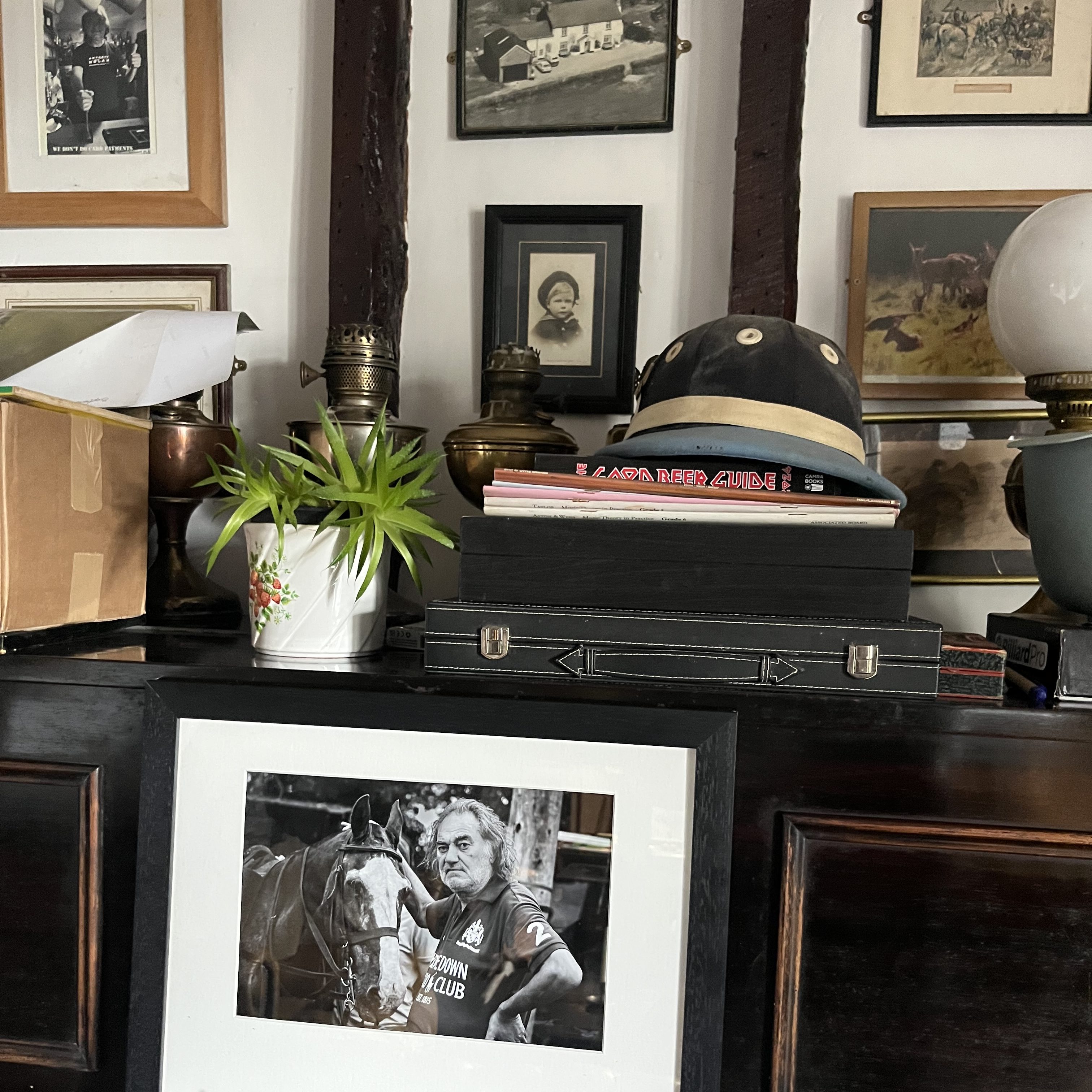
Steve explained how he had learnt to ride a horse to impress a woman who lived down the road, a Times art critic. This then led to the Poltimore Arms creating the countries only Pub Polo team. Despite being legally blind, Steve is apparently quite the polo player.

What really struck me, besides Steve’s constant jokes and his supposed parliamentary candidacy core policy of “free hair colouring on the National Health Service” for “the most oppressed minority in the world – ginger people,” was the true sense of community spirit that enveloped the foundations of the pub.

“It’s just p***heads basically, it’s all about the community working together.”

He explained how when elderly people in the community are sick or need help, the pub will ensure someone goes around to cut their grass or do their shopping. He says it’s all about looking after each other. To me, this is why the pub is so successful. Despite being in the middle of nowhere with not even a village connected to it, the sense of companionship is overwhelming. This is what makes places like this so vital in rural communities.

This article is an adapted version of a Politics in Motion radio special feature. You can listen to it, as well as my whole interview with Steve, on Spotify.