‘I like to beautify the ugly and uglify the beautiful’: Returning to interview Sophie McQue, a Gen Z poet

Written by Tanzi Stewart-Stewart

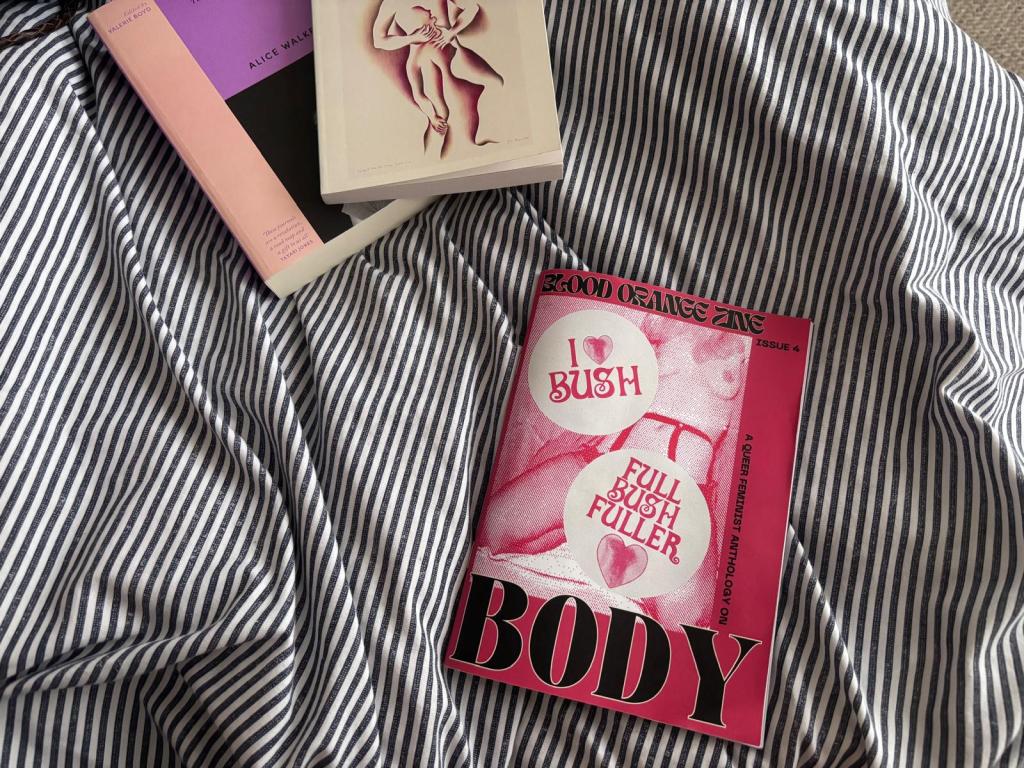
Loyal listeners may remember Sophie McQue from her interview about her and her friend Rosie’s feminist book club, Tongues of Stone. But a book club is dedicated to other authors, and Sophie herself has recently been published in a feminist zine, Blood Orange Zine, based here in Liverpool. 

Sitting in Sophie’s bedroom now, it is every inch a bohemian muse’s boudoir draped in white lace and adorned with biblical iconography. Even my interviewee herself is decorated similarly, with a stick and poke of the virgin mary on one arm and ropes of pearls and crosses cascading over her other shoulder. She is an atheist, of course.

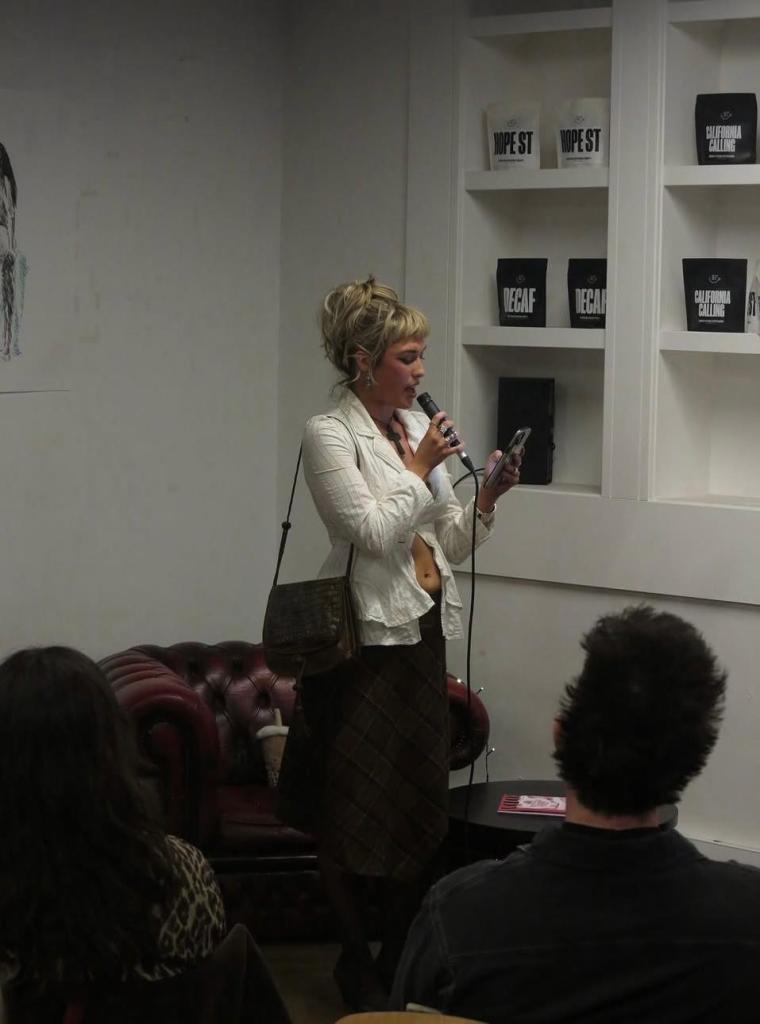
I previously interviewed Sophie on The Young Ones on the topic of young women in literature in Liverpool. On that note, Blood Orange is a queer feminist zine, with themes such as female rage, female friendships, and reclaiming the night. Their most recent publication was on the theme of Body, and both Sophie’s first publication and public poetry reading. I enjoyed my first interview with Sophie so much, and am so interested in the topic myself, that I wanted to revisit her on the occasion of her first publication. 
How did you approach the body brief?

‘I already had poems written. I had actually submitted to their female friendships theme but they didn’t publish it. But this next theme, body, I always write from the body about the body, and they published it. I always use themes of the grotesque…’

Is the female body inherently political to you?

“Yeah. Yes of course… Females have always been kind of looked at through their body and been put at a disadvantage for that. However, I don’t tend to always explore that in my writing. I explore the grotesque. Because I think women’s bodies are often expected to be held up as clean and sexy in a lot of media and I like to confront the abject and the grotesque in my writing. I like to beautify the ugly and uglify the beautiful. I confront the grotesqueness of my body while using very feminine and floral language. I use a lot of animal imagery, feminine colours, and stuff. Delicate things that represent femininity – it makes it a bit creepier I think, approaching the abject from a hyper-feminine angle.”

What was the reading like?

Well.. I mean I was terrified! And they forgot about me. There was a woman there, the creator of the magazine’s old tutor, and she went up and reminded her, so I was the closing act which was daunting for my first ever reading.. However by the end of it I was a little bit tipsy so that helped! I felt empowered- I got a nice cheer from all my friends, and I felt proud of my writing. I just had a feeling that it would be something people resonated with. It gave me confidence knowing that I could read my work with a northern accent. I speak a little bit drab. All my vowels are quite… What’s the word… flat?

(Sophie is from the North-East, with a Mackem accent.)

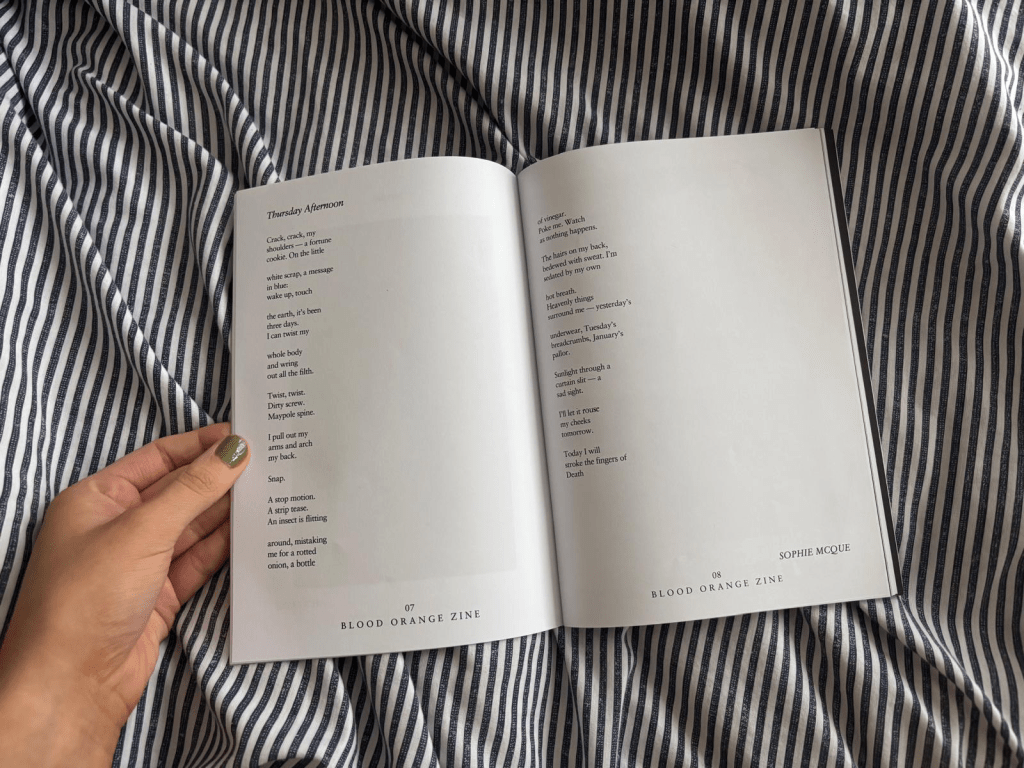
Final Question… What’s your favourite line from your poem?

Oooh! Dirty screw. May pole spine
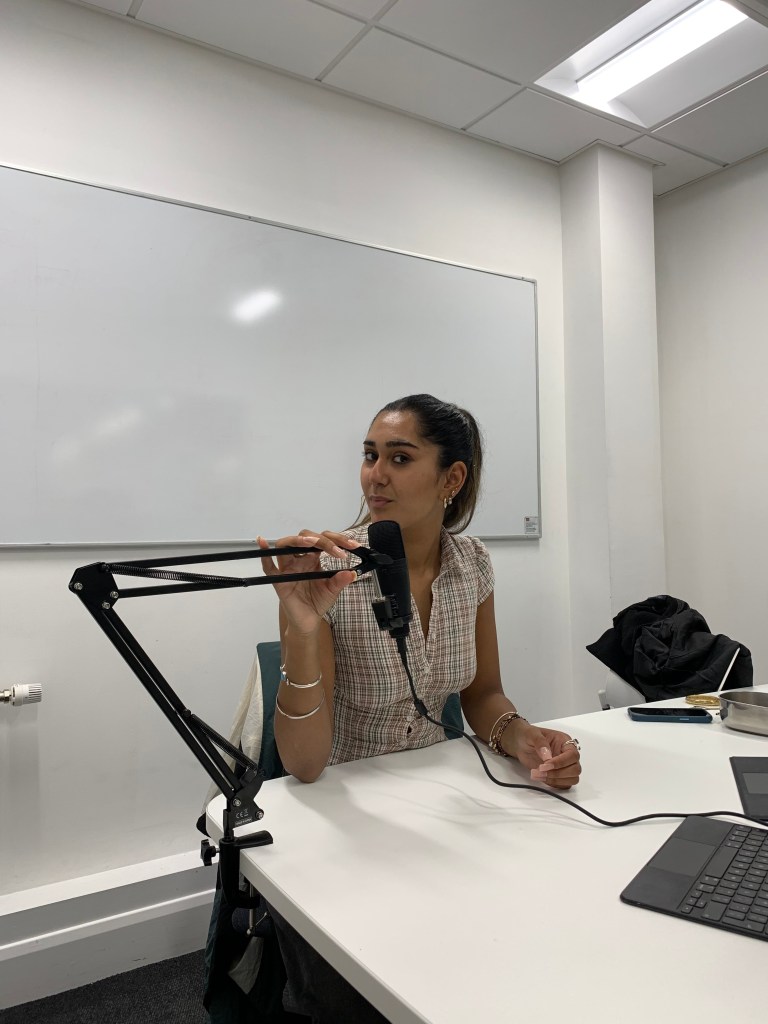
For a deeper discussion on women in literature, I encourage you to revisit our broadcast on young women in literature where I originally interviewed Sophie on her book club, available below (Interview begins at 27:58).

You can find Sophie’s work on @dreamboatsophie on instagram and her book club at @tonguesofstone. You can find Blood Orange Zine and their upcoming summer zine at https://bloodorangezine.com/

Female sexual health: the good, the bad, the ugly.

By Simi Ojla

November 28, 2024

A conversation universal to women everywhere always starts with “I had a friend who tried [form of contraception], and she had a terrible experience”. Contraceptive horror stories circulate like exchanges made at a cash counter. Women trade stories, using one of the oldest forms of education to highlight one of the largest gendered issues affecting women today.

In one of our earlier episodes, I investigated this issue, focusing on two stories and three conversations. The link between gendered disparities in treatment within healthcare and University students’ experiences of contraception are key to this discussion. After engaging in conversations here at the University of Liverpool, it was clear that this was affecting students.

During my research, it was apparent that female sexual health was isolated from other gendered issues. Historically, contraception has been made a woman’s responsibility, meaning the progression of contraception has been slow and healthcare issues within this field amass. The effects of this neglect have manifested, targeting female students who are disregarded in conversations surrounding their own sexual health.

In the case of the first student I spoke to, it was just that. She was coerced, belittled and disrespected during her appointment in the Brownlow student health centre. After having consulted her GP at home, she decided it was in her best interest to remove her IUD. Despite the careful planning and research she had prepared, she was met with confusion over why she would want to replace “a Rolls Royce with a clapped out Old Ford”. Having been at the appointment with her, I can recall the blatant level of disrespect the female practitioner had presented, viewing my friend as someone who she could speak down to. Unfortunately, this is one example of a recurring pattern in which women are being diminished.

“Initially refused to do either a pregnancy test or an SDI test and I was only 19 at the time, but I used the phrase I think. Please stop pressuring me. The issue of SDI tests for me and my personal relationship is non existent. What if it was actually a real risk? You know how would they have been spoken to. Both pregnancy and STI tests came back negative but I was intensely pressured into doing them.

I did not want to do them in the slightest. I was just sobbing on you in the toilet because we were both just so taken aback that this happened to a student at a sexual health clinic as well. I then, after having been pressured and spoken down to and horrid comments made about me and I then had to, you know, get undressed and had a very invasive and vulnerable procedure done to me and there wasn’t a lot of bedside manner given in that respect. You know, it wasn’t, it was the way that my GP described it to me.

(Excerpt from an interview with first student)

There is a pattern that consistently shows how women are having bad experiences when discussing changes they want, that affect their own body. However, what is most disappointing is that this has occurred within the University sexual health clinic.

The second story reflects disparities within the wider NHS framework. I spoke to a student who told me her story, which was retold on the show using a voice actor.

The second student’s story retold.

Not only was this story uncomfortable and shocking to hear, it was even more disturbing to listen about the way the student’s pain was ignored. This case, like many others, signifies the gendered disparities between the ways physical pain is acknowledged among men and women. Women’s pain appears to be ignored or made to seem exaggerated, and this boils down to misogynistic stereotypes of the ‘overly emotional’ woman. The student’s statement exposes the issues regarding the lack of interest, awareness and education surrounding female sexual health.

Both these stories highlight the neglected nature of the area of female sexual health, symbolizing a much bigger network of stories that are told between many female friend groups.

This article is an adapted version of a special feature I did with the Politics in Motion team. You can find the episode here on Spotify.