Coronavirus Conspiracies

stay-home-save-lives-4983843_1280

The Coronavirus is a very harmful and contagious disease that’s causing a lot of stress and worry at the moment. However, there’s also a lot of confusion and myths about the virus too. So here, I am providing some light relief and debunking some myths and conspiracies about the virus.

karaoke_1First, I’d like to remind everyone that karaoke parties are not essential. Shocking I know! So please, do not go to your friend’s house for a karaoke party, and do not host a karaoke party and invite people who aren’t in your house. And for karaoke parties with members of your household…they’re allowed, but please remember we’re all stuck inside. I’m confident your neighbours don’t want to hear your attempts at reaching the high notes in Whitney Houston’s I will always love you. So keep the volume down!

I’m confident that everyone has heard about the rumours that 5G caused the coronavirus. However, there is 0 evidence to support this claim. What a surprise! In case you are unfamiliar with this rumour, many believe that the 5G wireless technology caused coronavirus because it weakens the immune system. Which isn’t true. This rumour has spread because of claims that Wuhan was the 1st city to receive 5G. Yet, Wuhan was one of a number of cities that received 5G and those cities haven’t experienced the same outbreak of coronavirus.                      Additionally, a new rumour has begun to spread that the British government set up the clap for our NHS as a weekly event so no one hears their 5G tests that makes a loud buzzing sound. Again, this is not true. Please continue clapping for the NHS.

downloadThere is absolutely no proof that eating garlic will prevent coronavirus, as nice as garlic bread is. Yet one woman believed this would protect her and she ate 1.5kg of raw garlic. Whilst there is no report that she has coronavirus, she did end up in the hospital with an inflamed throat. So please, abstain from eating raw garlic.

Tangled+750x500Personally, I don’t believe that the Disney film Tangled predicted coronavirus. However, I can’t deny that the signs are there. Rapunzel was locked away in a tower and wasn’t allowed to go outside. She was being kept from the kingdom called Corona. So maybe time travel does exist? But I very much doubt this is more than a strange coincidence.

originalAnd finally, is there no coronavirus? Are we just being told to stay inside so the government can change the batteries in the birds? I’d have to say no. we cannot ignore the tragedy that coronavirus is and the lives it’s taking across the world. And obviously, the birds are solar-powered!

Please stay at home! Listen to all of our episodes here on SoundCloud to keep you company in this lonely time and look after yourselves! https://soundcloud.com/thepoliticshour2018

Written by Rachael Hughes
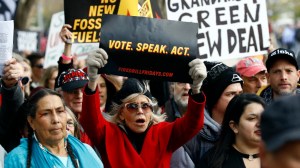
 

Does Jane Fonda care about the environment? Or is this a publicity stunt?

imgThis question follows the virtual climate protest with Fonda on Friday, April 3rd. Fonda has been attending weekly protests known as Fire Drill Fridays in Washington DC for a number of months now. Due to the coronavirus outbreak, the organisation has decided to move protests online to keep supporters safe.
Jane Fonda is a well-known American model, actress, fitness instructor, and political activist. Within the last 12 months, Fonda has begun protesting on behalf of the climate alongside the Fire Drill Fridays organisation. Fire Drill Fridays are campaigning the U.S. government for 3 things:

To introduce a new green deal,

To halt all new coal, oil and gas investments and infrastructure and ban fossil fuel projects,

Phase-out existing fossil fuel projects and transition to a renewable energy economy.

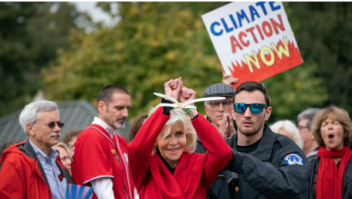
Picture1Fire Drill Fridays have begun holding weekly protests that Jane Fonda has frequently attended. At these protests, Fonda is often arrested whilst smiling, which is where many have questioned her motives. Fonda is a wealthy and famous woman, who can be arrested and afford to pay bail. Many others would lose their job, housing or stability if they were to be arrested for protesting. Thus Fonda’s actions have been labelled as performative and cry’s for attention. A lot of this controversy arose in late October when Fonda accepted her Stanley Kubrick Britannia Award for Excellence in Film whilst being arrested.

However, Fonda has also been called a hero, legend and a feminist icon for bringing the Picture2media’s attention to the climate debate. Celebrities’ involvement in politics is often passive, meaningless or just to advance themselves. Yet, this can’t be said for Fonda who has been politically active all her life. Her mug shot from protesting against the Vietnam war is one of the most iconic celebrity mug shots. Fonda has been vilified by right-wing figureheads but has never reacted to criticism or feared her activism would harm her career.

Jane Fonda has used her position in society to enhance the attention given to social issues. Fire Drill Fridays wouldn’t be known about if it wasn’t for her. Her acts are performative and their purpose is to draw attention to herself as they also draw attention to the cause.

Screen shot from the virtual protestsSince the coronavirus outbreak, the climate debate has been quiet. This is understandable. However, Jane Fonda and Fire Drill Fridays hosted an online protest on Friday, April 3rd which resulted in technical difficulties due to the number of people who tried to join. Thus it’s clear that Jane Fonda has brought a lot of positive attention to the cause.
Many are still unimpressed at celebrity involvement in politics. But you can’t doubt the purity and good intentions of Jane Fonda’s involvement in climate protest.

I spoke about Fonda’s activism in our show in November. The segment starts at 7:15: https://soundcloud.com/thepoliticshour2018/international-politics-hour-show-5

More information about Fire Drill Fridays can be found at their website: https://firedrillfridays.com/

Written by Rachael Hughes

The BAFTAs and Oscars 2020: Diversity and Environmental Concerns, with Dr Niamh Thornton

by Toby Lawson

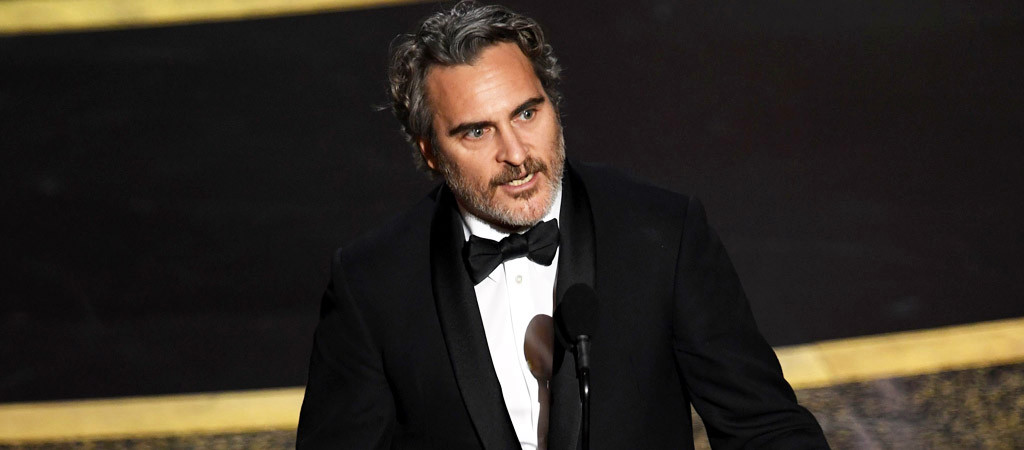
This year’s BAFTAs and Oscars, the two biggest film award ceremonies here in the UK and in America, were surrounded by discussions of diversity and environmental activism. The events were marred in controversy in respect to the lack of diversity their awards seemed to showcase, with many shocked that 2020 events seemed like a step in the wrong direction. At the BAFTAs not a single person of colour was nominated in any of the acting categories, with the Oscars only nominating one, Cynthia Eviro in her role in Harriet (2019). In respect to female diversity, there was not a single female director nominated at either event, with many feeling Greta Gerwig and her film Little Women (2019) was snubbed at the events. Indignation at these decisions were highlighted even in the events outfits, with Natalie Portman sporting a cape at the Oscars emblazoned with the names of overlooked female directors such as Gerwig. Ultimately, as host Graham Norton pointed out ironically, this became the year ‘white men broke through’, symbolised through the 11 nominations for the film Joker (2019), which Norton joked was the story where ‘a white man made himself whiter’. Joaquin Phoenix, star of Joker, was not happy to just accept this success, bringing attention in his BAFTAs victory speech to point out that these events ‘send a very clear message to people that you’re not welcome here’ when referring to the lack of diversity (https://www.theguardian.com/film/2020/feb/02/joaquin-phoenixs-attack-on-baftas-for-systemic-racism-meets-industry-wide-praise).

To try understand the issues the lack of diversity entails, I spoke to Dr Niamh Thornton, a Reader in Latin American studies in the University of Liverpool’s Film Studies department. When asking her about the importance of diversity, she said that despite these film ceremonies at first just representing a trade show, their popularity has meant it become more about a representation of ‘who do we privilege and what do we value, and also who do we value and whose stories get valued’ in the film industry. She linked this then to visual representation, the idea that ‘If you can’t see it you can’t be it’, with awards piled on films centred around white, male stories sending a clear message to those different that their story is not as valuable and that you are not part of the ‘cultured conversation’ in film. Dr Thornton argued this culture needed to adapt beyond solely films made by white people, featuring white people from ‘the west’ and instead to create and then include stories in this culture that feature more women as well as those from areas that are usually overlooked, such as Africa, crediting the work of filmmakers such as Geena Davis and Ava DuVernay in pushing these ideas. The awards however did not just send out negative messages, with the surprise win of Parasite (2019) as first non-English best picture and its director Bong Joon-Ho as winner of best director at the Oscars represented a shift at the awards. Dr Thornton highlighted how Parasite’s success showcased how the Oscars ‘have really changed the make-up’ of the panels who decide winners, incorporating more globalist inclusivity to their decision making.

As well as diversity issues, the events saw unprecedented levels of focus on environmental issues, especially climate change and single use plastics. The events promised this year to reduce waste and energy use as much as possible, with the BAFTAs taking measures such as banning single use plastics, using a recycled red carpet, introducing vegan meals, replacing the goodie bag with a ‘gifting wallet’ made of recycled plastic and encouraging guests to reuse or buy sustainable outfits. Best Actor winner at both events Joaquin Phoenix also brought attention to the importance of his diet, Veganism. An obscure diet as of several years ago, its has surged in popularity in recent years, especially in respect to the prevalence of climate change. On what was probably the high-profile endorsement of Veganism, Phoenix dedicated his Oscars acceptance speech to it, lamenting how humans ‘go into the natural world and we plunder it for its resources. We feel entitled to artificially inseminate a cow and steal her baby, even though her cries of anguish are unmistakeable’ (https://www.theguardian.com/film/2020/feb/10/joaquin-phoenixs-oscars-speech-in-full).

When talking to Dr Thornton about this new emphasis on environmentalism, I asked how the film industry can endorse such claims whilst also being a huge contributor to carbon emissions. The film industry requires huge amounts of energy through extensive air travel, in filming, lighting, special effects and the vast crews they require to be produced. The film ceremonies themselves were places Dr Thornton thought were ‘a really good place to have the conversation and provoke the conversation’ around these issues in bringing wider prevalence to these ideas, not in necessarily changing anyone’s minds but making them think about what Veganism and Climate Change. In terms of their resource use, Dr Thornton thought the Dogme-95 rules of film making, in advocating for less special effects and more natural lighting although not intended to combat energy use, might become useful as a precedent in the future for films having an energy ‘ten commandments’ when filming to in order to reduce their carbon footprint in respect to climate change. When financially backed by governments or national organisations in the UK, films are already subject certain guidelines concerning their carbon footprint and Dr Thornton would not be surprised if in the future, with the increasing seriousness of climate change these will have to be thought about ‘differently or more thoroughly’ than they are currently.

This year’s film events certainly left a lot to discuss and thank you to Dr Niamh Thornton for taking the time out to talk to me about these issues. This was only a brief overview of our discussion and our full interview can be found here https://soundcloud.com/thepoliticshour2018/week-3-uk-show. For further discussion around these events Dr Thornton has written an article focusing on how Jennifer Lopez was overlooked at this year’s events and the wider significance this has concerning diversity https://reframe.sussex.ac.uk/mediatico/2020/02/03/so-why-hasnt-j-lo-been-nominated-for-any-of-the-big-film-industry-awards/.

Veganism: Is it worth it?

According to studies from the Martin School of Research (University of Oxford), a global switch to diets that rely less on meat and more on fruit and vegetables could save up to 8 million lives by 2050. This switch could also reduce greenhouse gas emissions by two thirds, and lead to healthcare-related savings and avoided climate damages of $1.5 trillion (US). (https://www.oxfordmartin.ox.ac.uk/news/201603-plant-based-diets/)

But surely if we all turned to a vegetarian/vegan diet there would be serious economic and political trade-offs? If we all turned vegan tomorrow, how would our rural economy, which relies so heavily on meat production, cope with the loss of demand? How high would unemployment rise and who would be affected?

In the wake of Brexit, surely the UK economy needs to support our industries rather than force them into a decline in the name of the benefits of veganism. Is it not those who are worst off in our society who are unable to join this vegan revolution? All these questions and worries were put to The Vegan Society Campaigns and Policy Officer, Timothy Thorpe, who I quizzed and questioned on the real effects of veganism.the vegan society

The Vegan Society (https://www.vegansociety.com/) is a registered charity founded in 1944, making it the oldest of its kind on the planet. My conversation with Tim involved discussions around the bigger picture of veganism, promotion of the lifestyle in the UK, and questions about what a vegan economy would look like. We also discussed the possibility of agricultural transition to a plant-based farming economy and how the potential negative externalities could be minimised.

Ultimately, our interview was a search to answer the question:

Is it worth switching to veganism in the UK?

Listen to our conversation and see what you think at: https://soundcloud.com/thepoliticshour2018

Graduate Jobs piece

Getting a graduate job is the bane of existence for many final year students including myself. Getting rejected after going through dozens of time consuming online judgements tests and interviews is tough to take and leaves you feeling like there isn’t much hope left for your future. I’ve been in that position for the last few months where every graduate scheme or job I apply for seems like a never ending blackhole with no acceptance in sight. This worry for your future becomes even worse when newspapers are publishing articles regularly with titles such as ‘UK employers will offer fewer entry level jobs in 2020, figures suggest’ (Makortoff K, The Guardian, 2020).

This kind of article is worrying, particularly for final year students like myself who know exactly how difficult it is to find a graduate job in a saturated market and just how competitive these jobs already are. The article uses research from the Institute of Student Employers’ (ISE) whose data found that recruiters were failing to hit their target’s by around 3% last year and this points to a potential stagnation across the jobs market and a slowdown of hiring school leavers in the months ahead.

The matter of stagnation in the market isn’t the only issue though according to Makortoff. She states that ‘many of the jobs created in the UK over the past decade are too senior for students fresh out of school or university’. Most of the jobs on offer are professional with around 500,000 low skilled jobs available out of 3.4 million compared to 2.5 million senior/professional jobs. (https://www.theguardian.com/money/2020/jan/06/uk-employers-fewer-entry-level-jobs-2020-survey)

But is this prediction of 2020 true? or am I just very unlucky in the graduate jobs market? I decided to investigate this issue of graduate jobs being in decline as well as graduates not moving jobs once they have found one. In order to do this, I did some interviews with students as well as economist Dr Balázs Muraközy.

I first interviewed final year students largely studying humanity subjects in the Sydney Jones Library based at the center of the University of Liverpool campus. Believe it or not, it wasn’t hard to find students struggling to find something to do after graduation. In fact, the first two students I spotted who featured in our radio segment had been talking about their struggles before I’d even come over to them. I interviewed 10 people in total and the answers from the students I interviewed were almost unanimous with 9 out of the 10 people saying that they have been rejected from two or more graduate jobs with one student studying history having been rejected from over 20!
Another unanimous trait was the belief that doing a masters was the only way to counteract the difficulties of trying to get a graduate job and more than one student told me that graduate schemes for the area they wanted to go into didn’t even exist.

But is this something we need to worry about? I interviewed Dr Balázs Muraközy to find out. His research is currently with the Organization for Economic Co-operation and development on the relationship between age and productivity, the research is only in the initial stages but points to a positive relationship between age diversity and productivity of businesses. (https://onlinelibrary.wiley.com/doi/full/10.1111/1748-8583.12011). Dr Muraközy says that young people will always be needed in industry and emphasizes the cyclical nature of this change rather than It being a long-term trend saying that students don’t need to worry about this as it may just be a trend that some companies are not able to invest currently but will be able to in the future.

I wanted to end this piece on a positive note. So far, I have spoken about the difficulties of finding a graduate job, the fact that competition may increase as employers reduce their graduate recruitment numbers and that students are worried about this future. But there is hope I assure you! there are services that can help with your job search and advise you on what you can do to better your chances in an interview or application. You could go and pay a visit to your academic advisor or speak to a recent graduate for example. I decided to pay a visit to the career’s office and interviewed Paul Gratrick about the worries surrounding third year students.

Paul insisted that it was normal to want to do a masters and pointed to the seasonality in graduate jobs market. He pointed out that a lot of graduate recruiters start searching for graduates again around graduation time so there are still options left. He also said that around 50% of applications get rejected for silly things that we can change for example spelling.

I asked him about the recent articles stipulating that graduates aren’t moving around as often as they used to. He told me that around 69% of graduates will stay in the region they are from and that most graduates will never work in London. Paul sits on the ISE research board and said that the study they did (in The Guardian article cited above) only accounted for a small proportion of companies that recruit graduates and that 20-25% of students go on to further study and more graduates are opening their own companies.

When asked about what the careers office could do to help students, Paul told me that The University of Liverpool has the first ever career studio introduced in the UK with career coaches. It is drop-in service for any student to go to for help with anything from applications to not knowing what you want to do. So, please go and pay them a visit if you are worried and need some guidance.

The final person I spoke to for this piece was Hannah, a politics graduate from 2016. I wanted to get a recent graduate’s perspective on this issue so reached out to her and she was happy to tell me her story in the hope that it will help others who are in a similar situation. She said that it was a struggle to find a job and that she didn’t actually start her graduate job until February 2017.
She said that in the time between university and finding a job she kept her barista job to ensure a steady income. Hannah told me that she definitely experienced the desire to give up as did many of her friends and that this wasn’t helped by the fact that she wasn’t 100% sure what she wanted to do. She stated that particularly with humanity degrees like politics, it is harder to find something than when you are in a set field as there isn’t a clear-cut option of what you should do for a career. She recalled that one of her friends that did the course ended up as a wedding planner! Hannah went into the private healthcare profession for her graduate job and said it gave her invaluable experience.

Hannah’s story really spoke to me as someone who is struggling currently to find a graduate job. Her resilience to keep trying to find a job that suited her and her ability to pick herself up even when she felt like giving up is something that is universal when experiencing rejections and trying to find where you fit in the world of work. It might take time and you might see no light at the end of the tunnel at times but there are many other people in the same position and whether it takes 1 year or 10 years, you will find something eventually.

Written by Megan Lyon
13/02/2020

An Interview with Peter Hitchens

An Interview with Peter Hitchens

Peter Hitchens is a journalist I have followed for some time. I remember an extract of his coming up in my AS Level Politics exam on First Past The Post, many years ago now. I had watched his Oxford Union debate on free speech and decided that he would be a perfect individual to interview on such a contentious issue. Getting hold of him was a case of ringing up the Mail on Sunday and asking for his email, after all, Peter is very private when it comes to sharing contact details on twitter. He was very professional and quick on replying, and very generously gave up his time to speak with me.

The question formulation prior to the interview was difficult at the time. I wanted to make sure that the questions were open enough to encourage free-flow dialogue, but at the same time I wanted to ensure it was concise. The aim was for it to be around 10 minutes once broadcast. The questions I decided to go with were putting Peter’s argument under scrutiny, which felt to me like the best way to go about the interview. I studied and learnt about Peter’s arguments and many of the counter arguments that are currently discussed in the debate on free speech, such as safe spaces and offense. At times it felt a bit daunting to scrutinise, particularly due to Peter’s long-standing reputation and well-thought out points. But this is something I have learnt is a necessary part of being a journalist. I also wanted to have the Guild’s opinion broadcast, mainly as a counter to Peter’s arguments. I found a piece written by the Guild shortly after Peter’s visit to Liverpool in 2017. I did email the Guild for a reply, but they didn’t answer unfortunately. So instead, Kitty Ward, my fellow colleague, read out the response by the Guild after the interview. I thought this was fair and well-reasoned.

The actual interview was a little daunting at first. I was very nervous. But Peter was very polite and answered every question, and when I mean answered, he actually directly answered the question! The interview ended after about 12 minutes. I was glad that I made sure it was kept to an appropriate time. This made the editing process much simpler. I decided to cut out my parts of the interview and ask the questions on air, and then play each answer afterwards. This made it seem more organic and concise than simply not editing the interview at all. I was pleased with how it came across on air. There was always the worry that after so much preparation, something would go wrong! I am also extremely pleased with how many listens to the interview has had on Soundcloud. I decided to cut the interview from the two hour broadcast and upload it to Soundcloud as a single segment. This upload alone currently has 860 listens on Soundcloud.

Overall this interview was a wonderful experience. I learnt the process of getting in touch and arranging an interview with a prominent journalist. As well as the importance of the formulation of questions, which was arguably the toughest task of this experience. In the future I think it would be beneficial for me to have made sure I managed my time better in regard to the time and date of the interview. The interview was delayed a little due to uncertainty about when I wanted to do the interview, and when Peter was free to do so. Next time I would be more precise and give more clarification to the interviewee regarding the time and date of the interview. In addition, I would ensure that I countered some of the points made by the interviewee during the interview.

Link to the interview: https://soundcloud.com/thepoliticshour2018/peter-hitchens-on-free-speech-at-universities

Charlie Millward

Featured Image: Peter Hitchens debating at Sussex College, University of Cambridge, England. Courtesy of Nigel Luckhurst.

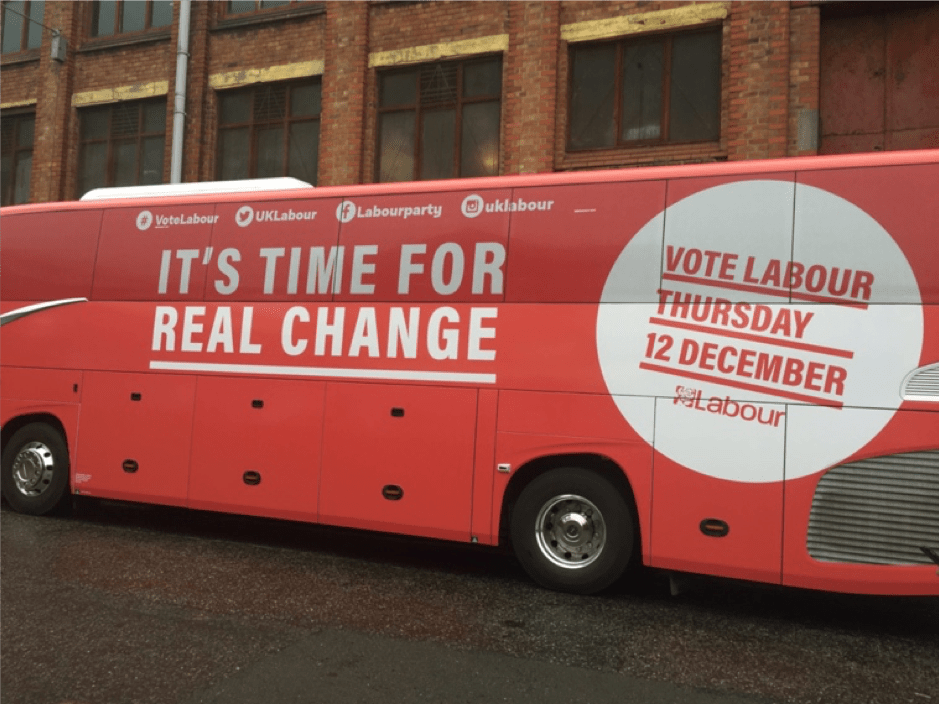
Attending the Labour Rally at the Invisible Wind Factory

By Juliana Christianson

Listen to the full segment here!

On Thursday 7th November I went to a Labour Party event at Liverpool’s Invisible Wind Factory. It was unlike anything I’ve attended before, and was definitely not what I expected my first event at the Invisible Wind Factory to consist off, however, the bar was open so I suppose that’s one thing the event had in common with all the music events held there.

I was sat with all the other media representatives at the event, including teams from ITV, Sky and the official broadcaster for the Labour Party who was streaming the event for party members on the Labour Party’s website. That part of the event was definitely a highlight as I had the recorder plugged into the main audio, the same output that ITV get, and did all the level checks feeling very professional with the massive headphones on. Although, I have to admit I was pretty alarmed when the sound check high pitch noise came through, as I thought I’d broken the recorder but really it was just a chance to set the levels right so you didn’t deafen anyone who listened to the audio afterwards.

The speakers at this event were Lucy Powell, Labour candidate for MP for Central Manchester, John McDonnell, Shadow Chancellor of the Exchequer and Labour candidate for MP for Hayes and Harlington and Jeremy Corbyn, Leader of the Labour Party, Leader of the Opposition and Labour candidate for Islington North. As it was the beginning of the election campaigns for all parties there was a drive to fire-up the base of supporters and Liverpool is a historical Labour stronghold, so what better place to kick-off the campaign and enjoy a passionate crowd that loves the party.

Lucy Powell started the talk by rallying Northerners against the Conservatives and talking about how “they (the Conservatives) just don’t understand us (Northerners) do they?”. I found it interesting how although she says that Jeremy Corbyn and John McDonnell are going to end the North-South divide, she also played on sentiments that cause that divide, by pointing out the stark differences in areas like education or life expectancy. She also mentioned the Social Transformation Fund, which John McDonnell later expanded on, but was introduced as something that will help to balance out the inequalities in investment in infrastructure in the North compared to the South.

Jeremy Corbyn spoke briefly to encourage people to keep turning out to support the party on the campaign trail, as there were supposedly more people out supporting Labour at the beginning of this campaign than there were halfway through the general election campaign in 2017. He continued on to introduce John McDonell, a man he acknowledged he’s not always agreed with, but still wants as his right-hand man in the treasury.

John McDonnell came to the stage and began to outline aspects of Labour’s economic plan, including policies like increased taxes for the rich, with the tax revenue funding many of the other proposals. He came across well in the speech and he seemed more at home in Liverpool, perhaps due to his Merseyside roots. The economic plan was well received, but then again, most things would’ve been well received considering it was a labour rally.

Overall, it was a really enjoyable experience, and an eye opener for me to see grass-roots mobilisation in action. I speak more in-depth about the event in a segment I did for an episode of the UK Politics Hour; find the link to below or by clicking on the show’s icon at the top of the page.

Listen to the full segment here!

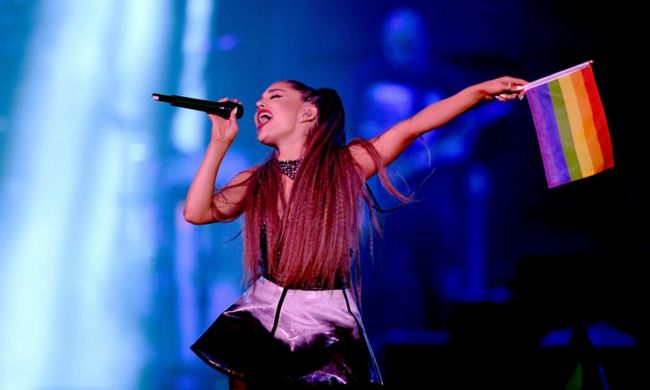
Ariana Grande Faces Backlash Over Manchester Pride Performance

It’s confirmed! Grammy award winning pop singer Ariana Grande will be headlining Manchester Pride Festival 2019.

Following much anticipation, Manchester Pride Festival officially tweeted the 2019 line-up, and rumours of Grande’s appearance have been settled once and for all. Meaning the twitter speculation can finally stop – or at least you would think.

Fan theories over how Manchester Pride could fit between Grande’s European Tour have been circulating Twitter for months now. But with the long-awaited confirmation of Grande’s appearance, the Twittersphere seems to have fallen into an even deeper frenzy.

It’s true, news of Grande’s confirmation came as a great surprise to most. However, some members of the LGBT+ community were left feeling confused – and annoyed. Questions over why a straight cis female artist had been chosen to headline a festival aimed at celebrating LGBT+ culture instantly spread online. Worse yet, accusations of Grande as exploiting the LGBT+ community began to flood Twitter.

One Twitter user claimed: “Ariana headlining pride when she’s straight and doubling the price of tickets… kinda smells like exploitation of the lgbt community to me.”

The viral tweet, by Twitter user @raininjulyvinyl, exploded: gaining over 17,500 retweets and 80,000 likes.

Surprisingly, the reference to the new ticket prices as having ‘doubled’ is in fact an understatement. Just last year, festival goers were being charged around £26 for the full main event. Yet this year, queer people wanting to experience the full Pride event will be forced to fork out a huge £70. Leaving many to raise the question online: should queer people really be expected to be charged extortionate amounts to celebrate their culture?

At an ‘Is Pride Still Political?’ talk at the University of Liverpool, LGBT+ activist Sanaz Raji, discussed her thoughts on how Pride was pricing out the poorest members of the community. Many of the LGBT+ community – especially trans people – are in fact homeless and would therefore have absolutely no way of affording this £70 price tag, she said. Raji went on, arguing that the whole mantra of Pride was inclusivity, yet this was sadly being lost to the crushing force that is commercialisation. Raji’s thoughts reflect those of many of Grande’s online critics.

In a response to the backlash, Grande replied to the earlier viral tweet, saying:

“i saw many people discussing this so i wanted to chime in… hope that’s okay,” Grande explained that she simply wanted to “celebrate and support this community”.

The “7 Rings” singer went on to write how she has little control over ticket pricing, this being the responsibility of Manchester Pride itself.

Grande also highlighted how straight singers often perform at Pride events: “Over the years, pride events have been headlined by performers and artists of all sexual orientations and genders, including straight allies like Cher and Kylie Minogue,” she wrote.

The original tweeter of the viral tweet responded to Grande, thanking her for her response and adding: “i completely get where you’re coming from”.

The Twitter altercation between the online user and Grande appears to settle the debate – Grande should not be blamed for the decision of a straight cis female artist headlining a Pride event. Any anger over the decision of her performance, or over the new price tag of Manchester Pride Festival – as justified as it is – should be directed towards Manchester Pride Festival themselves. As in the words of Grande: she had “nothing to do with ticket pricing”.

Grande is set to perform on Sunday 25th August. It will mark an emotional return to the city of Manchester for Grande, having been over two years since the terrorist attack at her concert which claimed 22 lives in May 2017.

Tickets for the event are still on sale online.


Bradley Fletcher-Poole

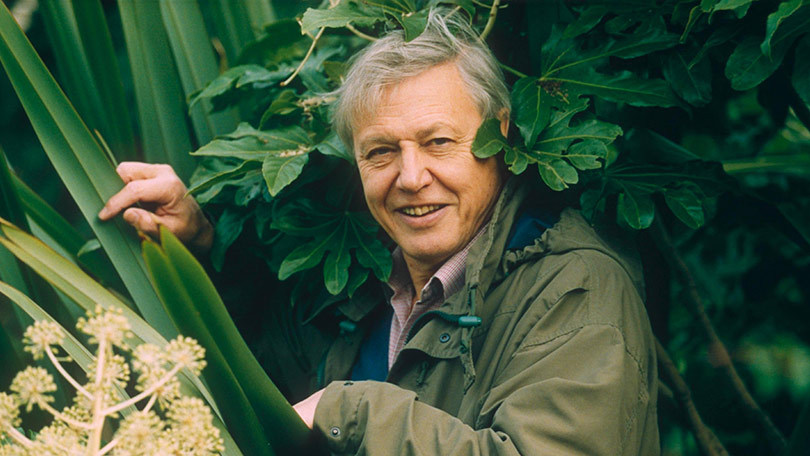
Saving the Planet: A Birthday Gift to Sir David Attenborough

Sir David Attenborough.

It’s a name that incites joy across the entire country, whether it be from a young, inquisitive child or your grandparents who have watched his entire career unfold across their lifetime.

Today, on his 93rd birthday, the celebrated TV legend is being showered with well-wishes from all corners of the Internet and beyond, and it’s not hard to see why.

Sir David’s career path has mapped out a blazing trail of activism that has seen the 93-year-old hailed as a climate change pioneer. The nature expert caused national upset recently, after admitting to The Guardian that he “doesn’t have many more years around here” and fears for the future of the Earth after he’s gone.

Terrifyingly, he’s right to be concerned, with the United Nations reporting this week that nature is in the ‘worst shape in human history’, with extinction threatening over one million species of plants and animals. The UN have made it clear that this issue is entirely human-made, but it is not too late to rectify the damage that has been done to Mother Earth.

Amongst the stark reality of a bleak future, Sir David has found time to praise young people who were critical activists in the recent Extinction Rebellion protests, which were successful in shutting down most of central London. Following the action of protestors, UK Parliament has approved a motion to declare an environment and climate emergency.

We’ve all heard time and time again that single-use plastics are bad for the environment and that we should refuse the straw. These are all wonderful suggestions but it’s time to think bigger. In celebration of Sir David Attenborough on his 93rd birthday, we present you with a list of lesser-known ways that young people can continue to demand change for the Earth. In honour of David, a national treasure…


  1. Cut down on smoking. We know what you’re probably thinking, and no, you’re right, we’re not your mother. But cigarette filters are made of plastic and they’re making their way into landfill, into our oceans and into the stomachs of woodland animals. If you fancy life without cigarettes, Smokefree is a handy app to aid your journey. Even if you don’t want to kick your habit quite yet, consider using a refillable lighter. Better yet, buy a pack of matches à la 1950s Greasers to add a real touch of je ne sais quoi to your personality when you light your next cigarette. You probably should cut down too, though. Sorry.
  2. Record your time travelling. Keeping a diary of the amount of time you’ve spent using varied modes of transportation is very eye-opening. If you’re spending an hour per day in rush hour traffic, it may be worth sacrificing the solace of your car and spending 20 minutes on that bustling train next to a screaming baby instead. An app called Life Cycle can track all of these movements for you, provided you’re okay with how Black Mirror-esque it is having your phone track your entire day’s movements, down to the minute.
  3. Join the food waste revolution. Too Good To Go is a remarkably handy app that allows local restaurants to post a list of all of the food that they’re going to have to bin at the end of the evening, offering it at discounted prices. What better way to try the restaurants in your local area? They believe ‘small actions have big consequences’, so download the app and become a Waste Warrior today.
  4. Go thrifty with your fashion choices. In a world of fast fashion and discount codes from social media influencers at every corner, it’s easy to fall into a trap of buying clothes you don’t actually need. We’ve all fallen victim to the ‘if I don’t like it, I’ll send it back’ mindset, but did you know that 5 BILLION pounds of retail returns end up in landfill? To combat this, Depop is a brilliant app that works exactly like eBay but entirely for clothes. One man’s trash is another man’s treasure, so before you spend £50 on that new dress, see if somebody else has already decided they’d rather get rid of it.
  5. Check your carbon footprint with WWF. It’s easy to read a list of suggestions for helping the planet and attempt to take them on board, but not all of the generic list will be tailored to your lifestyle. By checking your carbon footprint with WWF, you can access a handy list of tips that are catered to your lifestyle choices and understand where you’re going wrong.

There are thousands of ways that you can lessen your impact on the earth, and the small changes are what build up into a green revolution. There’s no day better than the 93rd birthday of Sir David Attenborough to jump on the bandwagon and start saving the earth, so do the nation’s grandfather a favour and start making the changes that will make him a happy man, today.

Recognise, Respond, Reform: Assessing New Zealand’s reaction to Christchurch and why their neighbours’ approach two decades ago may provide a persuasive and powerful lead

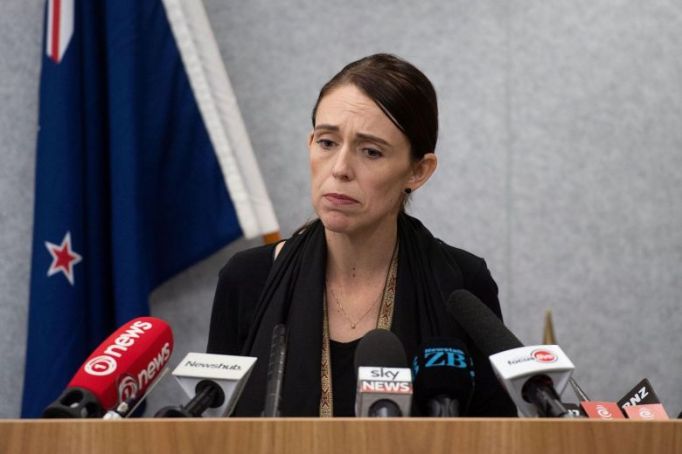
lwx_jacinda_ardern_160319_96

“Our gun laws will change, now is the time … People will be seeking change, and I am committed to that.”

These were the words of New Zealand Prime Minister Jacinda Ardern following the deaths of 50 Mosque-goers in Christchurch on 15th March at the hands of a white-nationalist.  This was the biggest fatal gun-attack witnessed in New Zealand’s history, the deaths of 13 people in Aramoana in 1990, and the previous mass shooting in 1997 in Raumiru, where 6 people were killed.

The Christchurch attack brought a truly peaceful nation to its knees as the rest of the world watched on in horror.

However, through the pain and suffering caused, New Zealand has recognised what has happened and has responded accordingly, to do justice to those who lost their lives.

The best way to do that? Gun reform.

Response

This is exactly what PM Ardern promised in the aftermath of the attacks.  Within 72 hours she had called for every semi-automatic weapon used in the attack to be banned.

The proposed legislation, which Ardern hopes to implement into law by 11th April, also includes proposals for a gun buy-back program for military-style semi-automatic weapons (MSSAs).  She announced that MSSA owners will receive “fair and reasonable compensation” for weapons purchased legally and has set out a figure between NZ$100-NZ$200 million for buy-back scheme.

As of last year, some 15,000 of New Zealand’s 1.5 million firearms were military-style semi-automatic rifles. The minimum age to own a gun is 16, but for semi-automatics, New Zealanders must be at least 18. In the attack in March, the Christchurch shooter used two semi-automatic rifles, both of which he purchased legally online.

The Australian Example: A case for optimism?

In terms of inspiration, New Zealand will see a plethora of developed nations which have themselves witnessed mass gun violence, have acted in response, and have achieved positive change.

Perhaps the best example took place just 3,000 miles away in New Zealand’s Antipodean neighbour, Australia.  In 1996 in Port Arthur, Tasmania, a lone gunman left 35 people dead and 18 seriously wounded by firing a military-style semi-automatic rifle.

Australia’s response? A mere 12 days after the shootings, in John Howard’s first major act of leadership as Prime Minister, his government announced nationwide gun law reform.

This included the banning of rapid-fire rifles and shotguns; gun ownership licensing was tightened and remaining firearms were required to be registered to uniform national standards.  The introduction of a comprehensive registration and licensing system made the requirements for owning a gun much tougher. A mandatory buy-back scheme resulted in at least 600,000 guns being handed over to the authorities.

Howard and his government met significant dissent, especially within Conservative interest groups, but the majority of Australians, shocked and appalled by what had taken place, backed the proposals.

Dissent is something Ardern will surely experience, considering New Zealand’s powerful gun lobby and its connections to the country’s hunting and farming communities.

But has action in Australia worked? Undoubtedly.

In the two decades before the law changed, there were 13 mass shootings.  In the last 20 years there have been just two mass shootings where four or more people were killed.

It is this kind of recognition, response and reform that New Zealand will surely hope to replicate itself.

What can we expect in New Zealand? Will it be 4th time lucky?

Although it is extremely encouraging to see swift and immediate action in response to the events in Christchurch, New Zealand’s track record on gun reform is not promising.

In her first address following the attacks, Ardern referred to previous attempts to change gun laws in New Zealand on three separate occasions: in 2005, 2012 and most recently in 2017.

Ominously, there has not been a significant change in New Zealand’s gun laws for more than 26 years.  This does not provide great cause for optimism.

This is why Australia’s example is so important.  The statistics don’t lie and Australia has undeniably seen positive change.


Hopefully, New Zealand will see the same.

James Rowan